Nicolas Winding Refn's Her Private Hell has the kind of visual confidence that initially makes you want to believe there is something deeper underneath it. Magnus Nordenhof Jønck's neon-drenched photography and lingering static shots give the film a polished, dreamlike atmosphere, while Pino Donaggio's synthesizer-heavy score adds another layer of uneasy unreality. Sophie Thatcher and Charles Melton commit to the material with a brooding seriousness, but the thin script leaves them with little to do beyond prolonged looks and sparse exchanges. The film certainly knows how it wants to look, but that aesthetic quickly becomes repetitive.
The bigger issue is how little happens beneath all that style. Her Private Hell moves at a glacial pace without giving its stillness enough dramatic tension to justify it, and what initially feels mysterious gradually becomes simply empty. The detached performances and sparse storytelling might have worked if there were stronger ideas underneath them, but the film rarely gives us enough reason to become emotionally invested in what we're watching. The visual polish keeps it from being a complete misfire, yet Her Private Hell ultimately feels like an exercise in atmosphere that mistakes emptiness for depth and leaves very little behind once the screen goes dark.
Her Private Hell
Passenger
André Øvredal knows how to make a lonely road feel dangerous, but Passenger keeps getting in its own way. The nighttime photography gives the van and surrounding highways an isolated atmosphere, while Christopher Young's sound work occasionally finds the tension the film should have sustained throughout. Lou Llobell and Jacob Scipio are likable enough as Maddie and Tyler, giving the opening some personality beyond the usual horror setup. There are flashes of the director who made The Autopsy of Jane Doe, particularly when he lets the Passenger remain something we barely understand.
Unfortunately, the film becomes increasingly repetitive and predictable once its mythology takes over. The constant rules, objects, warnings, and backstory drain the simplicity from what could have been a much scarier premise, while the repeated highway encounters become easy to anticipate. Melissa Leo's Diana should have been more memorable, but she is largely reduced to explaining the mythology. Passenger ultimately feels like proof that major studios still don't necessarily have a grip on horror, burying a promising premise beneath formula, repetition, and explanations that leave little mystery behind.
Passenger
Buddy
Buddy gets its strangest trick right almost immediately. It doesn't just parody a children's television show—it actually feels like one. Casper Kelly recreates that aggressively cheerful world with candy-colored sets, awkward songs, and the kind of forced positivity that starts feeling weird before anything explicitly horrible happens. Keegan-Michael Key is perfectly cast as Buddy, giving him such a relentlessly pleasant voice that his growing hostility becomes even funnier and more unsettling. Delaney Quinn gives the children's side of the story more weight than I expected, while Cristin Milioti brings a different kind of unease once the film steps outside Buddy's world.
The problem is that the joke doesn't always develop as well as it does in those early scenes. The film becomes less focused as it moves between the children's-show horror and what is happening in the real world, and some of the later ideas don't hit with the same force as the opening setup. I still like how committed Kelly is to the premise. He rarely breaks the illusion just to remind us that we're watching a horror-comedy, and that makes the stranger moments feel much more natural. Buddy doesn't completely sustain its own joke, but there is something genuinely bizarre about watching something this cheerful slowly reveal how wrong it is.
Louis Leterrier establishes an effective atmosphere in The Last House, using dim naturalistic lighting and the isolation of its surroundings to make the setting feel increasingly oppressive. The sparse sound design adds to that unease without constantly announcing when something frightening is supposed to happen. Greta Lee gives Ann a grounded emotional presence that helps keep the film from becoming too detached, while Wagner Moura brings an intensity that makes Jason's strained behavior difficult to ignore. There is a real sense that Leterrier is trying to build something more psychological than a straightforward thriller, and the early stretches suggest that the film might have the patience to pull it off.
Unfortunately, that patience eventually becomes the problem. The film repeatedly returns to the same domestic friction and conversational standstill without creating enough escalation, making The Last House feel considerably longer than its runtime. Moura's intensity is often trapped inside a script that keeps circling instead of pushing the characters somewhere new, while even Lee's steady performance can't fully compensate for the lack of momentum. There are enough interesting ideas and serious intentions here to keep the film from being a total misfire, but the slow-burn approach never develops into the kind of tension it seems to promise. The Last House ultimately spends too much time traveling down the same stretch of road without giving us enough reason to care where it leads.
The Last House
Silo - S3 • E9 - Farewell
Silo finally hits the accelerator with "Farewell," turning what had been a frustratingly slow season into something I couldn't look away from. Camille's announcement sends everything spiraling, and the escalation that follows is the kind of television that makes the wait between episodes feel almost unbearable. Amber Templemore directs the chaos with remarkable control, while the visual effects give the episode's central catastrophe a scale and beauty that caught me completely off guard. More importantly, the spectacle actually means something for the characters and the world rather than existing simply to give the season a big moment. After so much setup, "Farewell" feels like the payoff finally arriving, and it is easily the most thrilling episode of the season so far.
Silo - S3 • E9 - Farewell
Silo - S3 • E8 - Gray Goo
"Gray Goo" gives Silo a welcome jolt of momentum, finally allowing some of the secrets hanging over the season to produce real consequences. Gus's confession carries genuine emotional weight, while Charlotte's decision gives the season a much more interesting direction to follow. These moments work because they actually change things rather than simply adding another piece of information to the pile. The episode still gets bogged down by some of the show's familiar exposition, keeping the surrounding story from moving as quickly as these character developments deserve. Nevertheless, "Gray Goo" is one of the stronger hours of the season because it remembers that the mysteries only matter when they force these characters to make choices.
Silo - S3 • E8 - Gray Goo
Silo - S3 • E7 - Radio
"Radio" is another generally solid step forward for Silo, particularly when Juliette sends Lukas and Kennedy into a mission that finally makes the larger conflict feel like it is going somewhere. The show's atmosphere remains as strong as ever, but the episode works best when it focuses on exploration and the shifting balance of power rather than keeping everyone trapped in another round of personal drama. I had a hard time finding much suspense in the relationship between Camille (Alexandria Riley) and her husband, Robert (Common), which becomes a pretty significant problem when so much of the episode depends on that tension carrying emotional weight. The broader mystery and Lukas and Kennedy's mission keep things moving, but the marital storyline feels like dead weight on an otherwise competent hour.
Silo - S3 • E7 - Radio
Silo - S3 • E6 - The Drive
One of the trickier things Silo has had to pull off this season is jumping between two timelines separated by hundreds of years, and "The Drive" handles that balance better than most episodes so far. The Before Times material is particularly strong, with Helen and Daniel having a chemistry that frankly feels more natural than almost anything happening in the present day. Billings and Hank's investigation does uncover an intriguing new mystery, but their storyline still feels a little restrained by comparison. The episode has proven though that the series has figured out how to move between its timelines without either one feeling like an interruption, and that alone gives the season a much-needed sense of momentum. "The Drive" isn't perfect, but it is an engaging-enough episode that shows how effective Silo can be when all of its moving pieces actually move together.
Silo - S3 • E6 - The Drive
Silo - S3 • E5 - Memory
"Memory" is a real step forward for Silo, finally giving the season some of the momentum it has been missing. The consequences of Juliette's return begin to take shape, but I was just as interested in the shifting relationships around her. Lukas and Bernard both get material that makes the silo's political situation feel more alive, while the unexpected alliances add some welcome unpredictability to a story that had started to feel stuck in place. Rebecca Ferguson remains excellent, but for once she doesn't have to carry the entire episode herself. The "Before Times" material also continues to expand the mystery in a way that actually makes me want to know where all of this is heading. There are still a few slower stretches, but "Memory" feels like Silo has finally found its footing again and is beginning to move with some purpose.
Silo - S3 • E5 - Memory
Silo - S3 • E4 - Whatever You Do, Don't Go Home
Silo is finally starting to feel like its larger story is coming together. The "Before Times" flashbacks have become genuinely interesting, giving us more context for the world beyond the silo and making the season's larger mystery feel much more worthwhile. The present-day story doesn't land nearly as well. "Whatever You Do, Don't Go Home" clearly wants its revelations to be shocking, but I found myself surprisingly indifferent to most of them. That's a frustrating problem for a mystery that has spent so much time asking us to care about what is being uncovered. The episode holds together well enough, and the atmosphere is still one of the show's biggest strengths, but when the moments meant to make you sit up barely register, it's hard not to feel a little let down. For a show built around secrets and discoveries, simply not caring about the answers may be its biggest problem.
Silo - S3 • E4 - Whatever You Do, Don't Go Home
Silo - S3 • E3 - A Dark Web
The conspiracy at the center of “A Dark Web” is finally starting to feel like it could lead somewhere. Silo remains as polished as ever, and the cramped server rooms and flickering screens give this investigation a suitably grimy atmosphere. Rebecca Ferguson continues to carry Juliette with a weary determination as she generally always has, but the episode still has trouble turning its mysteries into momentum. The flashbacks are actually the more intriguing part, giving the larger conspiracy some much-needed context and making the world outside the silo feel considerably bigger. Unfortunately, the frequent shifts between the two timelines can also interrupt the flow, and the present-day story keeps stretching out its revelations through exposition and conversations that feel longer than they need to be. There is more here to hold my attention than in the previous episode, but “A Dark Web” still feels like Silo deliberately holding back when I really want it to start moving.
Silo - S3 • E3 - A Dark Web
Silo - S3 • E2 - It's All Good
"It's All Good" is where Silo starts feeling a little too familiar again. The show still looks fantastic, with its rusted machinery and cramped stairwells making the silo feel as tangible as ever, and Rebecca Ferguson remains a strong presence even when the story gives her very little to work with. My bigger problem is that the season seems to be falling right back into the same habit that frustrated me last season, stretching out conversations and small diversions without giving the larger story much room to move. The political tension and growing paranoia are still interesting, and there are clearly bigger answers waiting somewhere ahead, but the episode keeps burying them under more setup. "It's All Good" isn't a bad episode, but after the premiere only hinted at where this season might go, this feels like Silo spinning its wheels again.
Silo - S3 • E2 - It's All Good
Silo - S3 • E1 - Who Are You?
"Who are you?" gets Silo back on its feet without giving it much momentum. Juliette somehow finds herself in the same ridiculous position twice, first becoming Sheriff despite having no interest in the job and now being pushed into the mayor's office for much the same reason. The idea is interesting, but the episode doesn't do enough with the absurdity of someone repeatedly being handed authority she never asked for. The lower levels still look fantastic, preserving the industrial claustrophobia that makes the series so distinctive, but too much of the episode is spent recycling lore and circling its political tensions through exposition. The glimpses of the "Before times" could be interesting, and I'm curious to see where they lead. Even so, this felt more like preparation for the season ahead than a particularly compelling episode in its own right.
Silo - S3 • E1 - Who Are You?
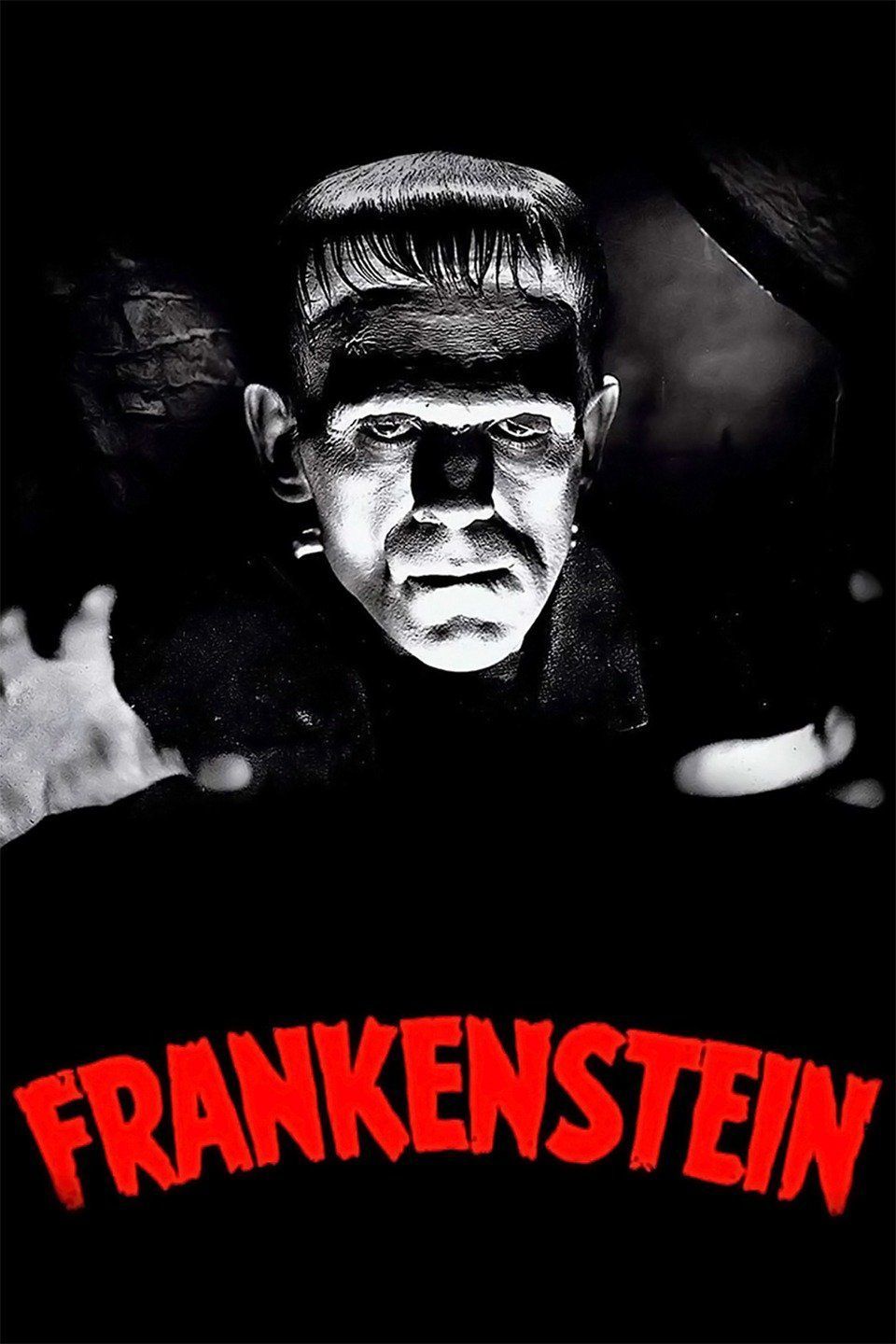
Frankenstein
James Whale's Frankenstein still has an energy to it that makes the film's age easy to forget. The laboratory in particular is where Whale's imagination really comes to life. Every towering machine and violent flash of electricity makes the creation feel like an experiment that has gone horribly beyond its creator's control, while Karl Freund's stark lighting gives the laboratory a sense of impending doom. It's interesting that Freund had also shot Dracula earlier that same year, because his visual touch gives both films such a distinctive atmosphere. The creation scene remains fantastic because Whale trusts the setting and the machinery to carry much of the horror instead of constantly pushing it toward the audience. There isn't a traditional score constantly telling us how to feel either. Thunder rolls outside, machinery groans, and then the room can suddenly fall almost completely silent.
Boris Karloff is the reason the Creature is so memorable. The makeup is iconic, but it is really his eyes and the way he moves that make the character so affecting. He gives the Creature a vulnerability that makes it difficult to see him as simply a monster. The film can feel creaky in places, especially when the dialogue becomes overly theatrical or the pacing slows into the conventions of early sound cinema, but those things are easy to forgive when the central performance is this good. Frankenstein remains one of Universal's defining horror films because Whale and Karloff understood that the Creature could be frightening and heartbreaking at the same time. That contradiction is what makes him so difficult to forget.
Bela Lugosi's interpretation of Count Dracula makes it easy to understand why his version of the character became so enduring. There is something immediately commanding about the way he carries himself, but it is his voice that makes the performance so hypnotic. His strange cadence and heavy accent give every line an almost unnatural elegance, while his piercing stare makes Dracula feel completely in control. Tod Browning and Karl Freund create the gothic world around him quite effectively as well, particularly in the misty Transylvania sequences and the enormous, shadow-filled interiors of Dracula's castle. The film's lack of a traditional score adds to the strange stillness, leaving the silence and occasional creaks of the castle to create the atmosphere.
I was more taken with Dracula than I expected to be. It has to be said that some of the magic fades once Dracula reaches London. The long conversations and relatively static staging slow things down, but Dwight Frye's wonderfully unhinged Renfield gives those scenes some life. Lugosi remains magnetic whenever he appears. What stays with me most is how completely realized his interpretation of Dracula feels. His mannerisms and that unmistakable stare became part of the character's identity for generations afterward, and watching them take shape here is fascinating. I would have to give Dracula the slight edge over Nosferatu, if only because I found myself connecting with it more, but both are essential viewing for anyone interested in classic horror or even just classic cinema in general. Nearly a century later, Dracula remains an atmospheric and hugely influential piece of horror cinema.