
True DetectiveKiss Tomorrow Goodbye
Directed by Jeremy SaulnierTV-MA
S3 • E2 Jan 13, 2019 56m8.07.7

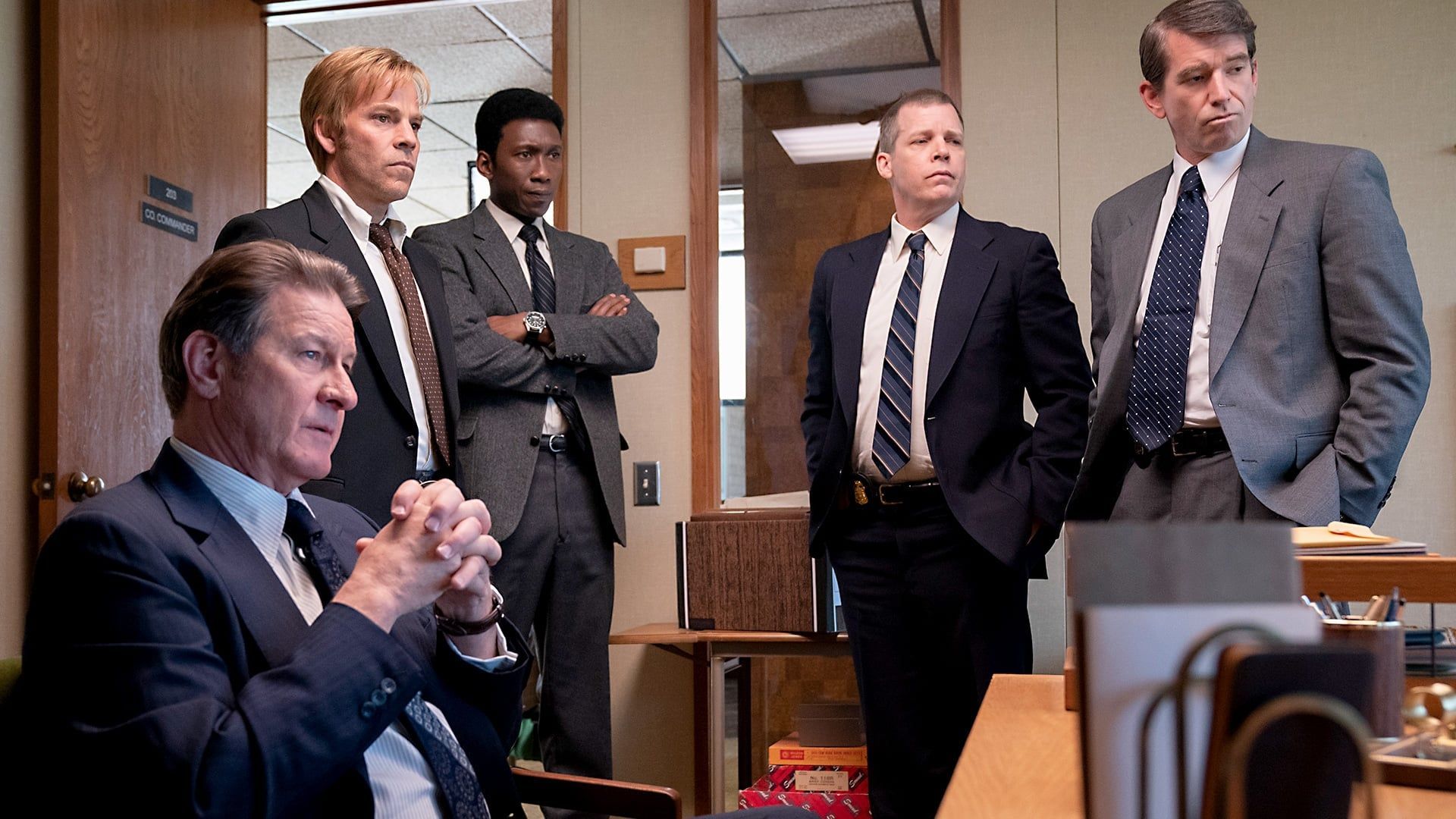
Hays looks back at the aftermath of the 1980 Purcell case in West Finger, Arkansas, including possible evidence left behind at the Devil's Den. As attention focuses on two conspicuous suspects--Brett Woodard, a solitary vet and trash collector, and Ted LaGrange, an ex-con with a penchant for children--the parents of the missing kids, Tom and Lucy Purcell, receive a cryptic note.
Where to Watch True Detective - S3 • E2















- C218May 15, 2026True Detective — Season 3, Episode 2, “Kiss Tomorrow Goodbye” — deepens the season’s atmosphere of grief, uncertainty, and emotional fragmentation while proving that Season 3 is less interested in shocking revelations than in the slow corrosion of memory and identity over time. It’s a quieter episode than many earlier True Detective chapters, but its emotional precision and growing unease make it deeply absorbing. The investigation into the missing Purcell children expands here, but the case itself increasingly feels inseparable from Wayne Hays’ inner life. Every clue, interview, and recollection becomes filtered through memory — and memory in this season is unstable, selective, and haunted. The title itself suggests the season’s worldview: the future disappears long before people realize it’s gone. Mahershala Ali continues giving one of the finest performances in the anthology. What makes Wayne Hays so compelling is how much Ali communicates through restraint. Wayne isn’t a man who explains himself easily; emotion appears in tiny fractures — pauses, looks, moments of confusion, sudden irritability. The 2015 timeline scenes are especially heartbreaking because Wayne’s fading memory turns the investigation into something existential. He’s no longer just solving a case; he’s trying to preserve his own identity before it dissolves. Stephen Dorff also becomes increasingly essential to the season’s emotional core. Roland West’s loyalty and rough-edged humor provide warmth without undercutting the melancholy. The friendship between Wayne and Roland already feels more emotionally balanced than Rust and Marty’s relationship in Season 1. There’s genuine affection here beneath the tension and professional frustration. The episode also gives more attention to Carmen Ejogo as Amelia Reardon, whose growing connection with Wayne adds emotional complexity to the story. Amelia isn’t just a supporting figure orbiting the detectives; she represents another way of processing trauma — through storytelling, empathy, and interpretation rather than repression. Visually, the season remains stunning in a restrained way. Director Daniel Sackheim leans into quiet landscapes, fading light, empty roads, and small domestic spaces. Unlike Season 1’s overwhelming gothic decay or Season 2’s neon industrial despair, Season 3’s horror is intimate and mournful. Thematically, the episode becomes increasingly focused on time itself. Conversations across decades echo each other. Relationships subtly shift. Small emotional wounds calcify into lifelong distances. The nonlinear structure isn’t a gimmick — it’s the emotional architecture of the season. One of the most effective aspects of Episode 2 is its patience. The season refuses sensationalism. It allows suspicion, grief, and uncertainty to slowly accumulate rather than relying on constant escalation. That deliberate pacing may frustrate viewers expecting bigger narrative shocks, but it gives the emotional material far greater weight. The episode also continues exploring race and social class with more nuance than earlier seasons. Wayne’s perspective as a Black detective in Arkansas quietly shapes many interactions without ever reducing the character to symbolism. If there’s any weakness, it’s that the mystery itself still feels intentionally opaque at this stage, and some viewers may sense echoes of Season 1’s structure too strongly. But emotionally and atmospherically, the season already feels distinct. Rating: ★★★★★ (5/5) A deeply melancholic and emotionally intelligent episode that transforms the investigation into a haunting meditation on memory, aging, and the fragile stories people tell themselves to survive time.


