Independent LensSeason 8
TV-PG
Independent Lens is an award-winning PBS documentary series that streams on the PBS App and airs on public television. Independent Lens documentaries focus on stories of underrepresented communities and universal challenges found across America. The series has been awarded numerous Emmys and Peabodys, and has been nominated for 10 Academy Awards.
Where to Watch Independent Lens • Season 8
27 Episodes
- Still Life With Animated DogsE1
Still Life With Animated DogsThe World According to Sesame Street is a 2005 feature-length documentary created by Participant Productions, looking at the cultural impact of the children's television series Sesame Street, and the complexities of creating international adaptations.[1] It focuses on the adaptations of Sesame Street in Bangladesh (Sisimpur), Kosovo (Rruga Sesam, in Albanian; and Ulica Sezam, in Serbian), and South Africa (Takalani Sesame). - Revolucion: Five VisionsE8
Revolucion: Five VisionsThis documentary tells the story of five Cuban photographers whose lives and work span more than four decades and whose perspectives on photography are as varied as their opinions about the Cuban Revolution. From photographers whose lens portrayed the heroic masses to more contemporary photographers who seek to portray individual truths, their stories uncover the power of art to liberate. - ShadyaE11
ShadyaShadya Zoabi, a charismatic 17-year-old karate world champion, strives to succeed on her own terms within her traditional Muslim village in northern Israel. Despite her father's support, she faces the challenge of balancing her dreams with her religious commitments and others' expectations. This film takes an intimate look at the evolution of a young Arab-Israeli woman with feminist ideas in a male-dominated culture. - Billy Strayhorn: Lush LifeE14
Billy Strayhorn: Lush LifeAs Duke Ellington's co-composer, arranger, and right-hand man, Billy Strayhorn wrote some of the greatest American music of the 20th century. But as a gay man in the ’40s and ’50s, Strayhorn had to lead a discreet existence, while Ellington played to thunderous applause on center stage. - Hip-Hop: Beyond Beats and RhymesE16
Hip-Hop: Beyond Beats and RhymesHip-Hop: Beyond Beats and Rhymes is a 2006 documentary film written, produced, and directed by Byron Hurt. The documentary explores the issues of masculinity, violence, homophobia and sexism in hip hop music and culture, through interviews with artists, academics and fans. Hurt's activism in gender issues and his love of hip-hop caused him to feel what he described as a sense of hypocrisy, and began working on the film. - StolenE18
StolenIn 1990, two thieves dressed as police officers gained entrance to the Isabella Stewart Gardner Museum in Boston, successfully executing the largest art heist in modern history. Among the 13 priceless works lifted was Vermeer's "The Concert," thought to be the world's most valuable stolen painting. This riveting film thoroughly explores the theft and the fascinating, disparate characters involved. - Race to Execution
 E19
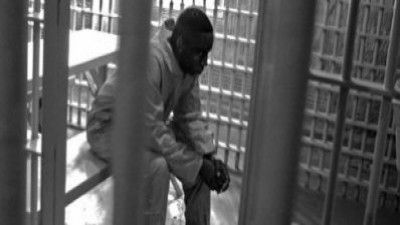
E19Race to ExecutionRace discrimination infects America’s capital punishment system. According to a landmark study regarding race and the death penalty, a black defendant who kills a white victim is up to 30 times more likely to be sentenced to death than a white defendant who kills a black victim. RACE TO EXECUTION, a film by Rachel Lyon, traces the fates of two death row inmates, Robert Tarver in Russell County, Alabama and Madison Hobley in Chicago, Illinois. Their compelling personal stories are enlarged and enriched by attorneys who fought for these men’s lives, and by prosecutors, criminal justice scholars and experts in the fields of law and the media. RACE TO EXECUTION reveals how, beyond DNA and the issue of innocence, the shameful open secret of America's capital punishment system is a matter of race. Once a victim’s body is discovered, his or her race—and the race of the accused—deeply influence the legal process: how a crime scene is investigated and the deployment of police resources, the interrogation and arrest of major suspects, how the media portrays the crime and ultimately, the jury selection and sentencing. Hugh Kite, a white man, general store owner and mainstay of his rural Alabama community, was murdered during the course of a robbery on September 15, 1984. Less than four months after Kite was murdered, Robert Tarver, a black man, was sentenced to die. The prosecutor at Tarver’s trial rejected all but one of the African Americans qualified for jury service. Eleven white Alabamans and one African American composed Tarver’s “jury of his peers.” And as prosecutors have long known, a trial can turn on who is sitting in the jury box. Recent research indicates the extent to which the make-up of the jury affects sentencing: when five or more white males sit on a capital trial jury, there is a 70 percent chance of a death penalty outcome. If there are four or fewer white males, the chance of a death sentence is only 30 percent. Whether in the rural South or the inner city North, virtually all-white juries are commonplace—and potentially lethal to black defendants. In 1987, in Chicago, Madison Hobley, a young black medical technician married to his high school sweetheart, lost his wife and son in an apartment house blaze. Hobley was accused of setting the fire. Police officers claimed that Hobley had signed a written confession but that spilled coffee had destroyed the document. A panel consisting of 11 white jurors and one African American juror convicted Madison Hobley and sentenced him to die. With key 2005 Supreme Court decisions overturning death sentences in Texas and California due to racial discrimination in jury selection, RACE TO EXECUTION offers a timely analysis. The film examines the subtle yet persistent ways in which American culture consistently overlooks matters of race in criminal justice. Neither advocating nor repudiating capital punishment, the film catalyzes dialogues about the inherent imbalances that lead to inaccuracy and unfairness in the application of the “ultimate punishment.” The film concludes with the exoneration of one man and the execution of another. In both cases, race is a factor impossible to avoid. Yet there are signs that the death penalty is being used less often in the United States and scrutinized differently than it was even five years ago. The Supreme Court heard five death penalty cases in 2005 alone. Is this progress, or are recent reforms still inadequate? The varied voices heard in RACE TO EXECUTION contribute to a thoughtful examination of the factors that influence who lives and who dies at the hands of the state. - China BlueE20
China BlueThey live crowded together in cement factory dormitories where water has to be carried upstairs in buckets. Their meals and rent are deducted from their wages, which amount to less than a dollar a day. Most of the jeans they make in the factory are purchased by retailers in the U.S. and other countries. China Blue takes viewers inside a blue jeans factory in southern China, where teenage workers struggle to survive harsh working conditions. Providing perspectives from both the top and bottom levels of the factory’s hierarchy, the film looks at complex issues of globalization from the human level. China Blue, which was made without permission from the Chinese authorities, offers an alarming report on the economic pressures applied by Western companies and the resulting human consequences, as the real profits are made—and kept—in first-world countries. The unexpected ending makes the connection between the exploited workers and U.S. consumers even clearer. - The Cats of MirikitaniE23
The Cats of MirikitaniIn 2001, Japanese American painter Jimmy Mirikitani, over 80 years old, is living in the streets of lower Manhattan. Filmmaker Hattendorf takes an interest, and begins to engage with him to create a documentary of his life. After the World Trade Center destruction on September 11, 2001, the debris- and dust-choked streets are deserted. When Hattendorf looks for Mirikitani, he is still in his usual spot near Washington Square Park. She invites him to stay a while at her apartment nearby to recover from the devastation and unhealthy air in the streets. Gradually we learn who he is, and of his past...with amazing and unexpected results. (The cats of the title are featured in Mirikitani's artwork.) - The Wild Parrots of Telegraph HillE26
The Wild Parrots of Telegraph HillThis film tells the true story of a bohemian St. Francis and his remarkable relationship with a flock of wild red-and-green parrots. Former street musician and San Francisco dharma bum Mark Bittner falls in with the flock as he searches for meaning in his life, unaware that the parrots will bring him everything he seeks. - La Lupe Queen of Latin SoulE27
La Lupe Queen of Latin SoulLegendary Afro-Cuban pop singer Lupe Victoria Yoli, “The Queen of Latin Soul Music,” aka La Lupe or La Yiyiyi, rose to fame in the 1960s and died in 1992 virtually unknown. Beautiful, sexual and the epitome of Afro-Cuban 60s sophistication, La Lupe remains the quintessential bad girl and perpetual outsider, renowned for emotional performances and as the embodiment of female narcissism who stopped at nothing in the name of love and passion. Shot in Cuba, Puerto Rico and the U.S., this film tells her story through interviews and rare archival footage from the groundbreaking musical era.