
Claude Autant-Lara
Director, Writer, Actor, Producer
August 5, 1901 — February 5, 2000 (98 years)
Claude Autant-Lara (August 5, 1901–February 5, 2000) was a French film director and later Member of the European Parliament (MEP).
Born at Luzarches in Val-d'Oise, Autant-Lara was educated in France and at London's Mill Hill School during his mother's exile as a pacifist. Early in his career, he worked as an art director and costume designer, his best-known work in this vein was possibly for Nana (1926), a silent film directed by Jean Renoir. Autant-Lara also acted in the film.
As a director, he frequently created provocative movies, saying "if a film does not have venom, it is worthless". In the 1960s, he turned his back on the New Wave movement, and from then on he had no popular successes.
On 18 June 1989, he came to public notice again, controversially, when he was elected to the European Parliament as a member of the National Front and the oldest member of the assembly. In his maiden speech, in July 1989, he caused a scandal by expressing his "concerns about the American cultural threat", provoking a walkout by the majority of the deputies.
In an interview granted to the monthly magazine Globe in September 1989, he accused ex-President of the European Parliament and Holocaust survivor Simone Veil of playing "ethnic politics" to try and "infiltrate and dominate", saying that "If they try to speak to me about genocide, I say they missed mother Veil!" He also described Nazi gas chambers as a "string of lies". The resulting scandal led to his resignation as European deputy. Moreover, the members of the Académie des Beaux-Arts, of which he was a vice-president for life, voted to prohibit him from taking his seat thenceforth.
His memoir, The Rage in the Heart, appeared in 1984. He died at Antibes in Alpes-Maritimes in 2000.
From Wikipedia, the free encyclopedia
Born at Luzarches in Val-d'Oise, Autant-Lara was educated in France and at London's Mill Hill School during his mother's exile as a pacifist. Early in his career, he worked as an art director and costume designer, his best-known work in this vein was possibly for Nana (1926), a silent film directed by Jean Renoir. Autant-Lara also acted in the film.
As a director, he frequently created provocative movies, saying "if a film does not have venom, it is worthless". In the 1960s, he turned his back on the New Wave movement, and from then on he had no popular successes.
On 18 June 1989, he came to public notice again, controversially, when he was elected to the European Parliament as a member of the National Front and the oldest member of the assembly. In his maiden speech, in July 1989, he caused a scandal by expressing his "concerns about the American cultural threat", provoking a walkout by the majority of the deputies.
In an interview granted to the monthly magazine Globe in September 1989, he accused ex-President of the European Parliament and Holocaust survivor Simone Veil of playing "ethnic politics" to try and "infiltrate and dominate", saying that "If they try to speak to me about genocide, I say they missed mother Veil!" He also described Nazi gas chambers as a "string of lies". The resulting scandal led to his resignation as European deputy. Moreover, the members of the Académie des Beaux-Arts, of which he was a vice-president for life, voted to prohibit him from taking his seat thenceforth.
His memoir, The Rage in the Heart, appeared in 1984. He died at Antibes in Alpes-Maritimes in 2000.
From Wikipedia, the free encyclopedia
Known For




Filmography
| 1969 | |
| 1968 | |
| 1967 | |
| 1966 | |
| 1965 | |
| 1965 | |
| 1963 | |
| 1963 | |
| 1961 | |
| 1961 | |
| 1961 | |
| 1960 | |
| 1960 | |
| 1959 | |
| 1958 | |
| 1958 | |
| 1956 | |
| 1955 | |
| 1954 | |
| 1954 | |
| 1953 | |
| 1952 | |
| 1951 | |
| 1949 | |
| 1947 | |
| 1946 | |
| 1943 | |
| 1942 | |
| 1942 | |
| 1940 | |
| 1939 | |
| 1937 | |
| 1932 | |
| 1931 |
| 1969 | |
| 1963 | |
| 1954 | |
| 1953 | Le bon Dieu sans confession · as Screenplay |
| 1951 | The Red Inn · as Screenplay |
| 1947 |
| 2012 | |
| 1965 | A Woman in White · as Un Spectateur Qui Sort Du Cinéma |
| 1927 | |
| 1926 | Nana · as Fauchery |
| 1920 | Man of the Sea · as Un Des Copains (uncredited) |
| 2022 | The French New Wave: A Cinema Revolution · as Self |
| 2022 | Les 100 vies de Francis Blanche · as Self |
| 1995 | Cinema Europe: The Other Hollywood · as Self |
| 1987 | Buster Keaton: A Hard Act to Follow · as Self |
| 1980 | My Name Is Anna Magnani · as Self |
| 1975 | Sunday meetings · as Self |
| 1964 | Filmmakers of our time · as Self |
| 1956 | Cinépanorama · as Self |
| 2007 | L'auberge rouge · as Adaptation And Dialogue |
| 1961 | Thou Shalt Not Kill · as Adaptation And Dialogue |
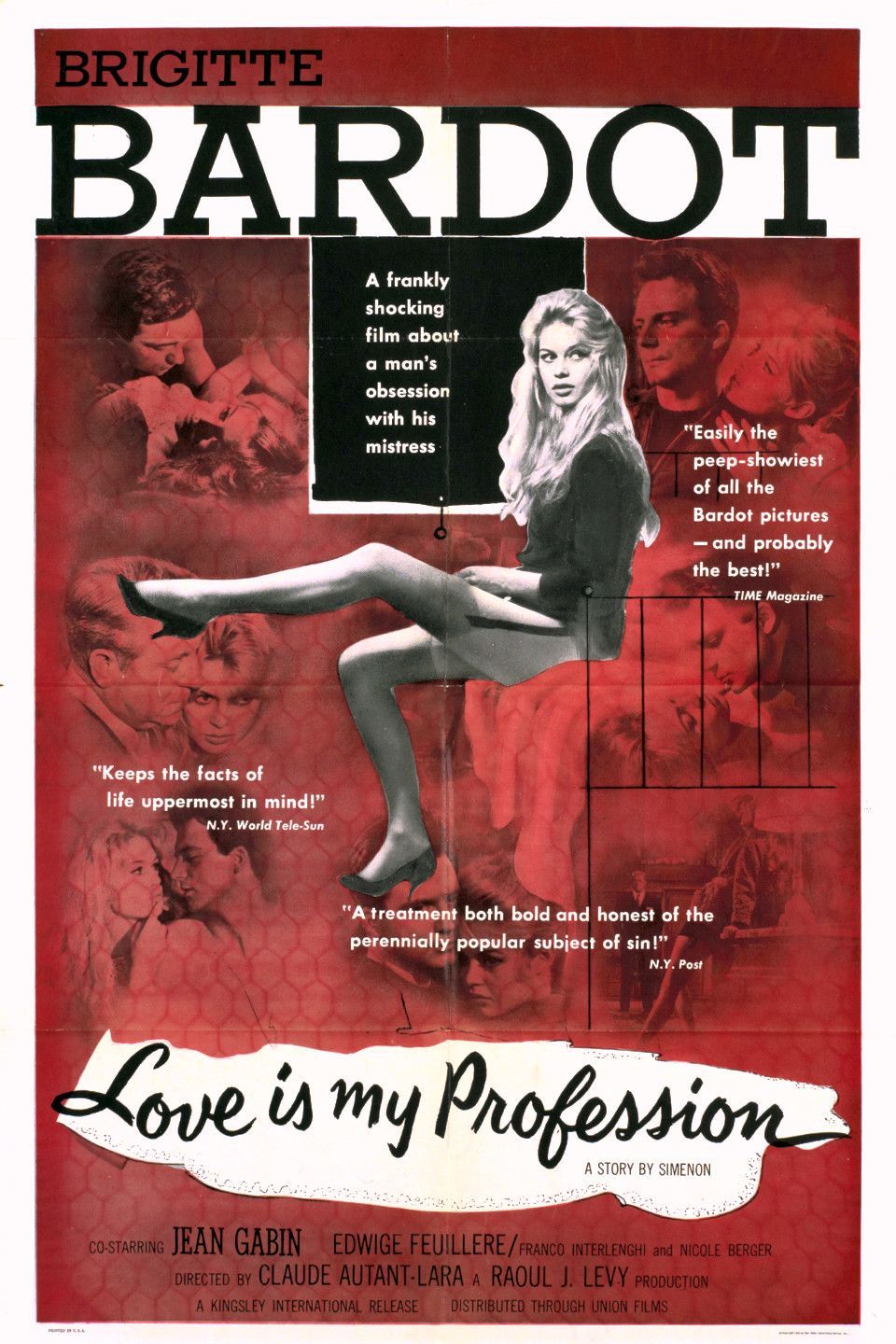
| 1958 | Love Is My Profession · as Adaptation And Dialogue |
| 1954 | The Immature Grain · as Dialogue |
| 1952 | The Seven Deadly Sins · as Scenario & Dialogue |
| 1947 | Devil in the Flesh · as Costume Design |
| 1943 | Douce · as Costume Design |
| 1942 | Le mariage de Chiffon · as Costume Design |
| 1938 | The Stream · as Assistant Director |
| 1937 | L'affaire du courrier de Lyon · as Scenario |
| 1927 | The Devil in the Heart · as Production Designer |
| 1927 | The Devil in the Heart · as Assistant Director |
| 1926 | Nana · as Production Design |
| 1926 | Nana · as Costume Designer |
| 1926 | The Imaginary Voyage · as Assistant Director |
| 1925 | Paris Asleep · as Art Director |
| 1925 | Paris Asleep · as Assistant Director |
| 1924 | L'inhumaine · as Art Direction |
| 1924 | L'inhumaine · as Costume Design |
| 1920 | Man of the Sea · as Production Design |
| 1920 | Man of the Sea · as Costume Designer |