The future in The Days Ahead looks less like a fully realized world than a few rooms waiting for someone to finish decorating them. The digital look is flat, the sets are barely dressed, and the movie keeps reaching for a scale its production cannot afford. The first office sequence makes the problem even worse, with performances so amateurish that I honestly have seen middle school theater productions with more convincing actors. They clearly take the material seriously, but that only gets you so far when the delivery constantly pulls attention away from the story. I could see the ambition behind the movie, which made the limitations more frustrating.
That mismatch eventually hurts the storytelling too. Bigger ideas are reduced to people talking in small spaces, and the lack of visual variety makes the movie feel increasingly static. I don't need every independent science-fiction film to look expensive, but this one is asking me to believe in a world that the production never fully creates. The Days Ahead deserves some credit for attempting something this ambitious on limited resources, but the concept never becomes the film it seems to want to be.
The Days Ahead
When the Wind Blows
It's unsettling seeing this older couple going about their everyday lives while the threat of nuclear war looms larger and larger. Jimmy Murakami’s animation has this intentionally simple, almost homemade vibe that makes their little slice of England seem innocent, which only heightens the overall tension. Sure, the hand-drawn characters and simple backgrounds can come off a bit rough around the edges, but I actually think that adds to the story, considering these two have no real grasp of the danger they’re up against. The straightforward style keeps the spotlight on Jim and Hilda instead of turning the film into just another spectacle about nuclear chaos.
John Mills and Peggy Ashcroft are fantastic as Jim and Hilda; they bring so much warmth to the characters that you really feel for them when they cling to the advice they get. It struck me how little they comprehend the enormity of what’s happening, even while they're trying so hard to get ready. The visuals can be pretty stark, and some of the animation feels more practical than artistic, but that doesn’t stop the story from really getting under your skin. When the Wind Blows is most effective when it stays with these two ordinary people because the film understands that the most frightening part of nuclear war isn't the explosion but what happens to the people left behind.
When the Wind Blows
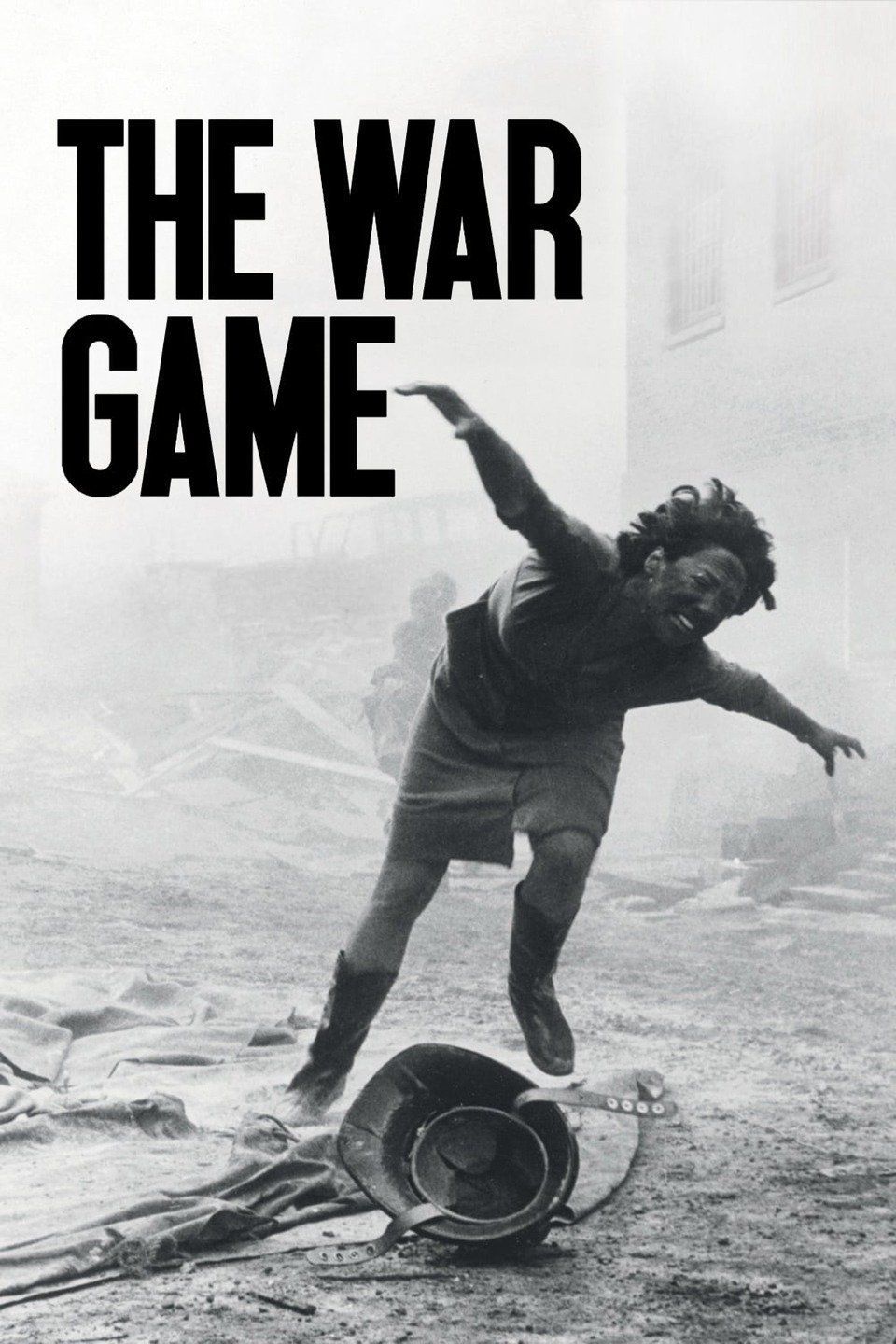
The War Game
Peter Watkins makes The War Game feel disturbingly close to something that could actually be happening. By presenting nuclear destruction through the language of television news, he removes the distance that usually separates an audience from fictional catastrophe. The handheld camerawork, matter-of-fact narration, and ordinary people caught in the aftermath make the film feel less like a drama than footage recovered after the world has already ended. Watkins gives the destruction no cinematic grandeur, focusing instead on what nuclear war would mean for ordinary people. That approach is what makes the film's most horrifying moments feel so immediate.
The film's commitment to that approach does become exhausting as its political argument and images of suffering are repeated more than necessary. However, the local performers give the aftermath a rawness that feels difficult to manufacture, and Watkins' refusal to make nuclear war entertaining gives the film much of its lasting power. The result is an unusually effective warning about the consequences of nuclear conflict, even when its message becomes somewhat heavy-handed. At just 48 minutes, The War Game proves it doesn’t need a conventional feature-length runtime to leave behind an unsettling picture of what nuclear war would actually look like for the people forced to survive it.
The War Game
Our Flags Lead Us Forward
Caught between competing political movements, Hitlerjunge Quex gives its larger conflict a surprisingly personal dimension through Heini Völker's search for purpose and belonging. Jürgen Ohlsen makes him easy to root for, though Heinrich George deserves much of the credit for making that connection work. Playing Heini's troubled father, he gives us a clearer sense of the home Heini is trying to escape. Hans Steinhoff builds around that character work with remarkably polished filmmaking, and Konstantin Tschet's cinematography contrasts the cramped streets of the Communist camps against the disciplined formations of the Hitler Youth. The marching songs and choral music complete that sense of order and collective identity.
The film can become a little too direct when the dialogue pauses the drama to spell out its larger political ideas. At those moments, the characters feel more like representatives of opposing movements than ones having a natural conversation. This never outweighed how invested I became in Heini's story, though. Hitlerjunge Quex remains remarkably assured for its period. Its strong performances, visual contrasts, and passionate sense of national belonging make it a fascinating piece of 1933 cinema.
Our Flags Lead Us Forward
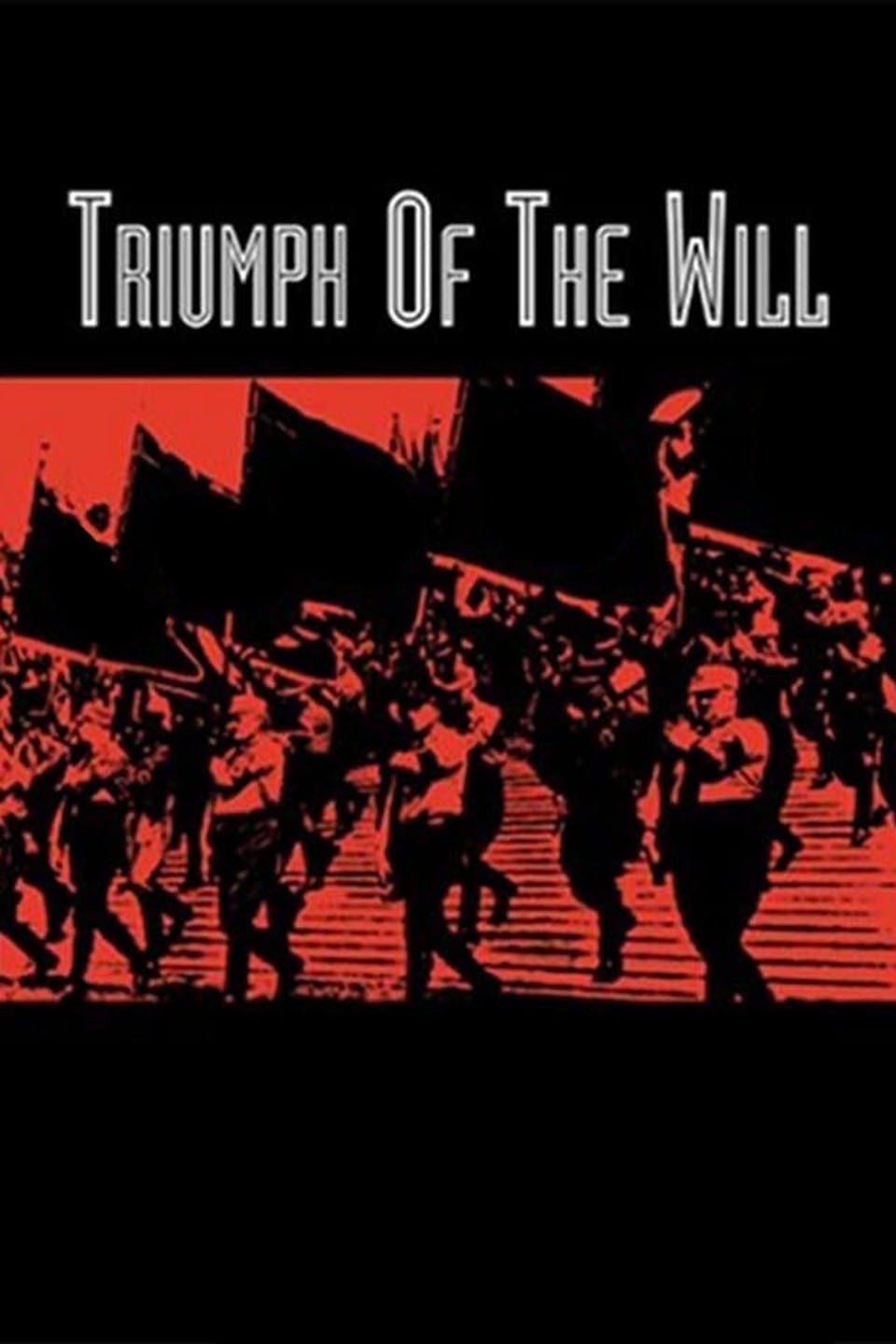
Triumph of the Will
Few documentaries have ever attempted to capture mass political spectacle on the scale of Triumph of the Will. Leni Riefenstahl presents the enormous rallies in Nuremberg almost like architectural compositions, with thousands of people arranged into precise formations that stretch across the frame. Her camera constantly finds new ways to emphasize that scale, from sweeping aerial photography to low-angle tracking shots and carefully positioned cameras within the crowds. The staging is remarkably precise, and the absence of traditional narration leaves the speeches, marching bands, roaring crowds, and movement to establish the film's atmosphere for themselves. The result is an unusually cohesive piece of large-scale visual filmmaking.
The film's patient approach can certainly be demanding. Hitler and the other party leaders deliver extended speeches, while long sequences of marching and organized formations return throughout the film. There is very little conventional narrative structure to carry the viewer between these sections, so the repetition can make the runtime feel considerably longer than it might otherwise. I still found the approach worthwhile because it provides such an extensive record of the rallies and the political culture surrounding them in 1934. Triumph of the Will is fascinating both as a historical document and as a study in cinematic construction, particularly in the way composition, camera movement, sound, and mass choreography can turn a real event into something visually monumental. Nearly a century later, its technical influence and historical importance remain difficult to ignore.
Triumph of the Will
Frankenstein
I watched James Whale’s Frankenstein (1931) thinking I must have been watching the first cinematic adaptation of the gothic horror novel. I was wrong. More than a century later, Frankenstein still feels like a strange little experiment in figuring out how to put horror on a screen. J. Searle Dawley's 1910 film is obviously limited by the technology and filmmaking conventions of its time, and the surviving print has been worn down by the years, but there are moments of real invention here. The creation scene is the obvious highlight, with the Creature appearing from a burning cauldron through a simple effect that remains surprisingly effective. Charles Ogle also makes the Creature memorable without a single spoken line, relying entirely on his physical performance to give the character an unsettling presence. The short's quick pace and stage-like presentation can make it feel primitive, but that is also part of what makes it fascinating to watch. At only 14 minutes, Frankenstein doesn't have much room to become anything more, but watching this early attempt to bring Mary Shelley's story to the screen is a fitting reminder that even the most familiar monsters had to be created somewhere.
Frankenstein
Hope
It takes a while for Hope to settle into its strange rhythm. The early stretch demands patience, throwing the viewer into an unfamiliar world while withholding enough information to make everything feel deliberately disorienting. Stark cinematography and oppressive industrial environments create a chilly sense of isolation, while abrasive sound design and low, persistent hums keep the tension simmering through the heavier stretches of exposition. There is real confidence in the presentation, even when the film makes its audience work for every scrap of understanding. As a foreign-language sci-fi film with a dense setup, it is not an effortless watch, but once the action gets moving, it becomes much easier to settle into.
The cast helps carry that momentum, with Hwang Jung-min bringing nervy desperation to Bum-seok and Hoyeon making a strong impression as the determined officer Sung-ae. Zo In-sung adds some welcome volatility as Bum-seok’s hunter cousin, although the world they race through during the monster’s pursuit feels bizarrely empty, as if the town and surrounding roads were designed as an arena for the characters and creature to face off. The action is often thrilling enough to overcome that artificiality, especially during the frantic driving and chaotic monster encounters. Hope offers genuinely original science fiction that feels different from the usual studio formula, even if its ambitious ideas are surrounded by uneven pacing and questionable visual effects. Once it gets going, its strange, thought-provoking world makes the demanding journey worthwhile.
"Lights Out" doesn’t just follow last week’s very solid chapter—it surpasses it. The investigation’s measured pace gives way to a sustained emergency, with Geeta Vasant Patel using limited light and sudden stretches of silence to make the danger feel immediate. Kyle Chandler and Aaron Pierre sell the shift through tense physical performances and stripped-back dialogue, making Hal and John’s increasingly unstable dynamic feel dangerous even when neither of them speaks. The episode also trusts its central mystery enough to avoid both easy answers or another cheap cliffhanger, turning it into a psychological trap that keeps tightening. After four episodes of groundwork, Lanterns finally feels willing to let its characters lose control.
Twenty-five years after September 11, 2001, United 93 is still an incredibly difficult film to watch. Paul Greengrass does not try to make the morning feel cinematic. He makes it feel confusing. Barry Ackroyd's handheld camera is constantly moving through the FAA and NORAD control rooms as phones ring, voices overlap, and nobody seems to have the full picture. The fluorescent lighting and cramped spaces only add to that sense of confusion. On the plane, there is barely any music to soften what we are hearing. It is mostly breathing, radio static, and the steady noise of the engines. That choice gets under my skin more than a traditional score ever could. I know how this ends, and somehow that makes every minute more uncomfortable.
A lot of the cast were unknowns, with real aviation and military personnel mixed in. This decision went a long way toward keeping the film from feeling like a Hollywood recreation of a tragedy we already know too well. Nobody seems to be reaching for a big performance or a heroic speech. The people react just as people would, which makes the whole thing feel brutally close. Greengrass deserves credit for never forcing a sentimental release. By the final stretch, the exhaustion of watching the film becomes almost suffocating, and I was ready for it to end. I would not call that a flaw so much as the cost of what the film is trying to do. These were ordinary people who refused to simply stand down, and for that, they forever deserve our gratitude. On the 25th anniversary of 9/11, United 93 remains sobering because it does not try to make that day easier to remember and instead tells it how it happened.
After last week's detour, Lanterns comes roaring back with its best episode yet. "The Weenie" moves with a much sharper rhythm, jumping between a tense infiltration mission and increasingly strange but meaningful revelations. The ring work is also much more inventive in this episode, especially when the constructs become part of the action instead of simply showing off what the rings can do. Most importantly, Hal and John's friction finally starts paying off. They needle each other and second-guess each other's decisions, but they still manage to work together when a situation turns dangerous. That gives their partnership a much stronger pulse than it had before and a chance of actually working for the greater good, or so we thought. After three episodes of uneven momentum, this is Lanterns operating beyond any level I could hope it would reach.
“OutKast” is easily the weakest episode of Lanterns so far, slowing the series down just as its mystery was starting to gain momentum. The focus on John Stewart's past could have been a useful way to deepen him, but the episode repeatedly mistakes self-sympathy for complexity, making his frustration feel more entitled than compelling. Aaron Pierre commits to the material, yet the dim, overcast look and industrial settings only make the hour feel more airless when the story isn't moving forward. There are still glimpses of the show I was enjoying in the first two episodes, particularly in the larger mystery and the sense that its Green Lantern mythology can get genuinely strange, but John is given far too much room to sulk and not enough reason for me to care about his grievances. It's a frustrating detour after two promising chapters. With that said, it's not one that on its own makes me any less interested in seeing where Lanterns goes next.
“Trust Fall” is an even sharper episode than the pilot, with the introduction of the Manhunter giving the mystery a much more compelling direction. Kyle Chandler and Aaron Pierre prove their characters do have actual chemistry despite how different they are and actually get dialogue with some bite. The strange bird construct and the aliens' reaction to it add some needed originality, while the sound design makes familiar surroundings feel slightly off without overplaying the unease. The final encounter with a certain pink man leaves just enough uncertainty around John to make the partnership considerably more interesting. We're seeing Lanterns get a stranger mystery here and, more importantly, something worth investigating.
Putting Green Lantern mythology in the middle of a grimy rural crime drama sounds like a strange gamble, but Lanterns makes the combination work naturally. Kyle Chandler and Aaron Pierre make a strong first impression as two very different men who immediately seem to have some history between them, even when they barely know each other. Chandler brings a worn-down quality that makes his character feel like he's been carrying the weight of the job for years, while Pierre gives his younger counterpart a guardedness that keeps their early exchanges from becoming too easy. Their friction gives the mystery a human hook before the larger DC elements start taking over. The show also does a good job making its rural setting feel like a real place instead of another glossy superhero backdrop, which makes the more unusual elements stand out when they arrive. The script does have a lot of universe-building to unload, and some of that exposition slows a mystery that needs more room to breathe. It's a slow start, but the two leads give it enough personality to keep me invested.
Lanterns - S1 • E1 - Pilot
Onslaught
If you want a movie that earns its place on a midnight screening, Onslaught makes a pretty convincing case for buying the ticket. Adam Wingard returns to the scrappy genre filmmaking of his early career. The sun-scorched New Mexico desert and cramped trailer-park sets give the film a suitably rough backdrop for its escalating violence. A driving synth score also backs up the momentum without drowning out the carnage. Most importantly though, Wingard has enough confidence in the material to let the violence speak for itself. It is the kind of thriller that rewards an audience willing to settle in, suspend their need for restraint, and enjoy watching things get progressively more out of hand. There is enough craft and performance beneath the bloodshed to make the experience feel deliberately constructed rather than merely thrown together.
Dan Stevens gives the long-lost mad scientist archetype a welcome revival as Dr. Hans Kammler. He plays the albino German scientist with such bizarre and perverted conviction that the character becomes one of the film's biggest pleasures, particularly when paired with his equally commanding femme fatale, Hanna (Rebecca Hall). Adria Arjona gives Celeste the physical presence needed to carry the action, even if the veteran heroine occasionally feels like a cliché herself. This extends even more so to the genetically engineered super-soldiers, who are essentially Terminator meets Jason Voorhees. A film drawing this heavily from slasher and bio-engineering sci-fi traditions was always going to risk familiarity becoming its biggest limitation. Wingard's earlier independent work felt a bit more unpredictable, but Onslaught gets plenty of mileage from these ingredients and has enough WTF-elements of its own to become a bloody, energetic crowd-pleaser that knows exactly what kind of night it wants to provide.
Onslaught
Mother Mary
David Lowery builds Mother Mary like a pop concert remembered through a fever dream. The film's hyper-saturated colors and Sam Anselm's cluttered countryside workshop give its glossy celebrity world an oddly physical texture, filling the frame with fabrics, tools, unfinished designs, and other little reminders that these larger-than-life people still have to exist somewhere tangible. The music follows the same contradiction. Sleek pop arrangements are constantly rubbing against stranger ambient sounds, creating an uneasy atmosphere beneath all the stadium-sized spectacle. It is an ambitious visual and sonic package, and for stretches Lowery seems more interested in making Mother Mary feel like something than explaining exactly what it is.
Anne Hathaway throws herself into Mary with a ferocity that keeps the film watchable even when the writing starts wandering, while Michaela Coel brings a sharper restraint to Sam that gives their scenes some much-needed grounding. Their chemistry is easily the most convincing part of the movie. I just wish the screenplay trusted it more. Once the story starts leaning into literal ghosts and increasingly bizarre supernatural exorcisms, the earlier ambiguity gives way to heavy-handed ideas that feel less provocative than simply overcooked. I can see what Lowery was reaching for, but the film keeps reaching past its own grasp. There is plenty here to admire, but the ambition eventually becomes its biggest obstacle.