


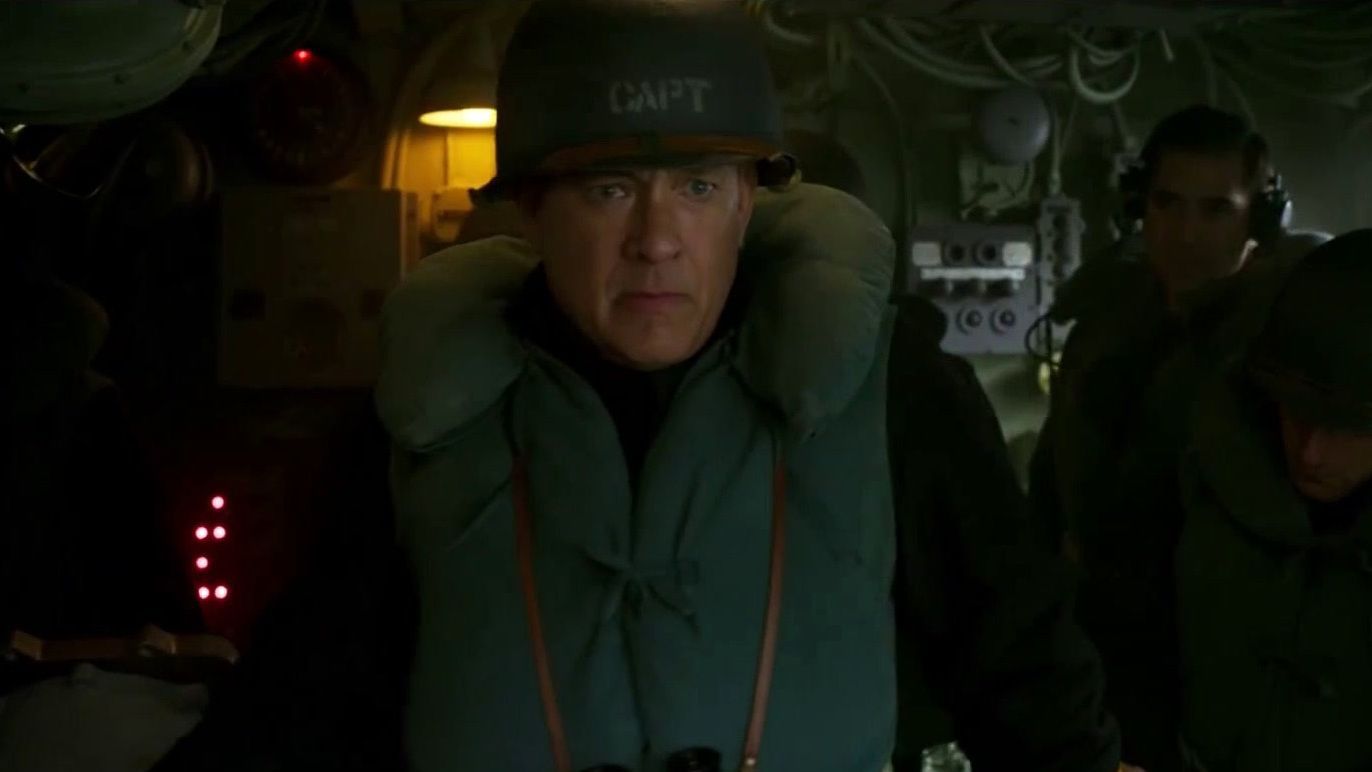
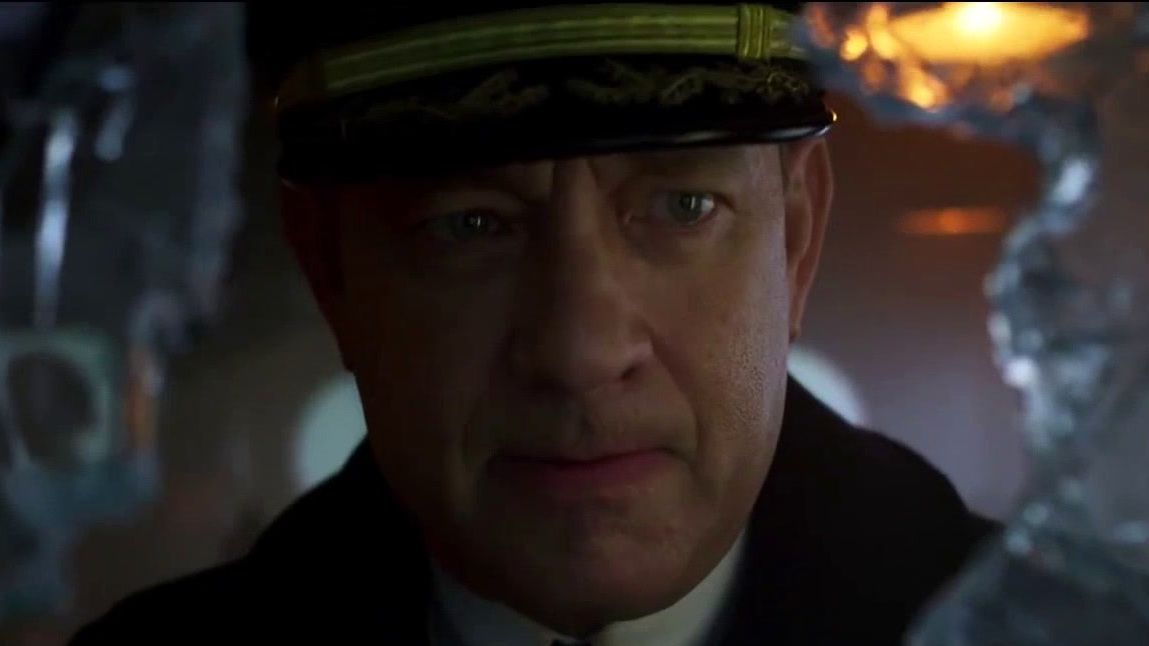
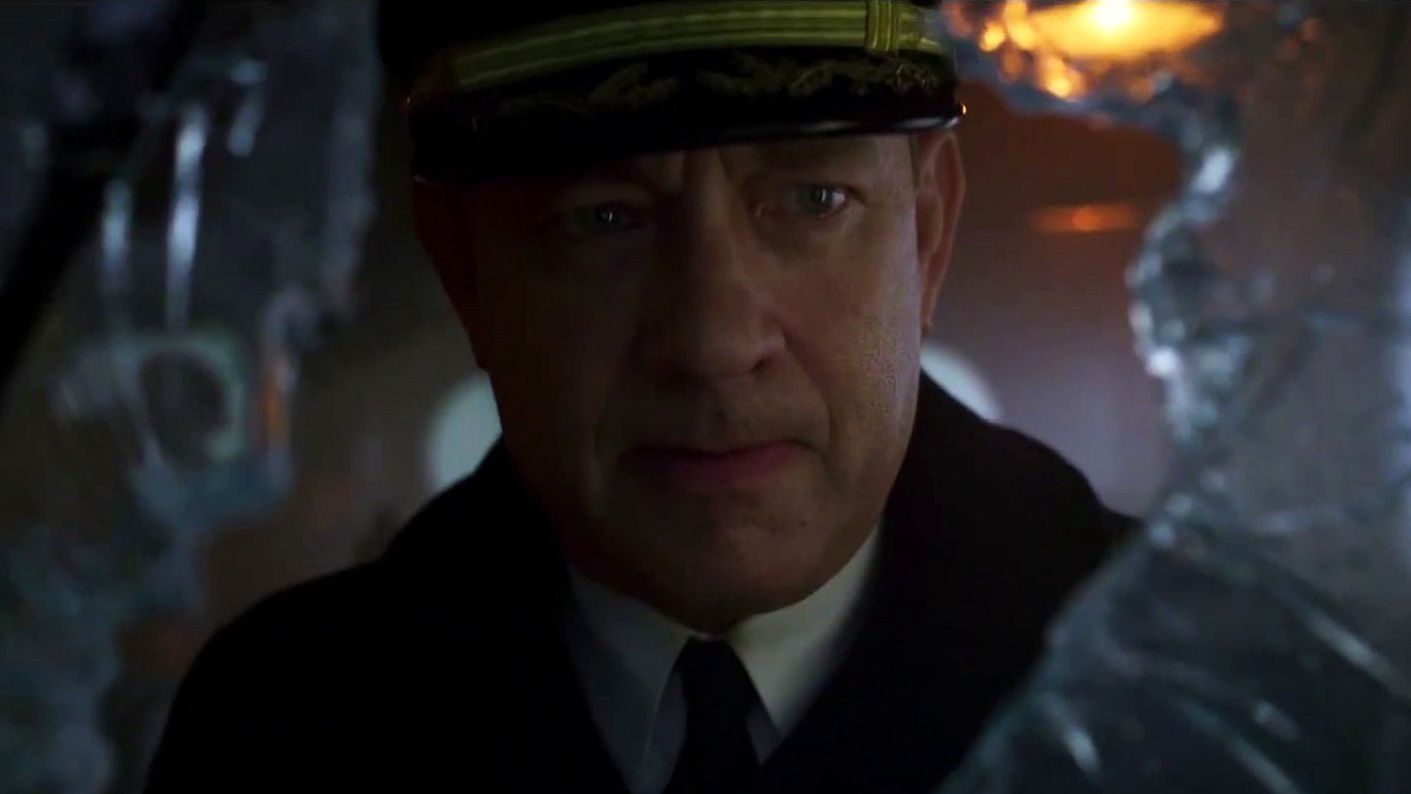
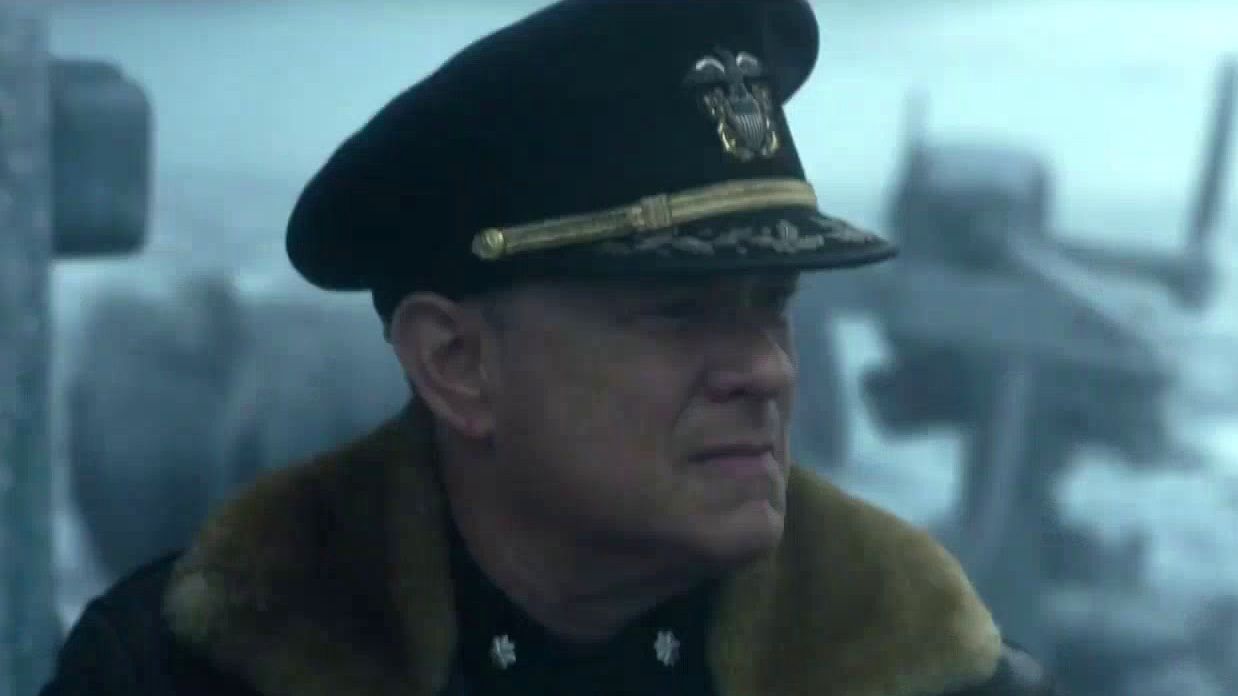
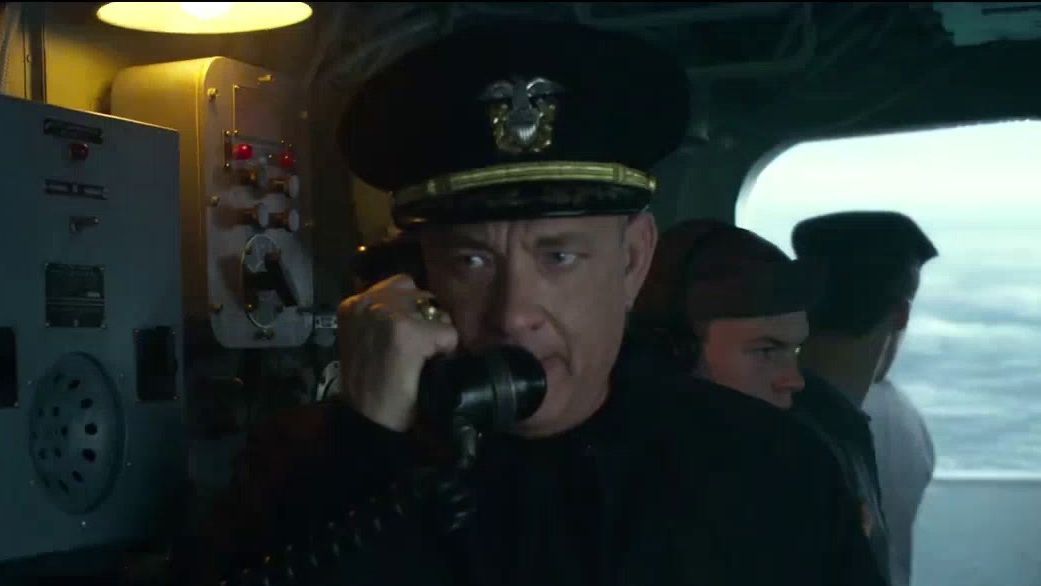
Kaptajn Ernest Krause leder en international konvoj af 37 skibe over Atlanten med tusindvis af soldater og tiltrængte forsyninger til de allierede styrker. Dette spændingsmættede krigsdrama er inspireret af virkelige hændelser fra 2. verdenskrig.
Hvor man kan se Greyhound



















- mgrunner19. september 2026Greyhound tries to make the Battle of the Atlantic feel immediate and visceral, focusing on the brutal struggle between German U-boats and the Allied supply convoys crossing from the United States to Europe. In that respect, the film is effective: tense, technically solid, and often genuinely gripping. At the same time, it falls back on a very familiar Hollywood wartime formula. Against the chaos, suffering, and madness of war stands Tom Hanks’ deeply religious, morally unwavering captain — a man who always seems to know what is right, acts according to his principles, and ultimately survives the ordeal with those values intact. That gives the film an unmistakably propagandistic undertone: the Western side is presented through a reassuring moral framework in which faith, duty, decency, and courage are naturally aligned with the “right” side of history. The complexity and moral ambiguity of war rarely get much room. Still, as a tightly constructed naval war film, Greyhound has real strengths. It is straightforward, atmospheric, well paced, and often very suspenseful. Ideologically simplistic, perhaps, but undeniably effective and engaging.
- CrossCutCritic23. november 2024Some films overwhelm you with spectacle. Others win you with character. And some — rarer still — ask you simply to endure with them, moment by moment, in silence and tension and grit. Greyhound is that third kind. Clocking in at a lean, relentless 91 minutes, it offers no soaring speeches, no grand emotional arcs, no cathartic victories. Instead, it offers something harder — and maybe something truer: A portrait of faithfulness hidden inside exhaustion. A study of a man bearing a burden no one else can see, fighting a war both without and within. --- Commander Ernest Krause (Tom Hanks) is a man summoned not to glory, but to perseverance. Tasked with shepherding a convoy across the North Atlantic during World War II, Krause faces invisible enemies: German U-boats, prowling like wolves beneath the grey waves. For 48 sleepless hours, he must protect his vulnerable ships without air support, battling not just the enemy, but fatigue, self-doubt, and the silent gnawing fear of failure. There are no heroic monologues. No dramatic breakdowns. Instead, there are whispered prayers over cold food. Quiet forgiveness after mistakes. The slow bleeding of a soul stretched beyond its limits. Tom Hanks inhabits Krause with aching humility. Every decision costs him something. Every order carries the weight of life and death. He leads not by force of charisma, but by the stubborn, battered fidelity of a man who knows he is not enough — and yet leads anyway. --- There is a cross hidden in the machinery of Greyhound. It is not shouted. It is not even named. But it is there — in every exhausted prayer, in every mercy shown, in every silent surrender to a calling too heavy to carry alone. Krause does not defeat evil by strength of arms alone. He defeats it by endurance. By staying his course through fear and loneliness and the aching weight of unseen burdens. By holding his post not because he believes he can win, but because he knows it is the place he was given to stand. In this way, Greyhound becomes a kind of cruciform meditation on vocation: that true leadership is not triumph, but service; that true order does not come by dominating others, but by bearing with them through the storm. The battle Krause fights is the battle of every soul called to live faithfully in a world swirling with unseen dangers: To act without certainty. To persevere without recognition. To endure without applause. --- Greyhound offers no final trumpet. No parade. Krause’s victory is marked only by kneeling once again beside his bunk — exhausted, broken, praying one last silent prayer of thanks. It is a victory seen only by the God who knows what it costs to stay faithful when no one is watching. A victory shaped like a cross: hidden, bloodied, and triumphant in ways the world does not understand. In a time when success is measured by noise and spectacle, Greyhound dares to suggest another way: That the truest victories happen in silence. That faithfulness matters even when no one sees. That there is a harbor waiting beyond the grey storms — and that reaching it is not the work of the strong, but of the steadfast.
- Chris Morehouse17. oktober 2025Tom Hanks returns to WW2 but this time in the battle of the Atlantic. It might not be the instant classic of Saving Private Ryan, or Midway, but it is an engaging WW2 story that shines a light on one of the less explored theaters of the greatest conflict of the 20th century.
- flavo4326. november 2025Greyhound is a remarkably focused and emotionally gripping war film, one that chooses intensity and precision over sprawling spectacle. By centering the entire narrative on the Captain, the audience experiences the hazardous, relentless stress of convoy duty entirely through his perspective. You feel every decision, every hesitation, every moment of dread as German U-boats stalk the convoy across the treacherous “Black Pit.” As Captain, he is responsible for the safety of every ship, but instead of leaning heavily on delegation, he shoulders the burden almost entirely himself—an exhausting, admirable, and deeply human portrayal of leadership under fire. The film’s depiction of antisubmarine warfare is not just realistic; it is practically textbook in its accuracy. From sonar tracking to evasive maneuvers to the coordinated attacks of the German Wolfpack, Greyhound delivers one of the most authentic recreations of naval combat ever put on screen. Taut, respectful, and riveting—this is naval warfare done right.
- Survivor Always29. august 2026Greyhound does not get nearly enough credit. People don’t talk about this movie enough when they talk about war movies. First, off Tom Hanks is an amazing actor and this film gives is another opportunity to watch him in an intense war drama that has to limited to the confines of a ship in extremely dangerous waters. The whole cast works together to put in a realistic performance of men in the thick of naval warfare. Great script, set, costumes, sound & cinematography. I only have one complaint and it’s the repeated, high pitched and frankly irritating sound of what seems to be a distorted whale call, whenever submarines are surfacing. Of course, I’m just nit picking because the movie is so good that there is just that one thing I could even speak to. Really great film, even on a second viewing. I still cried in that one scene about the middle. Too many of the families of those who died in service, never received their bodies to be able to bury. This movie reminds us of that too.
- everyday3220. august 2026Gotta watch this movie with surround sound.
- Cubane26. juli 2026The movie is very entertaining and relentlessly paced, which helps a lot with the tone. The moral qualms the captain faces are made abundantly clear. However, the factual inaccuracies are very significant and somewhat distracting. Both the depiction of submarine warfare and the technical access of the time are heavily massaged to fit the narrative. U-boats almost never attacked destroyers, as doing so would be completely counterproductive. They relied entirety on surprise to sink merchant ships, and were hopelessly outgunned in a direct confrontation with an escort. They also would not, and could not, taunt a convoy on the radio. They lacked the capability to broadcast on those frequencies entirely. They would also never willingly sail into aerial escort range, as it was a death sentence. I could go on. Tom Hanks does his best to pull it together but it's pretty obvious in the exterior shots he's just staring into a green screen. Overall, it's fine. Take a shot every time you hear whale sounds and you'll get absolutely hammered, just as the director intended.
- RedHarlow1314. juli 20268.5/10 - Goathound I have watched this film 3 times now it is quite literally to me the greatest naval film i have ever seen still
- Enes Şahin14. marts 2026It was a truly excellent film. I'm not usually a fan of this type of production, but this film was exceptionally good. It depicts America's entry into World War II. The production, effects, and especially the acting were perfect. This film has become one of my favorites. Of course, I also want to say that Germany wasn't as crushed in that war as it seems. They portrayed them as a bit too defeated in the film, but Germany didn't leave that war completely defeated. You should definitely watch the film. It was very, very good. Great job! The war tactics and everything were excellent. As I said, I'm not usually a viewer of this type of film, but I wasn't bored at all and I really enjoyed it. Great job!
- JeremyNZ11. april 2026Good WW2 movie, not too intense but told the story well of the conflicts between allied forces and German U-boats in the Atlantic. Good performance by Tom Hanks. The only annoyance was the whale sounds every time a German U-boat was on screen, I think the audience is smart enough to know what's going on without the audio cue that this is a bad guy.
- chrisjzahner26. marts 2026For the film this movie set out to be, it was perfect.
- Mister Arn15. maj 2025"Greyhound" tells the gripping tale of a single voyage during the Battle of the Atlantic; it captures the relentless tension experienced by the crew. The film offers a realistic portrayal of naval warfare, featuring intense action scenes with a detailed focus on the procedural elements of a naval battle.


Se Greyhound-videoer
Få Plex på dine enheder
Gratis på 20+ platforme. Vælg din egen.Greyhound-trivia
- juli 2020 blev Greyhound udgivet.
Greyhound blev instrueret af Aaron Schneider.
Greyhound har en spilletid på 1 t 32 m.
Greyhound blev produceret af Gary Goetzman.
Kaptajn Ernest Krause leder en international konvoj af 37 skibe over Atlanten med tusindvis af soldater og tiltrængte forsyninger til de allierede styrker. Dette spændingsmættede krigsdrama er inspireret af virkelige hændelser fra 2. verdenskrig.
Nøglepersonerne i Greyhound er Commander Krause (Tom Hanks), Charlie Cole (Stephen Graham), Cleveland (Rob Morgan).
Greyhound er bedømt 11.
Greyhound er en Krig, Drama, Action-film.
Greyhound har en seerbedømmelse på 7.7 ud af 10.
Greyhound havde et budget på 50,3 mio. US$.