NovaStaffel 37
12
A weekly documentary series, each episode providing an in-depth look at a different subject of scientific research. Subjects examined by this show have included the cutting edge of theoretical physics, a return to the Chernobyl nuclear reactor, the long-term effects of Amazon deforestation, and the development of life-saving medical techniques.
Nova • Staffel 37 ansehen bei

18 Folgen
- Darwin's Darkest Hour
 F1
F1Darwin's Darkest HourThis two-hour scripted drama tells the remarkable story behind the unveiling of the most influential scientific theory of all time, Charles Darwin's theory of evolution by natural selection. The program is a special presentation from NOVA and National Geographic Television, written by acclaimed British screenwriter John Goldsmith and directed by John Bradshaw. - Hubble's Amazing Rescue
 F2
F2Hubble's Amazing RescueThe best-known scientific instrument in history was dying. After nearly 20 years in space and hundreds of thousands of spectacular images, the Hubble Space Telescope's gyroscopes and sensors were failing, its batteries running down, and some of its instruments were already dead. The only hope to save Hubble was a mission so dangerous that in 2004 NASA cancelled it because it was considered too risky. - Lizard Kings
 F3
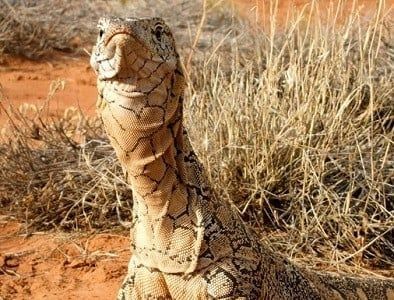
F3Lizard KingsThis program reviews the monitor lizard genus which, dispute the incredible diversity between species, share common traits such as the ability to count, that lead biologists to peg them as the most evolutionarily advanced of the lizards. Dr. Eric Pianka, who studied lizards for forty years in Australia, serves as guide. Program concludes with the customary, trite comment on human impact on climate change and the environment. - Die Anfänge der Menschheit 1 : Vom Affen zum Mensch
 F4
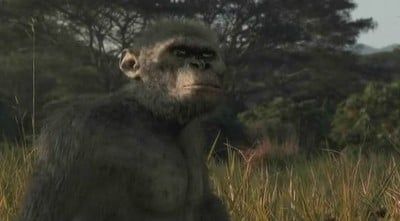
F4Die Anfänge der Menschheit 1 : Vom Affen zum MenschVor mehreren Millionen Jahren fand in Afrika ein folgenreiches Ereignis statt: Große, auf allen Vieren laufende Affen richteten sich auf, um fortan nur noch auf den Hinterfüßen zu gehen. Mit der aufrechten Haltung entwickelte sich das Gehirn, und so entstand im Laufe der Zeit der Mensch. Die Wissenschaftler konnten erst jüngst den Zeitpunkt dieser Entwicklungen bestimmen.Die erste Folge von "Die Anfänge der Menschheit" hat "Selam" zum Gegenstand, ein Fossil, das im Jahr 2000 in Äthiopien gefunden wurde: Selam, ein vor etwa 3,3 Millionen Jahren verstorbenes Mädchen, gehörte der Art des Australopithecus afarensis an, jener Art, von der die Mehrzahl der Spezialisten meint, dass der Mensch aus ihr hervorgegangen sei. Der kleinwüchsige, zweifüßige Hominide ähnelte noch sehr dem Schimpansen. Zu dieser Art gehört auch die berühmte Lucy, die Wissenschaftler 1974 vier Kilometer vom Selam-Fundort entfernt entdeckt hatten.Die mehrjährigen Forschungen haben bereits vorhandenes Wissen über die zweifüßige Fortbewegung der Australopithecinen bestätigt, nämlich dass sie sich auch hangelnd in Bäumen fortbewegen konnten. Vor allem aber brachten diese Forschungen kostbare Erkenntnisse über den entscheidenden Einfluss der Klimaschwankungen auf die menschliche Evolution. - Die Anfänge der Menschheit 2 : Familienbande
 F5
F5Die Anfänge der Menschheit 2 : FamilienbandeDie Hominiden bevölkerten Millionen von Jahren die Wälder und Savannen Afrikas, bis vor etwa zwei Millionen Jahren eine neue Art entstand, die mit im Tierreich unbekannten Eigenschaften ausgestattet war: der Homo erectus, einer der ersten Vertreter der Gattung Mensch.Die zweite Folge von "Die Anfänge der Menschheit" untersucht das erste dem menschlichen schon sehr ähnliche Skelett des sogenannten Turkana Boy, eines männlichen Individuums, das vor etwa 1,6 Millionen Jahren in Kenia lebte. Diese ersten Menschen brachten entscheidende Neuerungen, die ihr Überleben begünstigten: Sie jagten große Beutetiere mit Werkzeugen, sie konnten Feuer machen, entwickelten engere soziale Bande zum Schutz der Nachkommen, und sie wanderten schließlich bis in den Kaukasus, nach Indonesien, Asien und Europa. - Die Anfänge der Menschheit 3 : Homo sapiens, der letzte seiner Art
 F6
F6Die Anfänge der Menschheit 3 : Homo sapiens, der letzte seiner ArtEinige Millionen Jahre lang war die Erde von verschiedenen Hominidenarten bevölkert. Der Homo erectus war der erste, der Afrika vor knapp zwei Millionen Jahren verließ und nach Indonesien auszog. Dort entwickelte sich der Flores-Mensch, auch Hobbit genannt.Eine zweite Migrationswelle führte nach China, wie circa 700.000 Jahre alte Hominiden-Fossilien beweisen. - What Are Dreams?
 F7
F7What Are Dreams?To sleep researchers the various aspects of sleep and dreams make no sense unless they have a purpose. What that purpose is is fertile ground for research, speculation and disagreement. This program presents the ideas and research methods of several active sleep researchers. - What Darwin Never Knew
 F8
F8What Darwin Never KnewNOVA takes viewers on a journey from the Galapagos Islands to the Arctic, and from the Cambrian explosion of animal forms half a billion years ago to the research labs of today. Here scientists are finally beginning to crack nature’s biggest secrets at the genetic level. And, as NOVA shows in this absorbing detective story, the results are confirming the brilliance of Darwin’s insights while exposing clues to life’s breathtaking diversity in ways the great naturalist could scarcely have imagined. - Killer Subs in Pearl Harbor
 F9
F9Killer Subs in Pearl HarborThe Japanese attack on Pearl Harbor included five midget submarines. Four of the submarines failed in their mission being destroyed or captured. Nova follows the investigation of a mysterious ship wreck to determine if it is the fifth submarine, if it successfully launched its torpedoes and if so did it succeed in in attacking any ships. - Building Pharaoh's Ship
 F10
F10Building Pharaoh's ShipA magnificent trading vessel embarks on a royal expedition to a mysterious, treasure-laden land called Punt. Is this journey, intricately depicted on the wall of one of Egypt's most impressive temples, mere myth--or was it a reality? NOVA follows a team of archeologists and boat builders as they reconstruct the mighty vessel shown in the mysterious carving, and then finally launch it in to the Red Sea on a unique voyage of discovery. - Das Rätsel der Sphinx
 F11
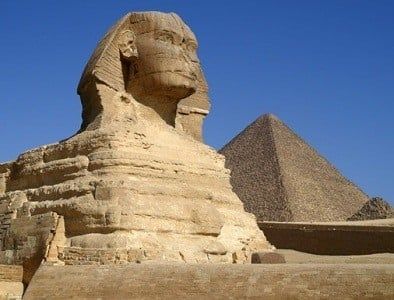
F11Das Rätsel der SphinxDie gigantische Skulptur am Eingang der Nekropole von Gizeh zählt zu den geheimnisvollsten Hinterlassenschaften der Alten Ägypter. Auf der Grundlage neuer wissenschaftlicher Erkenntnisse lüftet die Dokumentation einige Geheimnisse um Geschichte, Konstruktion und Bedeutung der legendären Sphinx von Gizeh. - The Pluto Files
 F14
F14The Pluto FilesWhen the American Museum of Natural History's Hayden Planetarium stopped calling Pluto a planet, director Neil deGrasse Tyson found himself at the center of a firestorm led by angry Pluto-loving elementary school students. What is it about Pluto—a cold, distant, icy rock—that captures so many hearts? Four years after the IAU (International Astronomical Union) officially reclassified the ninth planet as a plutoid, NOVA travels cross-country with Tyson to find out. - Das Geheimnis der Milchstrasse
 F15
F15Das Geheimnis der MilchstrasseMehr als 300 Jahre liegen zwischen Galileos erstem Fernglas und den heutigen Hochleistungsteleskopen. Von Berggipfeln, aus dem Erdorbit oder aus den Umlaufbahnen um fremde Planeten liefern sie immer neue Enthüllungen und Details über das Sonnensystem. Das Geheimnis der Milchstraße ist eine spannende Reise zu fernen Planeten und Monden, mit Filmaufnahmen, wie man sie bisher noch nicht gesehen hat. - Das ewig expandierende Universum
 F16
F16Das ewig expandierende UniversumVon der Entdeckung, dass die Milchstrasse nur eine unter Milliarden von Galaxien ist, bis zu der Erkenntnis, dass sich die Galaxien in jeder Sekunde schneller voneinander fortbewegen, erkundet das ewig expandierende Universum die ferne Vergangenheit und Zukunft des Kosmos. Die modernen Teleskope haben dieser Geschichte ein neues Mysterium hinzugefügt: Der Großteil der Materie des Universums ist unsichtbar: dunkle Materie und dunkle Energie. Was steckt hinter dem Geheimnis dieser dunklen Kräfte? - Mind Over Money
 F17
F17Mind Over MoneyExposes the mysterious and surprising nature of the two most powerful forces on the planet: the human mind and money. Using analysis and experiment, this film explores why economists failed to predict the 2008 crash and why we so often make irrational financial decisions. - Mt. St. Helens Back From the Dead
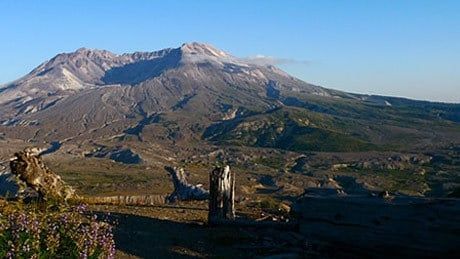 F18
F18Mt. St. Helens Back From the DeadFor 27 years, biologist Charlie Crisafulli has been documenting the dramatic return of plant and animal life to Mt. St. Helens after the 1980 eruption. / When Mount St. Helens erupted in 1980, every living thing in the blast zone was buried beneath 300 feet of avalanche debris, covered with steaming mud and, finally, topped with a superheated layer of frothy rock from deep within the earth. Biologist Charlie Crisafulli has remained at the site for 27 years, documenting the dramatic return of plant and animal life to the barren landscape and pioneering a new understanding of the interaction between geologic forces and the life surrounding the mountain.