NOVASæson 51
TV-PG
A weekly documentary series, each episode providing an in-depth look at a different subject of scientific research. Subjects examined by this show have included the cutting edge of theoretical physics, a return to the Chernobyl nuclear reactor, the long-term effects of Amazon deforestation, and the development of life-saving medical techniques.
Hvor man kan se NOVA • Sæson 51

18 episoder
- When Whales Could Walk
 E1
E1When Whales Could WalkIn Egypt’s Sahara Desert, massive skeletons with strange skulls and gigantic teeth jut out from the sandy ground. This fossil graveyard, millions of years old, is known as the “Valley of the Whales.” Now, paleontologists have unearthed a whole new species of ancient whale dating to 43 million years ago, and this predator wasn’t just able to swim – it also had four legs and could walk. Follow scientists as they search for new clues to the winding evolutionary path of mammals that moved from the land into the sea to become the largest animals on Earth. - Easter Island Origins
 E2
E2Easter Island OriginsEaster Island. The small island in the South Pacific is world-famous for one thing: its mysterious stone statues. For many years, it was believed that their construction led to a collapse of society. But new research contradicts old theories and offers new explanations for the purpose of the statues. Who created them and why? How were they moved? And what became of those who erected them? - Building the Eiffel Tower
 E3
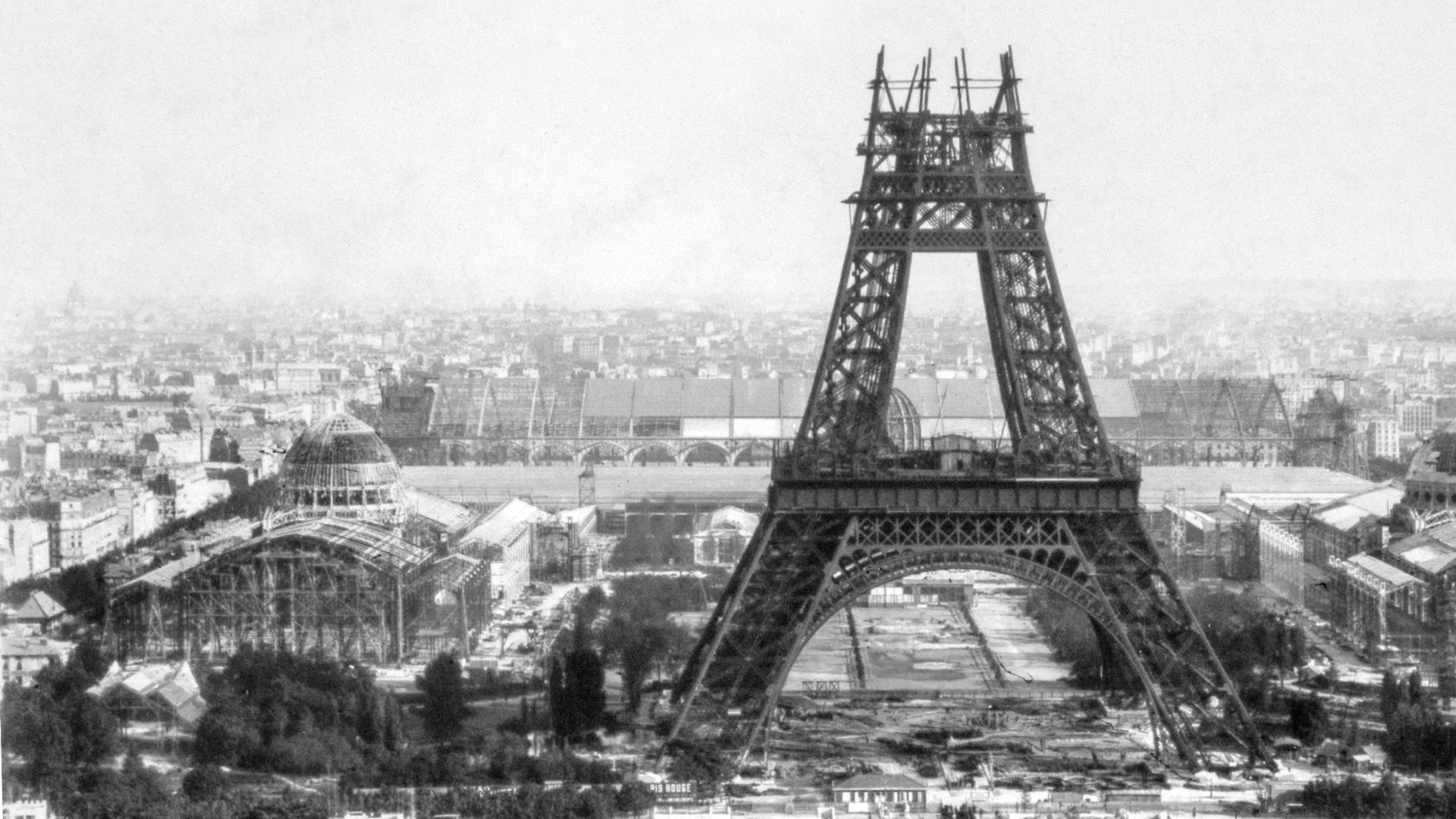
E3Building the Eiffel TowerExplore the revolutionary engineering behind Paris’s iconic landmark. Completed in just over two years for the 1889 World’s Fair, the iron tower smashed the record for the tallest structure on Earth, ushering in a new age of global construction that reached for the skies. How did the engineers do it? Follow the innovations, successes, and failures that made one of the most famous buildings on the planet possible. - Solar System: Strange Worlds
 E10
E10Solar System: Strange WorldsFrom a dwarf planet that looks like a deflated football, to a tiny moon with cliffs taller than Mt. Everest, to the spectacular rings of Saturn, discover how the effects of gravity produce the amazing variety of weird worlds in our solar system. - Solar System: Volcano Worlds
 E11
E11Solar System: Volcano WorldsAll around our solar system, volcanoes are powerful shapers of worlds. Next door on Mars is Olympus Mons, a giant volcanic mountain more than twice the size of Mt. Everest. And closer to the Sun, thousands of volcanoes produce the toxic atmosphere that keeps Venus boiling. Then there’s Jupiter’s moon Io, the most volcanically active world in the entire solar system, and Saturn’s moon Enceladus, where clues in its watery eruptions hint at the possibility of life. Discover the explosive forces that molded each of these worlds – and what makes the volcanoes right here on Earth so special. - Solar System: Icy Worlds
 E12
E12Solar System: Icy WorldsIce might seem familiar to us on Earth, but out in the solar system, it can get quite exotic. From Uranus’s ultra hot superionic ice, to glaciers of nitrogen ice on Pluto, to carbon dioxide snow on Mars, ice is a fundamental building block throughout our cosmic neighborhood. Visit some of the strange, frozen worlds of our solar system to discover why the ice here on Earth so special – and why we wouldn’t be here without it. - Solar System: Wandering Worlds
 E13
E13Solar System: Wandering WorldsThe classic view of our solar system contains eight orderly planets, some with moons in neat orbits – but when we look closer, we discover a bunch of stuff missing from this simple, clockwork model. Wandering worlds that seem out of place, found in the gaps between and beyond the planets, offer clues that our cosmic neighborhood is far more dynamic than we once thought. From the meteorites that impact Earth, to a moon that orbits backwards, to an imposter lurking in the asteroid belt, these wandering worlds are rewriting what we know – and even how we think about – our solar system. - Decoding the Universe: Quantum
 E14
E14Decoding the Universe: QuantumWhen we look at the world at the tiniest scales in the subatomic realm, things get weird – very weird. Welcome to the quantum universe, where particles can spin in two directions at once, observing something changes it, and something on one side of the galaxy can instantly affect something on the other, as if the space between them didn’t exist. Buckle up for a wild ride through the discoveries that proved all of this to be true and paved the way for the digital technologies we enjoy today – and the powerful quantum sensors and computers of tomorrow. - Building Stuff: Boost It!
 E15
E15Building Stuff: Boost It!Around the world, engineers are finding ingenious ways to amplify our abilities and senses – allowing us to access and shape the world way beyond our natural gifts. From helping a blind man see without the use of his eyes to building a sling so powerful it can shoot rockets into space, see why engineering just might be the closest thing to a superpower we humans have. - Building Stuff: Reach It!
 E16
E16Building Stuff: Reach It!From the time our species first evolved, we’ve been on the move. Not content to stay in one place, we’ve imagined and invented and built our way from one place to the next. From deep sea subs to wind-resistant skyscrapers to next-gen space habitats, see how today’s engineers are designing and building creative new ways for us to get all around – and even off – our planet. - Building Stuff: Change It!
 E17
E17Building Stuff: Change It!Thousands of years of human innovation have allowed us to shape the environment to improve lives. The consequences of our activities are not always benign – but there are solutions. From electrifying aviation, to building robots to protect threatened coral reefs, a new generation of engineers is finding creative solutions to some of our most critical environmental challenges. - Lost Tombs of Notre Dame
 E18
E18Lost Tombs of Notre DameAfter the devastating 2019 fire at Notre Dame, two mysterious sarcophaguses were discovered under the cathedral’s stone floor. Who is buried in them, and what secrets will these coffins reveal? Follow a team of archaeologists and historians as they attempt to solve centuries-old mysteries using the latest scientific investigation techniques. What can forensic analysis of the remains reveal about one of the world’s most famous cathedrals and those who devoted their lives to it?