

 Ordet
Ordet
Hvor man kan se Ordet


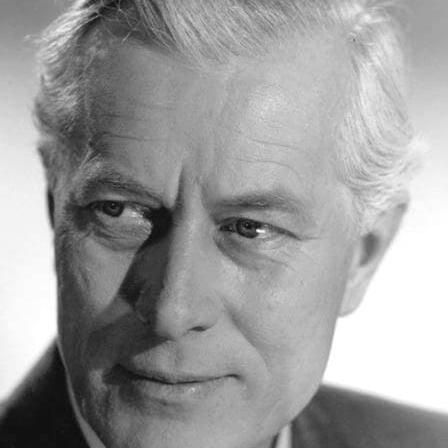



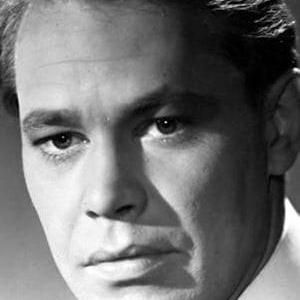

- CrossCutCritic28. april 2025The Word Spoken in Silence --- There are films that speak loudly, drowning you in sensation. And there are films that whisper — that ask you to lean closer, to listen with something deeper than your ears. Ordet (The Word), directed by Carl Theodor Dreyer in 1955, is a whisper stretched across two aching hours. It unfolds in the cold stillness of a Danish farmhouse, where faith, doubt, grief, and hope move like slow, invisible currents beneath every word and silence. It is a story about miracles. And it is a story about what happens when miracles do not come. --- The Borgen family stands at the center: The father, Morten, stern but worn by years. His sons: Mikkel, the doubter; Anders, the gentle dreamer; and Johannes, the madman who believes himself to be Christ returned. And Inger, Mikkel’s wife, whose warmth and kindness seem to hold the household together. They live in uneasy proximity to the local tailor and his daughter — two families divided not by cruelty but by rival theologies, proud righteousness on one side, quiet humility on the other. And over it all, a sense of suspended waiting: for reconciliation, for healing, for faith to be proven — or abandoned. Dreyer films it all with an austere grace. His camera barely moves. Scenes unfold in long, unbroken takes. Words matter. Silence matters even more. It would be easy to call Ordet a film about faith. And it is. But faith, in Dreyer’s world, is not simple. It is a thing battered by life, twisted by pride, broken by grief — and only sometimes, only at great cost, restored. --- There is a deep theology of the cross hidden in Ordet’s quietness. The world here is not ordered by human strength. Morten’s authority, Johannes’s ravings, the tailor’s righteousness — all fail to bring life. Only when these human powers are exhausted — only when death has entered the house — does the possibility of true order appear. It is the scandal of the cross played out in a cold farmhouse: that resurrection does not come to the strong, that healing does not belong to the wise, that salvation comes not by claiming it, but by being brought low enough to need it. The miracle at the film’s climax — when the mad Johannes, awakened at last, speaks life into the dead — is not a reward for anyone's virtue. It is sheer grace. Unlooked for. Undeserved. And devastatingly beautiful. Dreyer does not present this as spectacle. The resurrection unfolds not with trumpets, but with trembling hands and stunned silence. No one becomes a hero here. They are simply witnesses — to something that none of them can control. In this, Ordet touches the deepest notes of Christian truth: the hidden God, who reveals Himself not in power but in weakness; the crucified God, whose glory shines only through wounds; the Word made flesh, who still speaks, but only for those with ears to hear. --- Watching Ordet is not easy. Its pace demands patience. Its stillness demands surrender. It does not flatter the viewer’s expectations of drama or emotional release. But for those who endure its winter — for those who accept its silences as invitations rather than voids — there is a harvest. It is not triumph. It is not easy faith. It is a cross-shaped hope: fragile, costly, burning quietly in the cold. And maybe that is the only kind worth trusting.


Få Plex på dine enheder
Gratis på 20+ platforme. Vælg din egen.Ordet-trivia
- januar 1955 blev Ordet udgivet.
Ordet blev instrueret af Carl Theodor Dreyer.
Ordet har en spilletid på 2 t 5 m.
Ordet blev produceret af Carl Theodor Dreyer, Erik Nielsen, Tage Nielsen.
I et vestjysk sogn er grundtvigianeren Morten Borgen den største gårdejer. Den mellemste af hans tre sønner, Johannes, er blevet sindssyg og tror, han er Jesus. Den yngste søn kan ikke få lov at ægte datteren af den lokale indremissionske leder, Peter Skrædder. Da den ældste søns kone, Inger, dør i barselsseng, beder hendes otteårige datter Johannes, om ikke han vil vække moderen til live igen. Barnets enfoldige tro får ham til at udvirke det mirakel, der gør de interne kirkelige modsætninger ligegyldige.
Nøglepersonerne i Ordet er Morten Borgen (uncredited) (Henrik Malberg), Inger Borgen (uncredited) (Birgitte Federspiel), Mikkel Borgen (uncredited) (Emil Hass Christensen).
Ordet er bedømt 15.
Ordet er en Drama-film.
Ordet har en seerbedømmelse på 9.1 ud af 10.