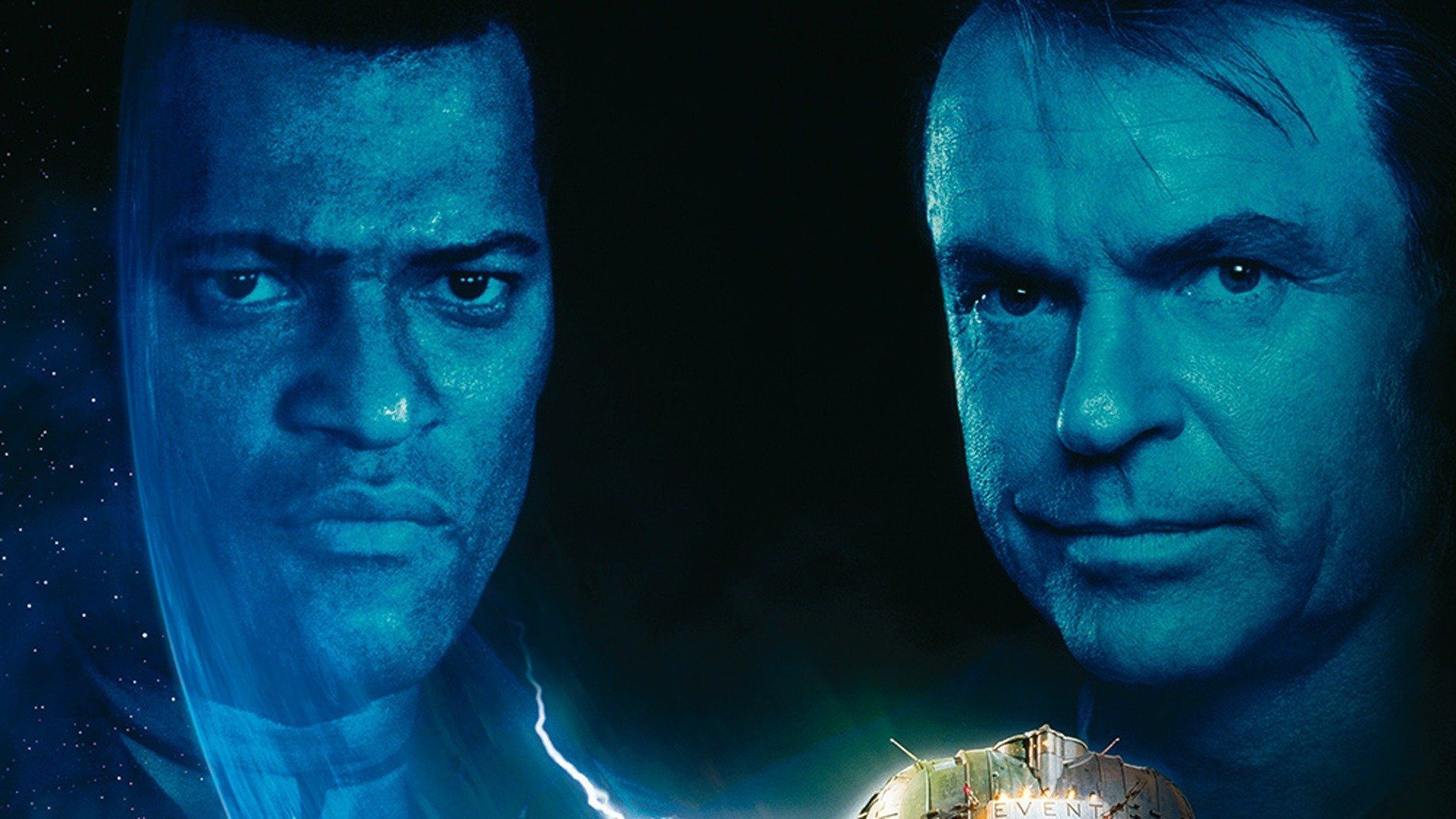

黑洞表面
由Paul W. S. Anderson执导未来几十年内,人类探索利用太空的程度不断加深。2040年,利用空间扭曲技术深入宇宙的“新领域号”消失于海王星附近。2047年,新领域号突然在海王星发回讯号,内容似乎为求救,于是当年设计新领域号的威尔博士(Sam Neill 饰)受命乘坐营救船“路易与克拉克”号前去施救。船长米勒(Laurence Fishburnes 饰)不甚友好,所幸路易与克拉克号很快按计划与新领域号对接。虽然生命扫描显示新领域号充满生命迹象,但搜寻之后营救队发现所有船员均死亡或消失,新领域号内制造黑洞的核心动力部分产生的震荡破坏了路易与克拉克号的外壳,营救队被迫暂时停留。新领域号残留的影像记录将当时血腥的一幕呈现给所有人,同时营救队员们被幻象所困——他们分别看到了自己心中无法释怀的伤痛。队员们陷入了崩溃的边缘。然而更令人惊异的是,新领域号似乎具有了生命。威尔博士相信新领域号的变化是由于它进入过地狱,米勒船长为了拯救队员们和威尔展开了生死对决……










黑洞表面的评分和评论
- nicolai1082天前This is cosmic horror at its best. I would like to see more scenes from hell. Definitely one of the best horror flicks from the 90s.
- Rick Fox2026年4月30日Paul WS Anderson’s best film to date. Great cast, cinematography, and story. Unfortunately it falls short of true greatness due to its editing. Many scenes were cut to have a shorter run time in order to maximize theater showtimes. I hope this film gets a reboot so Anderson can get a chance to tell the story he really wanted to tell.
- thehave12026年3月19日Truly horrific and gory horror, that swallows reality itself in to hell it self, dark and brooding outer space, in a gothic cathedral made of still and quantum mechanics.
- RipLinesMan2025年4月20日When comparing Event Horizon (1997) to Event Horizon (1997), one might expect redundancy, but instead, what unfolds is a recursive nightmare, a Möbius strip of horror cinema that folds terror into itself. No matter which angle you enter from, it feels like another layer is waiting, another descent into the same suffering, but told by a darker voice. Like two mirrors facing each other in a cathedral of fire, the film reflects its own torment back and forth until only darkness remains. In terms of atmosphere, Event Horizon (1997) edges itself out only by the thickness of the blood in its airlocks. It’s drenched in dread, but somehow manages to make even silence feel like a character screaming under its breath. The ship breathes like a beast baptized in sulfur, its walls exhaling rot and prophecy. Every corridor is a sermon from the damned, echoing with the cries of saints turned sinners. The air onboard is not oxygen. It’s purgatory made breathable. Even the silence has weight, a leaden pause before damnation reads your name aloud. The absence of life is not emptiness here. It’s judgment made visible. The characters, as written, as performed, as condemned, are not merely people. They’re archetypes shaped by guilt. Captain Miller is the reluctant guardian standing at the gates of a ship-shaped Gehenna. Dr. Weir is a fallen oracle pulling back the veil, not to escape damnation, but to embrace it. Their confrontation is not a climax. It’s a theological argument conducted through screams and imploding metal. Every crew member carries a cross, whether etched in regret or forged in memory. Justin’s journey into the void is a baptism by vacuum. Peters doesn’t just grieve. She is devoured by it. D.J. meets his fate with eyes open, as if recognizing his tormentor like an old friend. Characters don’t board the Event Horizon. They are summoned. The ship itself is not a vessel but a sanctum of pain. It generates sin the way a furnace emits heat: constantly, unconsciously, eternally. The gravity drive isn’t a machine. It’s a sacrificial altar, a heart of black iron pumping regret. The log recording the screams of the previous crew plays like a hymn sung in reverse, a gospel of torment carried across dimensions. The ship doesn’t return from somewhere. It brings somewhere back with it. The ship’s return from beyond is not an event. It’s an infection. Its presence isn’t narrative. It’s parasitic, invading the film until even the structure begins to rot. You feel it in the edits, the glances, the way the characters pause, not out of fear of what’s ahead, but because they realize they’ve already been condemned. The bridge offers control, but only as illusion. The same codes, the same systems, yet power always slips through like ash through desperate fingers. No scene in Event Horizon exists to entertain. Each is a rung on a ladder descending into something unknowable. The film doesn’t escalate. It peels. Every hallucination is a sermon in reverse. Every flashback is a flaying. The camera doesn’t glide. It crawls, like a witness too afraid to speak. Visual motifs echo like ancient liturgies. The spinning core is not technology. It’s a relic of spiritual horror. The red filters, the spinning corridors, they don’t resemble veins. They are veins. The ship is alive, and it does not want you to leave. The horror is infernal, a slow-burning collapse of theology, logic, and sanity. Event Horizon doesn’t scare you. It converts you. Fire doesn’t destroy here. It sanctifies. What lies behind the core isn’t science. It’s scripture. It is knowledge twisted until it screams. Even when you blink, the images burn on. They’re not memories. They’re permanent additions to the soul’s architecture. Event Horizon is a ritual disguised as a narrative, a liturgy of suffering bound to reel and runtime. Watching it once is a haunting. Watching it again is a communion. There are no different perspectives, only recursions, each bleeding into the other, until you’re unsure whether you’re experiencing a film or being initiated into it. To compare Event Horizon to itself is to realize it contains its own duality. The ship is both arrival and return. The horror is both external and born of the viewer. The hallucinations are unique, but they all speak the same sermon: guilt, grief, sin, and surrender. It is a film that demands interpretation but punishes understanding. It gives you no monsters to blame, only mirrors to stare into. What separates Event Horizon from other horror is its complete conviction. There is no wink. No relief. No escape hatch. It invites you in, shows you what lies beyond reason, and dares you to blink. And whether you see it in darkness, in memory, or in dreams, hell is always watching back. To stare too long at Event Horizon (1997) is to feel it reshape itself inside you. You may forget the plot. You’ll never forget the feeling. It’s not a movie you rewatch. It’s a scripture you retranslate. Each viewing brings revelation. And revelation always hurts. To compare Event Horizon to itself is to stare into a spiraling void and realize the patterns aren’t reflections. They’re instructions. And the more you understand, the deeper it buries itself in you. It is a monument to irreversible knowledge, a cinematic grimoire that leaves scorch marks on the soul. In the end, the question isn’t which part is better. The question is: how much can you take? And the answer is always the same. Just enough to be marked by it forever.
- AngusMcNutz2025年3月26日Film is such a weird industry. You can be one of the most tactless, schlock, franchise-rolling filmmakers around and, somehow, you just may end up creating an insanely ambitious, genre-defining classic. If there was ever anything that came close to capturing the tension and meticulous escalation that Alien had, it’s here. Blood for the Blood God.
- Rango Konk2026年3月17日Fishburne Delivers....
- leifhart2026年3月16日Basically Alien + Hellraiser
- makdelart2025年12月11日Infernal horror in space – okay, if you like that sort of thing. As for me: it looks nice, but there's no logic at all. Either hellfire or sci-fi, but here we get an infantile mix of chaos, fire, blood, and all that's missing is Godzilla at the end (or dinosaurs).
- hairydemon2025年10月2日It has aged well. Originally, when it came out I thought it was derivative, cringey and a bad rip off of a bunch of films. Hellraiser meets Alien. It seemed like an expensive parody. But in 2025, it has grown into itself as quite a good scifi, and even horror, film. Its pastiche influences now look like a revered homage to a better era when things were original. It is in fact quite a good film. (shock. horror, yes a Paul WS Anderson film is good!) Could it be that Scifi has declined so far (Alien Eath for example) that this looks like high art in comparision? Whichever way, a great cast do a good job of a fun 90 mins. And I love the model fx! Much cooler than cgi!
- jbuchanan19802025年6月10日Good fun. Bonkers and thin plot. Special effects have aged.
- Steven Schwalger2026年3月7日This is just a fantastic piece of sci-fi horror. Why thay have waited so long to make a sequel ill never know.
- mattcartlidge2026年2月21日Without doubt the scariest film ever made. Sam Neill is terrifying! Amazing storyline and brilliant actors. Has stood the test of time extremely well.
- Mike Holland2026年2月11日Never seen it ! glad I did !
- Makary Kuczera2026年2月7日Very good and very scary.
- Ommar2026年1月21日What a timeless masterpiece 🪬 ⚫ ⚫🪬 👃🏻


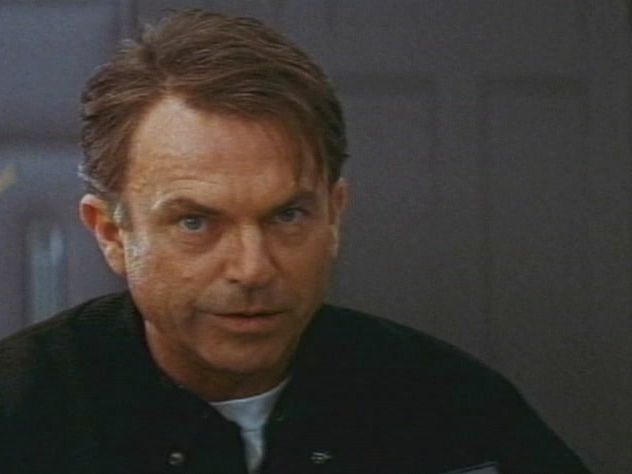
黑洞表面花絮
黑洞表面于1997年8月15日发布。
黑洞表面由Paul W. S. Anderson执导。
黑洞表面的时长为1小时 35分钟。
黑洞表面由Jeremy Bolt, Lawrence Gordon, Lloyd Levin制作。
未来几十年内,人类探索利用太空的程度不断加深。2040年,利用空间扭曲技术深入宇宙的“新领域号”消失于海王星附近。2047年,新领域号突然在海王星发回讯号,内容似乎为求救,于是当年设计新领域号的威尔博士(Sam Neill 饰)受命乘坐营救船“路易与克拉克”号前去施救。船长米勒(Laurence Fishburnes 饰)不甚友好,所幸路易与克拉克号很快按计划与新领域号对接。虽然生命扫描显示新领域号充满生命迹象,但搜寻之后营救队发现所有船员均死亡或消失,新领域号内制造黑洞的核心动力部分产生的震荡破坏了路易与克拉克号的外壳,营救队被迫暂时停留。新领域号残留的影像记录将当时血腥的一幕呈现给所有人,同时营救队员们被幻象所困——他们分别看到了自己心中无法释怀的伤痛。队员们陷入了崩溃的边缘。然而更令人惊异的是,新领域号似乎具有了生命。威尔博士相信新领域号的变化是由于它进入过地狱,米勒船长为了拯救队员们和威尔展开了生死对决……
黑洞表面中的关键角色有Miller(Laurence Fishburne), Weir(Sam Neill), Peters(Kathleen Quinlan)。
黑洞表面的评级为R。
黑洞表面是一部科幻, 惊悚, 恐怖电影。
黑洞表面的观众评分为6.2(满分10分)。
黑洞表面的预算曾是US$6000万。
黑洞表面的票房收入为US$2670万。