
Garrett Wilkins
SGarrettW
A rejoint en 2026
Knoxville, TN
Just a Tennessee man who enjoys being cultured (and a good scare).
- Eddington
 By the time Eddington arrived, Hollywood was already fashionably late to the COVID era. The film clearly wants audiences to look back on that period with some distance and reflect on just how absurd many of the political, cultural, and social battles became. For me, that timing is a slight miscalculation. I am not sure most viewers are feeling nostalgic about 2020, nor am I convinced they are eager to revisit it. Still, the film commits fully to its setting and does a surprisingly effective job capturing the confusion, frustration, and often ridiculous nature of that moment in time. What I appreciated most is that the film rarely gives anyone a free pass. Whether it is pandemic politics, performative outrage, opportunistic politicians, social media activism, or the broader culture-war conflicts of the era, Eddington seems determined to highlight the absurdity wherever it finds it. The small-town setting occasionally drifts into Hollywood-style exaggeration, but the satire remains sharp enough to keep it engaging. Joaquin Phoenix is also excellent in a role that feels somewhat different from the kinds of characters he is usually associated with, bringing a convincing sense of ordinariness to a story filled with increasingly extraordinary circumstances. Credit should also go to Ari Aster, who steps well outside the territory most viewers associate with him and delivers something far broader in scope than his previous work. The film is probably longer than it needs to be, and there are stretches where its ambition gets the better of its pacing, but I found its willingness to explore competing viewpoints far more interesting than simply choosing a single target. For all its satire and political commentary, the film remains surprisingly invested in the human consequences of the chaos it depicts. Whatever your politics, there is a good chance Eddington will make you uncomfortable at some point, and I suspect that it is meant to.Eddington
 - Immaculate
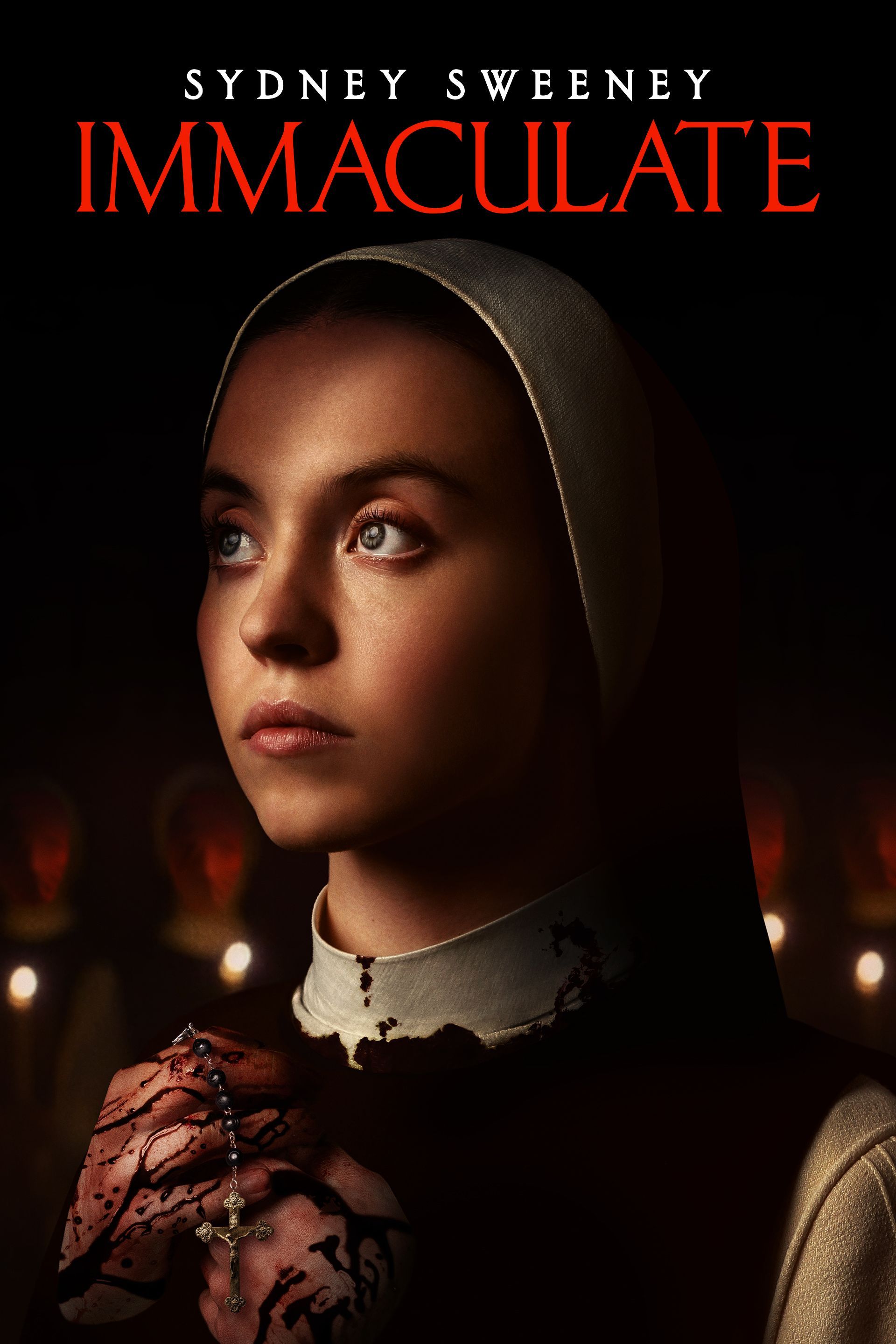 Immaculate is one of those movies that looks the part but completely forgets to be interesting. It is a real shame because Sydney Sweeney is genuinely fantastic here. She brings a level of intensity and grit that carries the burden of the film entirely on her own. She has made it perfectly clear that she is way beyond being just a celebrity casting; she is level with any actress in the industry today. I was honestly impressed by how she shines as a lead even without the nudity often associated with her other work, proving she has the range to command a screen on merit alone. She brings more heart and focus to this performance than the script ever manages to earn back, and it is honestly frustrating to see such a capable lead get stuck in a story that just goes through the motions. My biggest issue with the writing is that it feels like it was put together by an algorithm that only knows how to rehash tired anti-Catholic clichés. I am not asking for a movie that caters to my beliefs, but there is a clear difference between a dark, compelling story and a lazy one. Using Church traditions as a shortcut for evil has become so stale that it is hard not to roll your eyes when the latest scenes hit. Sweeney does her best to sell the material, but she is trapped in a landscape of predictable provocation that mistakes cynical tropes for actual storytelling. The film tries to leave you with some big, final shock to justify the runtime, but at that point, it’s just a desperate attempt to stick the landing after a fairly hollow experience.Immaculate
 - Cape Fear - S1 • E2 - Why Would I Want to Hurt You?
 Like the premiere, "Why Would I Want to Hurt You?" keeps the psychological tension moving in the right direction, even if the pacing felt a little slower this time around. As someone who remains completely unfamiliar with both the original Cape Fear film and its remake, I'm still evaluating the series entirely on its own merits. What continues to interest me most is the show's moral framework. The series seems fairly confident about where it wants the audience's sympathies to lie, but I'm not entirely convinced I've bought into that perspective yet given the severity of some past actions and their consequences. Whether that tension is intentional or not, it adds an extra layer of intrigue to the story and keeps the character dynamics from feeling straightforward. While there were a few moments where certain performances felt less nuanced than the material called for, the episode continues to build suspense effectively and leaves me interested in seeing where the series goes next.Cape Fear - S1 • E2 - Why Would I Want to Hurt You?
 - Cape Fear - S1 • E1 - Fingers & ToesHaving never seen either the original Cape Fear film or its remake (I'm a zoomer), I intentionally went into this premiere with a clean slate. "Fingers & Toes" isn't anything particularly groundbreaking on its own, and it does require some patience with its deliberate pacing, but it does a solid job establishing its characters, tone, and central conflict while leaving me interested in where the story is headed. What stood out most was the show's moral ambiguity. I'm not entirely sure who I'm supposed to be rooting for, as the series seems intent on generating sympathy for characters whose past actions and outright corruption have had serious consequences for others. If the show continues in the right direction, that moral conflict could add a welcome layer of complexity and give the story more to offer than a straightforward good-versus-evil dynamic. Overall, it was a strong enough opening that sets the stage for what's to come the way it needed to.Cape Fear - S1 • E1 - Fingers & Toes
- The Humans
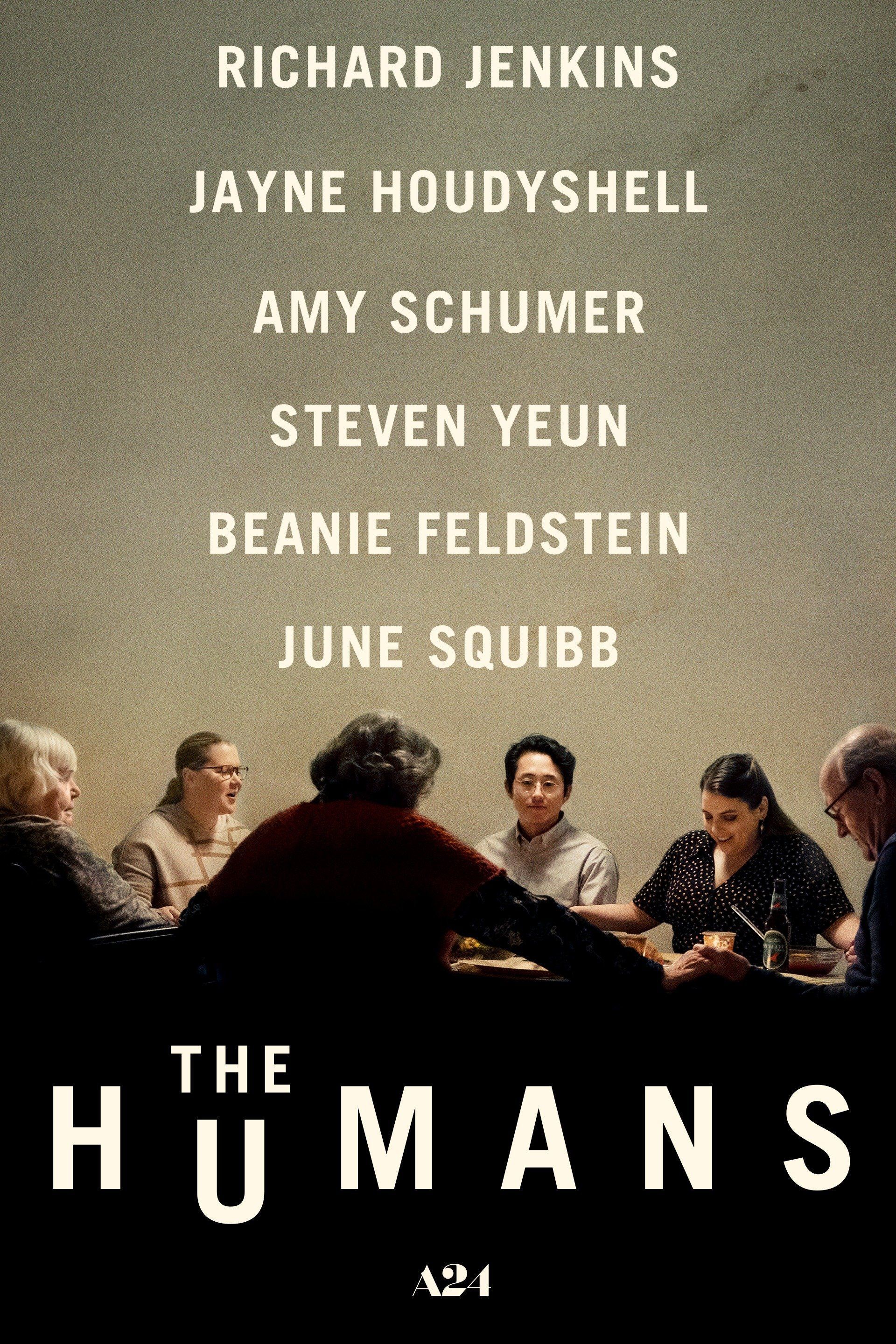 Most movies feel carefully engineered to maximize entertainment value. This is not one of those movies. There were multiple points while watching The Humans where I found myself thinking that this was a story that easily could have been staged as a play, and the film never seems particularly interested in disguising that fact. Rather than chasing dramatic highs or constantly demanding the audience's attention, it quietly observes a family gathering with a level of patience that many modern films would never dare attempt. It is precisely that willingness to prioritize observation over entertainment that makes the film feel perfectly at home within the A24 catalog. The result is something that often feels less like a movie and more like two hours spent sitting quietly in the corner of a real family gathering. What makes the film work is how believable everyone is. Nobody is entirely innocent, but nobody is entirely guilty either. The family dynamics feel authentic, and the performances across the board help sell that realism. Steven Yeun and Beanie Feldstein are particularly convincing together. In most movies, they probably are not the first two people you would imagine being paired romantically, which oddly makes them feel even more believable as a couple. They come across less like movie characters and more like two actual people trying to navigate life together. What I found most admirable, however, is how comfortable the film is being exactly what it wants to be. Even its R rating feels like evidence of that. Nothing about The Humans seems designed to maximize its audience or make itself easier to consume. That commitment places a natural ceiling on how engaging the film can be, but it also gives it a confidence and authenticity that many more ambitious films lack. I respected The Humans at least as much as I enjoyed it, and I suspect that is exactly the reaction it was aiming for.The Humans
 - Suspiria
 Nearly fifty years after its release, Suspiria remains one of the most frequently recommended horror films for anyone looking to explore the genre's history, which is ultimately what brought me to it. Jessica Harper delivers a strong lead performance and provides a welcome anchor as the film descends further into its increasingly strange and unsettling world. The vivid colors and iconic score create an atmosphere unlike almost anything else from its era, and there are moments where the film feels more interested in creating a nightmare than telling a conventional story. That approach is also where my biggest frustrations came from. I spent much of the runtime confused, and while I understand that dreamlike ambiguity is part of the film's appeal, it often left me feeling detached rather than intrigued. There were also moments where the film's age became difficult to ignore, particularly in sequences where the artificial nature of the sets was obvious through a modern lens. None of this ruined the experience, but it did prevent me from becoming fully immersed in the nightmare the film was trying to create. I have no problem accepting Suspiria as a horror classic, but I never found it to be a timeless one. More than anything, I came away respecting its influence and artistry more than I actually enjoyed watching it.Suspiria
 - Hallow Road
 Hallow Road succeeds because it understands how to make the audience feel trapped inside its central dilemma. Rather than relying on constant twists or exaggerated drama, the film steadily builds tension by placing viewers alongside its characters and forcing them to experience the uncertainty of the situation in real time. The confined scope becomes one of the film's greatest strengths, creating an atmosphere of mounting anxiety that remains engaging throughout most of the runtime. As someone with a particular fondness for British-set films, I also enjoyed hearing Matthew Rhys perform in his natural Welsh accent rather than the American accents many viewers may be more familiar with. Strong performances across the board help ground a story that could easily have become far more melodramatic than it needed to be. Where the film falls short is in its final act. For so much of the runtime, Hallow Road does an excellent job building tension and investment, but the payoff never quite matches the strength of the setup. Without venturing into spoiler territory, the ending left me wanting more, feeling as though the film reached its conclusion before fully earning it. One of the film's most important supporting figures is highly effective at generating tension during the early stages of the story, but the character ultimately feels underdeveloped. What begins as an intriguing presence gradually becomes a more two-dimensional figure, leaving the final act without the level of resolution the earlier buildup seemed to promise. I would also push back somewhat on the horror label. While there are certainly unsettling moments, the film operates far more effectively as a suspense thriller, deriving its strengths from tension, uncertainty, and emotional pressure rather than traditional horror elements. That doesn't diminish what it does well, and there is still plenty to admire from both a pacing and atmosphere standpoint. Hallow Road gets most of the important things right and remains an engaging thriller throughout, but it ultimately falls just short of reaching the level its strongest moments suggest it could have achieved.Hallow Road
 - House on Eden
 This is one of those films that mistakes confidence for competence. The movie places an astonishing amount of faith in the appeal of its central cast, but that faith is rarely rewarded. Too much of the runtime feels built around the assumption that simply putting allegedly famous internet personalities in front of a camera is enough to hold an audience's attention. Unfortunately, it isn't. The performances from Kris Collins, Celina Myers, and the rest of the ensemble rarely rise above the level of content creators playing dress-up as actors, leaving the film without the screen presence necessary to carry even its simplest scenes. When a horror film depends this heavily on its characters, that is a fatal flaw. The bigger problem is that the film never seems aware of its own limitations. The writing constantly reaches for depth and significance without ever earning either, resulting in long stretches of dialogue and character interactions that feel painfully self-important rather than engaging. The pacing is equally problematic, with extended stretches where very little of interest actually happens, forcing the audience to spend far more time with these characters than the material can justify. The found-footage presentation does the film no favors either. Rather than enhancing realism or tension, it often feels like a convenient shortcut around the discipline required to build atmosphere through more traditional filmmaking techniques. There are moments clearly intended to be provocative, mysterious, or even seductive, but neither the writing nor the performances can support the level of fascination the film seems to have with its own characters. Even a sequence seemingly included to shock or challenge the audience feels more awkward than effective. House on Eden isn't ambitious enough to be an interesting failure and isn't competent enough to work as straightforward horror. Instead, it lands in the uncomfortable middle ground of a film that genuinely believes it is far better than it actually is.House on Eden
 - No Exit
 A generic title and a premise that sounds like it was pulled from a streaming-service thriller generator don't exactly inspire confidence. A group of strangers trapped together during a snowstorm is hardly groundbreaking material, yet the film ultimately makes it work through strong pacing, a surprisingly tight script, and a willingness to keep the audience guessing without becoming convoluted. Despite operating within a very limited geographic footprint and undoubtedly feeling confined by its setting, it generates enough tension and momentum to keep that limitation from becoming a major issue. Havana Rose Liu carries the film with confidence and proves herself more than capable of anchoring a thriller, while Danny Ramirez and Dale Dickey provide strong supporting performances that help keep the ensemble dynamic engaging throughout. Dennis Haysbert brings his trademark Allstate-level assurance to the film, lending a welcome sense of stability whenever he's on screen. What impressed me most was how easy the story is to follow without sacrificing suspense. Too many thrillers mistake confusion for complexity, but No Exit understands that clarity and unpredictability can coexist. I also think it must be said that the horror label is simply incorrect—this one is a thriller from start to finish with virtually no genuine horror elements. Whatever label gets attached to it, the execution is surprisingly efficient. While the film does a respectable job rising above its familiar setup, it never completely escapes the clichés that come with a story built around a stranded traveler trying to get home through a storm. There are also a few moments where Hollywood-style exaggeration gets the better of the film's otherwise grounded approach, asking the audience to accept a level of durability from both people and particularly equipment that stretches credibility, while one scene takes a strangely questionable approach to depicting self-destructive behavior during a moment of crisis. It isn't reinventing the genre, nor do I think it is necessarily trying to, but for a relatively modest production it gets just about everything out of the concept that it can. For me, it hits the rating ceiling for a low-budget thriller and easily earns three out of five stars.No Exit
 - Cannibal Holocaust
 Cannibal Holocaust has spent decades carrying one of the most infamous reputations in cinema, and after finally watching it, it's easy to understand why. Even by today's standards, the film remains remarkably extreme, not only because of its graphic violence but because of how convincingly it presents itself. Ruggero Deodato's use of found-footage techniques was years ahead of its time, helping create a level of realism that blurred the line between fiction and reality for many viewers upon release. What surprised me most, however, was that beneath the controversy lies a film with an actual point to make. Rather than existing solely for shock value, Cannibal Holocaust functions as a critique of sensationalist media and the lengths people will go to in pursuit of a story. That doesn't mean I'd recommend it broadly. The film's reputation is earned, and a strong stomach is almost a prerequisite for getting through it. There are moments where the message and the methods used to deliver it feel at odds with one another, creating ethical questions that have followed the film for more than four decades. Still, I found it more thoughtful than I expected and far more influential than its detractors often acknowledge. This is not a film for casual horror fans, and many viewers will understandably decide its artistic ambitions don't justify its excesses. For those willing to engage with it on its own terms, however, there's more substance here than its notorious reputation might suggest.Cannibal Holocaust
 - Heretic
 Heretic succeeds largely because of Hugh Grant, who delivers one of the most unexpectedly compelling performances of his career. His portrayal of Mr. Reed is charismatic, intelligent, unsettling, and often genuinely entertaining to watch when the character is at his most manipulative. Sophie Thatcher and Chloe East are strong as the young missionaries caught in his psychological game and give the film an emotional grounding that prevents it from becoming little more than an extended philosophical exercise. The screenplay raises interesting questions about faith, doubt, and belief. For much of its runtime, I found myself fully engaged by the conversations as much as the suspense. Where the film loses some points for me is in its tendency to treat skepticism as inherently more sophisticated than faith. While Heretic presents itself as a discussion of competing worldviews, there are moments where it feels less interested in exploring religion than in dismantling it. To its credit, the film is smart enough to avoid becoming a completely one-sided lecture with Hugh Grant's character ultimately revealed to be far less enlightened than he believes himself to be. Still, I couldn't shake the feeling that the screenplay occasionally confuses cynicism with insight. Even so, the performances, tension, and thought-provoking subject matter make the film a must-watch. Whether you agree or not with Heretic's conclusions, the film gives you much to think about long after it's over.Heretic
 - Hereditary
 Hereditary announces Ari Aster as a major filmmaking talent with one of the most effective horror films of the last decade. Toni Collette delivers one of the best performances I've ever seen in a horror film, while Alex Wolff and Milly Shapiro help make the Graham family feel painfully real long before the story descends into outright nightmare territory. Rather than relying on familiar genre formulas, Aster builds his story on grief, guilt, and family dysfunction, giving the supernatural elements far more weight when they eventually take center stage. The film remains deeply unsettling even during its quietest moments, and the confidence behind the camera is remarkable for a first-time feature director. What separates Hereditary from many modern horror films is how carefully everything is constructed. Aster doesn't rely on cheap tricks or constant jump scares and instead patiently builds tension and allows it to accumulate until it becomes almost unbearable. The film is packed with memorable moments, including one sequence that serves as a surprisingly persuasive reminder of the importance of safe car riding practices. The technical craftsmanship is exceptional, from its meticulous cinematography to its unsettling sound design. But none of it would matter without such a strong script underneath. Hereditary doesn't simply deliver powerful scares-it builds an entire tragedy around them. The ending won't work for everyone, but I found it to be a fitting payoff to one of the most effective horror films of the last decade.Hereditary
 - Opus
 Opus has all the ingredients of a film I should have loved. The combination of celebrity worship, cult-like devotion, media manipulation, and an isolated setting feels tailor-made for a darkly funny horror satire, and the casting only strengthens that promise. John Malkovich seems perfectly suited to playing a reclusive music icon surrounded by devoted followers, bringing just the right blend of charisma and unease to the role. Ayo Edebiri provides a capable anchor as the audience surrogate, though I never found her performance compelling enough to elevate the material on its own. The setup is intriguing, the production is polished, and for a while it feels like the film is building toward something genuinely memorable. The problem is that Opus never seems quite sure how far it wants to push its ideas. The satire is obvious without being particularly incisive, and many of the film's observations about fame, fandom, and artistic ego feel broader than they are insightful. There are flashes of a smarter and more biting movie hidden underneath the surface, but it never fully commits to them. I remained interested throughout thanks largely to the premise and Malkovich's presence, but I walked away feeling like the film left a lot of potential unexplored. For a story built around obsession, celebrity mythmaking, and the dangers of blind devotion, the final result is surprisingly safe and far less provocative than it seems to think it is.Opus
 - Beau Is Afraid
 As an A24 production, Beau Is Afraid feels right at home alongside the studio's most unconventional releases. Ari Aster fully embraces the company's tendency to abandon traditional storytelling rules in favor of something stranger, more personal, and considerably more divisive. While I ultimately found Midsommar to be the stronger and more focused film, there's no denying the ambition on display here. At over three hours, Beau Is Afraid is messy, excessive, self-indulgent, and often completely fascinating. Joaquin Phoenix delivers one of the best performances of his career, carrying the film's relentless anxiety with a level of commitment that makes even its most absurd moments believable. Patti LuPone is equally excellent as Beau's domineering mother, while Parker Posey leaves a surprisingly strong impression despite her relatively limited screen time. Whether a scene is hilarious, uncomfortable, or completely baffling, the cast never stops treating the material with absolute sincerity. I can't honestly say Beau Is Afraid works all the time. There are stretches where the film disappears so far into its own nightmare logic that it risks losing the audience entirely, and some of Aster's ideas are more interesting than they are effective. Yet I found it impossible not to admire. In an era where so many films feel engineered to appeal to everyone, Beau Is Afraid feels determined to appeal to exactly the people willing to meet it on its own terms. It's the kind of ambitious, uncompromising project that only a studio like A24 would consistently champion. Aster takes an enormous swing, and while it doesn't always connect, I found the film's originality and willingness to reject convention far more memorable than many technically cleaner movies that play things safe.Beau Is Afraid
 - Midsommar
 Midsommar takes a premise that could have easily become a conventional cult horror film and transforms it into something far more unsettling and memorable. Ari Aster fills every frame with meticulous detail, creating a world that feels vibrant, beautiful, and increasingly wrong all at the same time. Florence Pugh delivers an exceptional performance as Dani, carrying the film's emotional weight from beginning to end and grounding even its most bizarre moments in something painfully human. The horror is often less about what happens and more about watching a woman desperately searching for connection in the aftermath of unimaginable grief. What makes Midsommar so effective is that beneath the rituals, sacrifices, and shocking imagery lies a remarkably sharp examination of a failing relationship. The film's nearly two-and-a-half-hour runtime won't work for everyone, and some viewers may find its deliberate pacing excessive, but I found the slow unraveling of both the mystery and Dani's emotional state consistently compelling. Rather than building toward a traditional horror climax, Aster crafts something stranger and more psychologically satisfying. General audiences may be divided by its length and arthouse sensibilities, but for fans of folk horror and character-driven psychological horror, Midsommar stands as one of A24's strongest releases.Midsommar