
lennyofficial
0following
0followers
Dołączono 2026
- Blow-Up
 This is a distinctive and unusual film, differing from what the director’s previous work had led audiences to expect. The story revolves around Thomas, a restless young photographer—primarily of fashion models—living in London during the explosive, vibrant heart of the 1960s. He is constantly busy capturing not only models—his preferred subjects—but also the marginalized, including the homeless, the disabled, and wayward youth. His life mirrors the frenetic energy of the British capital, an environment in which he seems to thrive. Yet, feeling saturated by London, Thomas decides to venture outside the city, visiting an antique shop—an act that feels like a rebellion against, or an alienation from, the city’s relentless progress. Before long, he begins photographing various scenes—images that might initially appear mundane. He also captures a man and a woman engaged in an intense, intimate exchange in a small park. The woman notices him and approaches, pleading for the photographs; her initial indignation seems to give way to vanity. The narrative returns to the rhythm of the city, but the two soon cross paths again—this time, it feels almost intentional—shifting rapidly from detachment to a palpable chemistry, even though the woman’s primary goal remains securing the photographs. While developing his film, Thomas notices a small, specific detail in one of the shots: a man holding a gun, aimed at the individual who had been in the park with the woman. In other frames, the man can even be seen lying lifeless on the ground. Thomas takes the photographs and enlarges them to get a clearer look—a process known in technical terms as a "blow-up." Yet, in doing so, he only succeeds in making the photographs increasingly grainy with each successive enlargement—as if he had fragmented reality to the point where nothing remains clear, despite his intention to achieve the exact opposite. The narrative unfolds as an investigation into an alleged crime, which ultimately leads nowhere—there is not even confirmation that it actually took place—as if the city, with its population of young hippies, drifters, immigrants, artists, and the marginalized, had swallowed up and concealed the misdeed. As touched upon earlier, the film uses photography as a means to explore reality—a reality that, with each enlargement, becomes increasingly fragmented—serving as a fresh and innovative tool for investigation. Beyond this, reality itself is called into question, to the extent that it is almost relegated to the background by the mimes’ tennis match—a game in which Thomas eventually participates, though it remains unclear whether this is an act of surrender or a recognition of the inherent absurdity of reality.Beyond this, reality itself is called into question—to such an extent that it is almost relegated to the background by the mimes’ tennis match, in which Thomas eventually participates; it remains unclear whether this is an act of surrender or a realization of the inherent absurdity of reality. The performances are excellent and intense, most notably that of the lead, David Hemmings. Also worthy of special mention is the cameo by the prog-rock band The Yardbirds, featuring iconic members such as Jeff Beck and the legendary Jimmy Page. Ultimately, this work stands in stark contrast to what Antonioni’s audience had come to expect; he makes a radical shift—moving from an intimate, melancholic Italy to a bustling, unstoppable London—without ever missing a beat.Blow-Up
- The Widow CoudercSet against the bucolic backdrop of rural France, an escaped convict has a chance encounter with a woman living on a farm; she offers him work for a few days. Naturally, the arrangement extends due to a mutual affinity that develops between them, yet complications arise—specifically involving the neighbors across the way (relatives of the woman hosting the fugitive), who want to force the young woman living with them to leave the house. The film revolves largely around this simple premise, yet its true strength lies in the relationships between the characters. Ultimately, things end tragically at the hands of the embittered neighbors following a liaison between the fugitive and their daughter—despite her reputation for loose morals. The two protagonists defy and challenge social conventions; even though they commit questionable acts, they are inexorably punished for daring to be different—an act of petty, childish spite. Delon is charismatic as ever; even in films that aren't top-tier, he demonstrates his undeniable talent. Signoret, visibly mature, also delivers an excellent performance as a deeply tormented and weary character. The film also features pleasing camera work and a predominantly pastoral setting, capturing a rural, inland France far removed from the country as we know it today.The Widow Couderc
- Borsalino
 The film immediately comes across as masculine and dynamic. The way the two protagonists—masterfully played by Jean-Paul Belmondo (François Cappella) and Alain Delon (Roch Siffredi)—meet is simply iconic: a bloody, bare-knuckle brawl over a woman who had moved from one man (Roch) to the other (François), ending with a nod of mutual respect. Set in 1930s Marseille, the story follows François as he brings Roch into the business; they start at the bottom as mere enforcers and henchmen before rising to become the "masters" of Marseille, suffering losses among their own men along the way. Despite these casualties, the two business partners and friends eliminate anyone who might stand in their path. François and Roch are like brothers—inseparable, guided by a strong moral code, and always ready to watch each other's backs, just as they did whenever they had to dispose of "problems." The beach scene, for me, highlighted this fraternal bond through a seemingly trivial detail: the color of their swim trunks—one white, one black—perfectly mirroring Yin and Yang, representing the strategist and the enforcer. In my opinion, the film is a classic of the gangster genre and comes highly recommended to fans; I honestly don't understand some of the negative reviews and ratings... Incidentally, Delon's character gave his name to the absolute master of Italian adult cinema: the irreproachable Rocco Siffredi (born Rocco Tano).Borsalino
- Have I the Right to Kill?
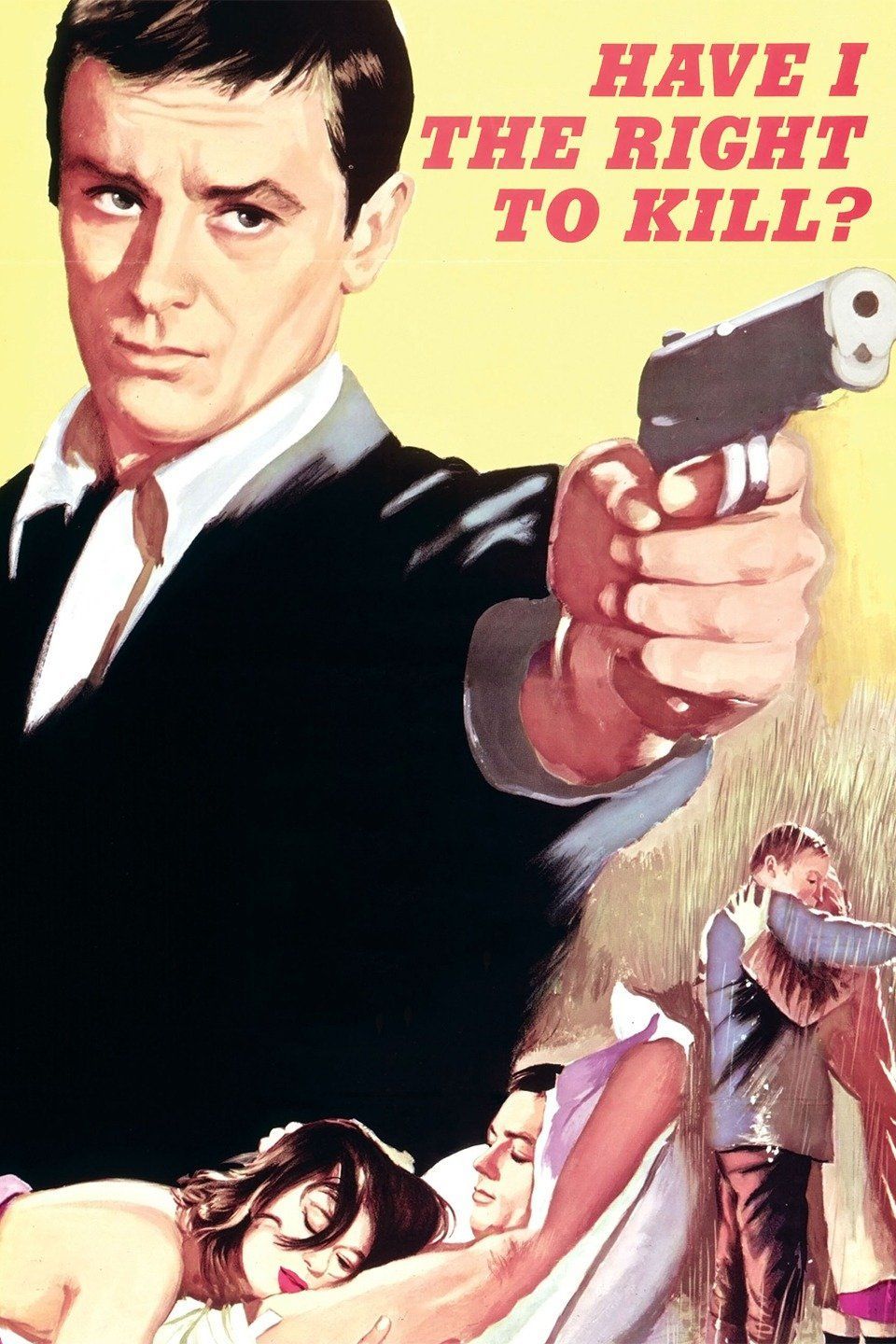 An intriguing, fast-paced noir set between Algeria and France during the Algerian War. Thomas, a Luxembourgish soldier fighting for France, has been stuck in Algeria for six years and longs to return home, wanting nothing more to do with politics. However, his lieutenant offers him the money needed for the journey in exchange for pulling off a job: kidnapping Dominique Servet, a lawyer from Lyon who was slated to defend two Algerians, and holding her captive for several days. Thomas accepts and is assigned to guard the captive alongside Armirio, a *pied-noir*. Despite his orders, Thomas ends up siding with Dominique, even at the risk of ruining the plan. Ultimately, he manages to break free and clear her name, finally making it back home. Yet, things do not settle down once he sets foot in France. After a series of events, Thomas is discovered by his lieutenant, who naturally vows revenge for his subordinate's betrayal. A flight to the Luxembourg border ensues; while it finally brings Thomas home, he finds that things are no longer the same. This is the film's core: through Thomas’s indirect desertion, it explores a widespread sense of dissatisfaction and revulsion toward a conflict that was wearing down many French people. His sense of patriotism—already wounded by the lack of recognition soldiers received back home—is completely extinguished by this act of betrayal. It all culminates in a homecoming that feels different—almost alienating—to the very man who had longed for it so deeply. Upon returning to France, Thomas discovers that no one seems truly interested in what he has experienced; his sacrifice goes unrecognized, and society moves on as usual, leaving him trapped in the aftermath of the conflict. As always, Alain Delon delivers a masterful performance, aided by his commanding screen presence and complemented by the equally superb acting of Léa Massari. The film’s ending is iconic, perfectly capturing the crushing sense of desolation that accompanies such an alienating return home—so much so that the image was chosen for the cover of the 1986 hit album *The Queen Is Dead* by the British band The Smiths. A truly hidden gem that is difficult to find.Have I the Right to Kill?


