


Where to Watch W stronę słońca





- Michael Heimgartner7 lipca 2025Visually Stunning, Intense, and Underrated – A Sci-Fi Gem with Flaws Right now 28 Years Later is in theaters, and it honestly feels surreal to see Danny Boyle and Alex Garland working together again after all these years. For longtime fans, it’s a small miracle. A lot of people don’t know this, but their creative partnership actually fractured around Sunshine. Behind the scenes, this film was apparently the breaking point - tensions over creative choices, diverging visions, and ultimately a professional split between two of the most talented cinematic minds of our time. And that’s fascinating, because Sunshine itself is, to me, one of the most interesting, yet criminally underrated sci-fi films ever made. Visually and sonically, Sunshine remains breathtaking even today. The cinematography is gorgeous, full of stark contrasts between the icy darkness of space and the blinding brilliance of the sun. Boyle’s direction creates this palpable sense of oppressive heat and claustrophobia that makes you feel the mission's stakes deep in your bones. Even watching at home, the film’s imagery and sound design hold up impressively well, immersing you in this decaying spaceship hurtling toward certain doom. John Murphy’s score, especially "Adagio in D Minor," is hypnotic and haunting - it elevates everything, adding an almost spiritual weight to the visuals. The cast is another standout. It’s a legitimately great ensemble where everyone feels believable, human, and fallible. Cillian Murphy, Chris Evans, and Michelle Yeoh in particular deliver grounded, empathetic performances that make you care about the crew as individuals. The film does an excellent job early on of exploring the psychological toll this mission takes on them. It’s not just about the science - it’s about fear, sacrifice, ego, and the terrifying possibility of failing humanity itself. Those philosophical and existential themes really come through in the quieter moments, and I love that the script isn’t afraid to let its characters grapple with moral dilemmas and personal conflicts. But for all that, there’s no getting around the fact that the final third of Sunshine is deeply divisive, and honestly, it’s the film’s biggest flaw. The tonal shift into horror feels abrupt and jarring, as if Boyle suddenly decided to make Event Horizon in the last 30 minutes. The pacing becomes rushed, some characters get completely sidelined or forgotten, and the grounded psychological drama gives way to something that feels more chaotic and less coherent. It’s not that the horror elements couldn’t work, but they don’t blend seamlessly with what came before. That said, even if the shift is clumsy, there’s something thematically consistent about it on repeat viewings. The descent into madness, the loss of rationality in the face of cosmic power - it’s disorienting for the audience in the same way the mission is for the crew. There’s even some fascinating trivia that adds context. The production famously built one of the largest soundstage sets in the UK at the time for the spaceship interior, which helped create that immersive, lived-in feel. Alex Garland has talked about how much research went into making the mission scientifically plausible, even consulting with physicists, although they ultimately took liberties for the sake of drama - like the reflective solar shield and the concept of reigniting the sun. And of course, it’s well known among fans that Boyle and Garland’s creative split after Sunshine meant they didn’t collaborate again for years—making their recent reunion all the more remarkable. I’ve seen other reviewers say Sunshine is "two-thirds masterpiece, one-third mess," and I can’t really disagree. But for me, that imperfect, messy ambition is exactly why I love it. It’s a film willing to take risks, to swing for the fences visually and thematically, even if it doesn’t always stick the landing. It’s not just a sci-fi thriller - it’s a meditation on hubris, sacrifice, and humanity’s fragile place in an uncaring universe. The Icarus mission’s name is no accident - it’s a warning about the cost of flying too close to the sun. Sunshine remains one of the most underrated entries in modern science fiction. It’s flawed, sure, but it's also beautiful, haunting, and thought-provoking. Even after all these years, it still gets under my skin and stays with me long after the credits roll.


Watch W stronę słońca Videos




Get Plex on Your Devices
Free on 20+ platforms. Pick yours.W stronę słońca Trivia
W stronę słońca was released on 4 kwietnia 2007.
W stronę słońca was directed by Danny Boyle.
W stronę słońca has a runtime of 1 h 48 min.
W stronę słońca was produced by Andrew Macdonald.
Jest rok 2057, słońce zaczyna gwałtownie gasnąć, ludzkości grozi śmiertelne niebezpieczeństwo. Jedyną nadzieją planety jest ekspedycja, która ładunkiem nuklearnym ponownie obudzi kulę ognia. Ośmiu mężczyzn i jedna kobieta wyruszają w krucjatę o przetrwanie miliardów istnień. Poza zasięgiem radiowym ich misja zaczyna nabierać całkiem nowego znaczenia i ujawnia liczne sekrety. Zaskakujące momenty, zmieniające kierunek akcji i niewiarygodnie mocne alternatywne zakończenie sprawią, że tej podróży w przyszłość długo nie zapomnisz!
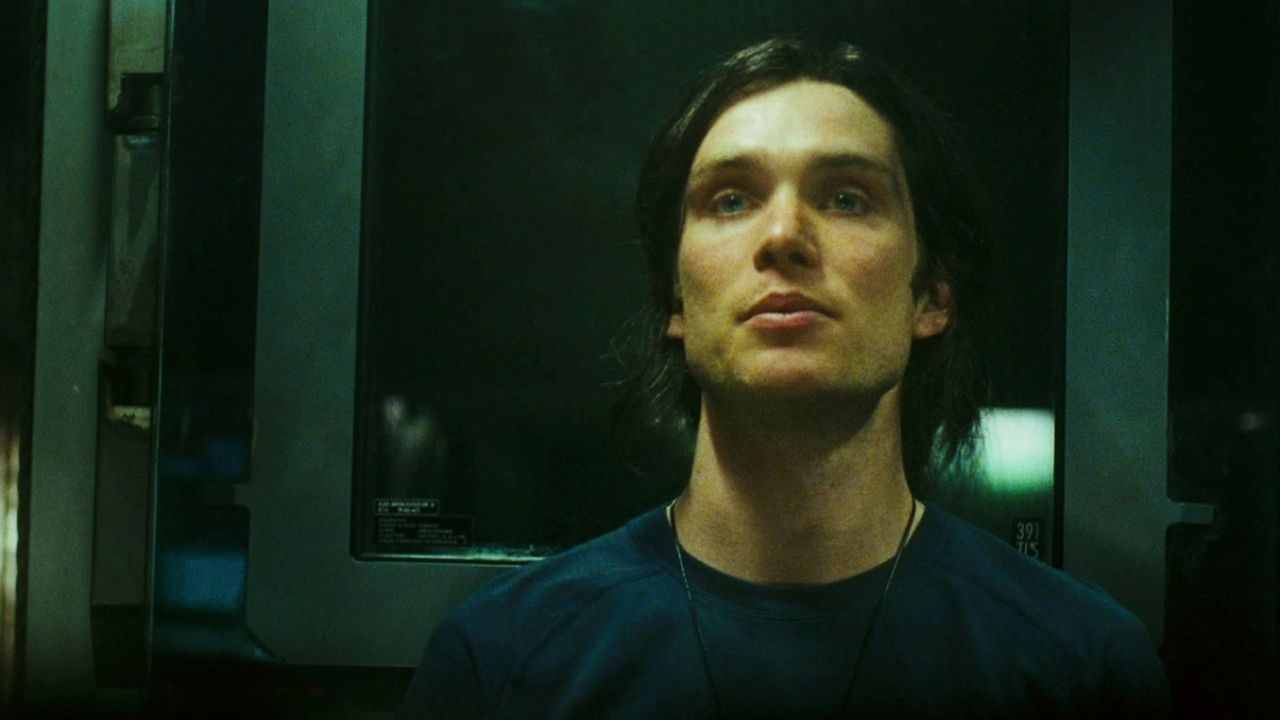
The key characters in W stronę słońca are Capa (Cillian Murphy), Cassie (Rose Byrne), Mace (Chris Evans).
W stronę słońca is rated 16.
W stronę słońca is a Sci-Fi, Thriller film.
W stronę słońca has an audience rating of 7.3 out of 10.
W stronę słońca had a budget of 50 mln USD.
W stronę słońca has made 34,8 mln USD at the box office.