NOVASeason 35
TV-PG
A weekly documentary series, each episode providing an in-depth look at a different subject of scientific research. Subjects examined by this show have included the cutting edge of theoretical physics, a return to the Chernobyl nuclear reactor, the long-term effects of Amazon deforestation, and the development of life-saving medical techniques.
Hvor å se NOVA • Season 35

17 episoder
- Marathon Challenge
 E3
E3Marathon ChallengeCan anyone run a marathon? How do you run 26.2 miles if you have trouble making it around the block? With good coaching, discipline, and lots of group support, as NOVA shows when it follows 13 generally sedentary people through a training regimen designed to prepare them for an ultimate test of stamina and endurance. Produced in cooperation with the Boston Athletic Association®, which granted NOVA unprecedented access to the 111th Boston Marathon®, and Tufts University, "Marathon Challenge" takes viewers on a unique adventure inside the human body, tracking the physiological changes that exercise can bring about. - Judgment Day: Intelligent Design on Trial
 E5
E5Judgment Day: Intelligent Design on TrialThe account of the legal battle in Dover, Pennsylvania over the required teaching of the religious-based "intelligence design" as supposedly a legitimate scientific alternative to evolution in the local public school. - Missing in MiG Alley
 E7
E7Missing in MiG AlleyNova reviews the air war between Russian Mig 15s and American F86 Sabres over Korea. With the Russians anxious for information about American aerial combat tactics and the F86, many people speculate that some American pilots who are still MIA were taken to Russia for interrogation. Their families hope they may still be alive. - Absolute Zero: The Conquest of Cold
 E8
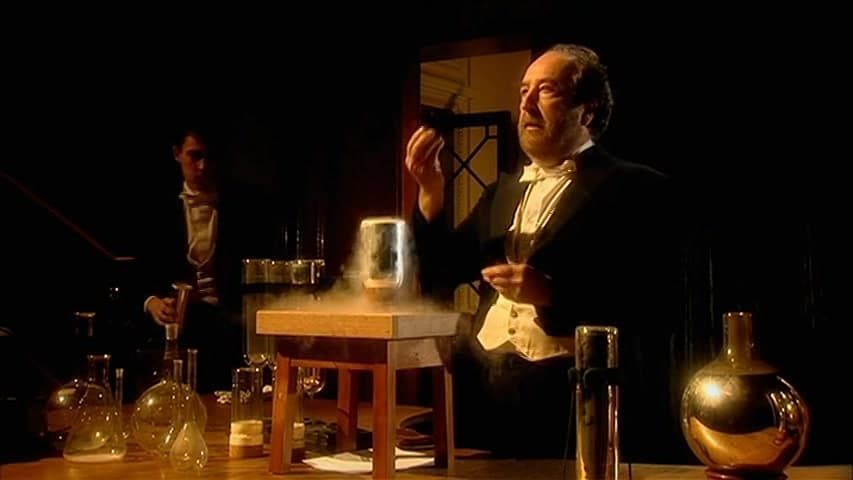
E8Absolute Zero: The Conquest of ColdOur mastery of cold is something we take for granted, whether it s air conditioning and frozen food or the liquefied gases and superconductivity at the heart of cutting-edge technology. But what is cold? How do you achieve it, and how cold can it get? - Absolute Zero: The Race for Absolute Zero
 E9
E9Absolute Zero: The Race for Absolute ZeroOur mastery of cold is something we take for granted, whether it s air conditioning and frozen food or the liquefied gases and superconductivity at the heart of cutting-edge technology. But what is cold? How do you achieve it, and how cold can it get? This two-part NOVA special brings the history of this frosty fascination to life with brilliant dramatic recreations of high moments in low-temperature research and the quest for ever-lower notches on the thermometer. In the second hour, The Race For Absolute Zero dramatizes the titanic rivalry between Scottish researcher James Dewar and Dutch physicist Heike Onnes, who plunged cold science to the forbidding realm at which oxygen and then nitrogen turn into liquids. The race continues today as scientists pioneer super-fast computing near absolute zero the ultimate chill of -459.67° F where atoms slow to a virtual standstill. - Astrospies
 E11
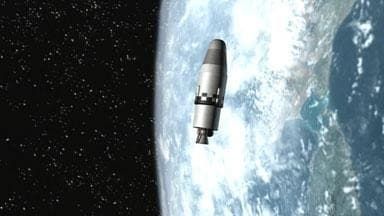
E11AstrospiesMillions remember the countdowns, launchings, splashdowns, and parades as the U.S. raced the USSR to the moon in the 1960s. But few know that both countries also ran parallel space programs, whose covert goal was to launch military astronauts on spying missions. With investigative journalist James Bamford, NOVA delves into the untold story of this top-secret space race, which might easily have turned into a shooting war in orbit. - Ape Genius
 E12
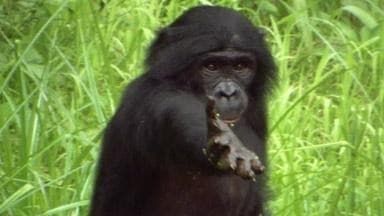
E12Ape Genius At a research site in Fongoli, Senegal, a female chimpanzee breaks off a branch, chews the end to make it sharp, and then uses this rudimentary spear to skewer a tasty bush baby hiding inside a hollow tree. It’s an astonishing breakthrough for primate researchers—the first time anyone has documented a chimpanzee wielding a carefully prepared, preplanned weapon. But it's only the latest in a slew of extraordinary new findings about ape behavior. The more researchers learn about the great apes—chimpanzees, bonobos, gorillas, and orangutans—the more evidence they find of creative intelligence. What, then, is the essential difference between them and us? "Ape Genius," a NOVA-National Geographic special, explores that provocative question and examines research that is illuminating the ape mind. Bit by bit, investigators are finding an explanation for why the non-human great apes never made the breakthrough into a human-style culture that builds on the achievements of previous generations. - The Four Winged Dinosaur
 E13
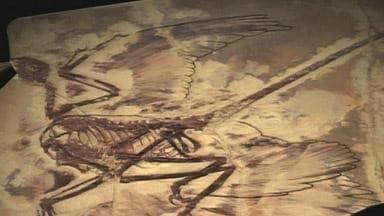
E13The Four Winged DinosaurA look at the 2002 discovery of a four-winged crow-sized dinosaur fossil dubbed Microraptor, which has rekindled the scientific debate over the origins of flight. Included is a wind tunnel test of a "flight-ready" model of the 130 million-year-old Microraptor. - Cracking the Maya Code
 E14
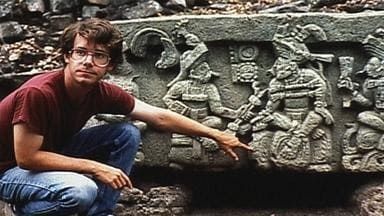
E14Cracking the Maya CodeThe ancient Maya civilization of Central America left behind an intricate and mysterious hieroglyphic script, carved on monuments, painted on pottery, and drawn in handmade bark-paper books. For centuries, scholars considered it too complex ever to understand—until recently, when an ingenious series of breakthroughs finally cracked the code and unleashed a torrent of new insights into the Mayas' turbulent past. For the first time, NOVA presents the epic inside story of how the decoding was done—traveling to the remote jungles of southern Mexico and Central America to investigate how the code was broken and what Maya writings now reveal. - A Walk to Beautiful
 E16
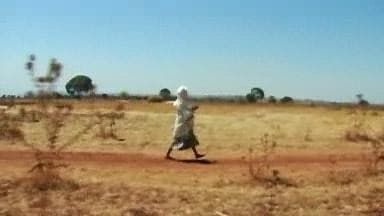
E16A Walk to BeautifulIn this award-winning documentary, a difficult journey that begins in hopelessness and shame for thousands of women in Ethiopia ends in a productive new life. The film tells the personal stories of rural women who make their way to Ethiopia's capital, Addis Ababa, seeking treatment for obstetric fistula, a life-shattering complication of childbirth. Filmed in a starkly beautiful landscape, the documentary juxtaposes the isolated lives of village women who are outcasts because of their medical condition, with the faraway hospital that offers a miracle after a long and arduous trek—a "walk to beautiful." - Lord of the Ants
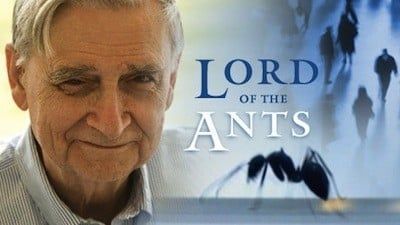 E17
E17Lord of the AntsNarrated by Harrison Ford. At age 78, E.O. Wilson is still going through his 'little savage' phase of boyhood exploration of the natural world. NOVA profiles this soft-spoken Southerner and Professor Emeritus at Harvard, who is an acclaimed advocate for ants, biological diversity, and the controversial extension of Darwinian ideas to human society.