
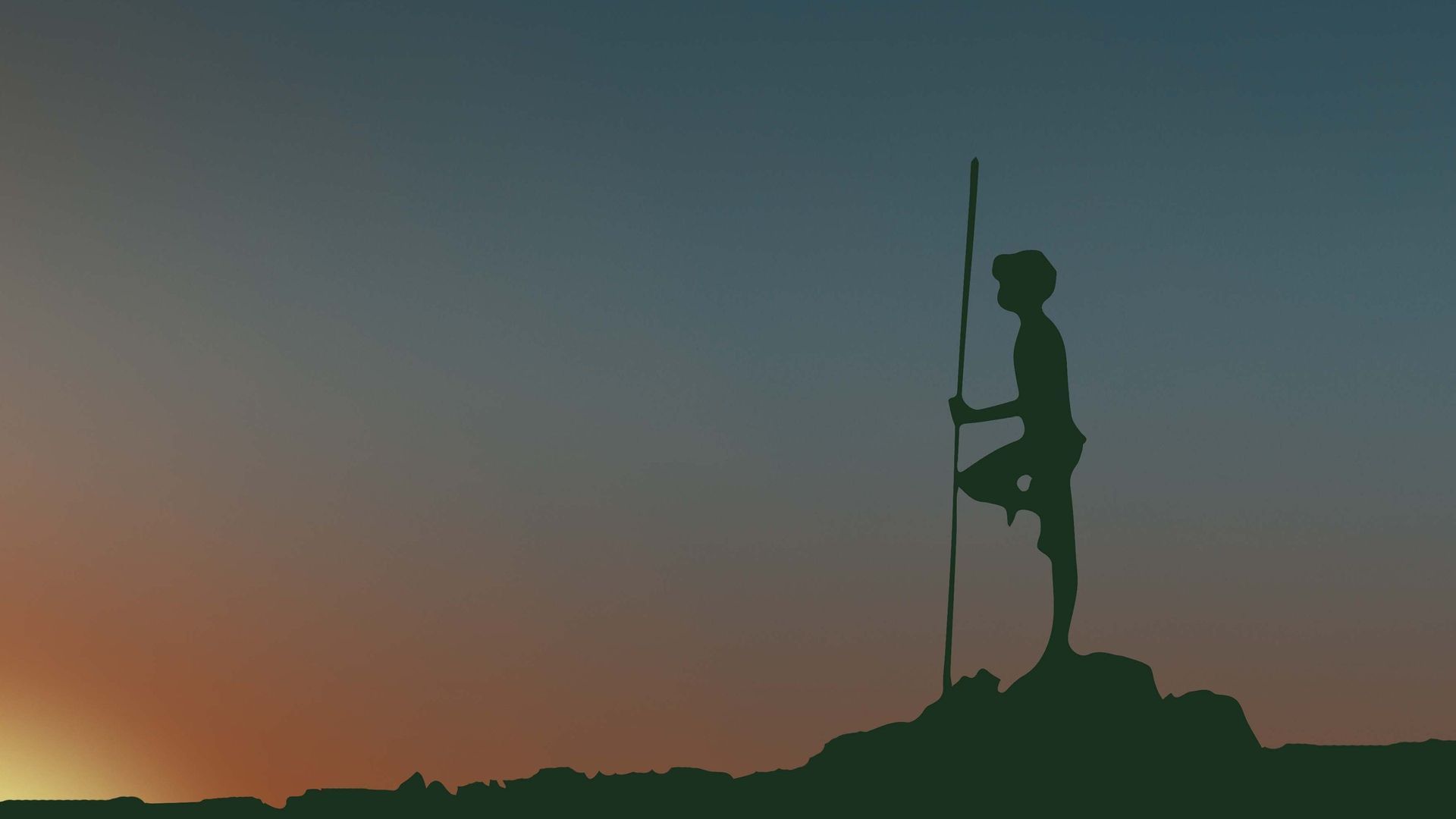





- CrossCutCritic18. mai 2025Walkabout Or, The Gospel According to the Dust and the Boy Who Sang Without Words A cruciform reflection through the voice of Henry Melville. I. A Most Singular Wilderness, and the Apparition of a Native Arcadia Behold the desert! —Vaster than Babel, and twice as mute. A place where the Lord God perhaps once spoke, but now only whispers in stones and the bones of lizards crucified beneath the sun. Into this great silence—this Australian Leviathan of light— come two children of the city, cast forth from their father’s motorcar as from Eden, not by serpent but by pistol. Civilization shot itself in the head, and the children, unknowing exiles, wander east of its ruin. She is a girl of schoolbooks and pressed skirts. He is a boy of soft shoes and softer hands. Their language is clocks, sandwiches, and plastic-wrapped reason. They walk not by faith, but by memory— a compass drawn from maps that no longer apply. And then— the boy appears. Naked, painted, radiant with the old earth’s laughter. A native of that sacred tongue which speaks not in words but in gestures— in birds, in fire, in the rhythm of dust. An Abel in the land of Cain. He does not speak their language. He dances it. Feeds them. Guides them. Saves them. And like all who offer salvation without armor or nation, he is doomed. But not yet. Not yet. For a moment—an hour, a season—the three of them form a kind of trinity: not holy, but whole. A girl who learns to trust. A boy who learns to laugh. And one who never needed to learn, for joy was already in his breath. If you, reader, have ever stood upon sand that once held water, or stared into the eyes of one who belonged to a world older than your gods, then you have already walked with them. And the wind knows your name. --- II. The Rites of the Child and the Silence of the Woman The boy is not lost. He is transfigured. He climbs trees with the grace of a ghost. He reads the entrails of the wind. He laughs with the birds and feeds fire with his breath. To call him primitive is to confess one’s own bewilderment at holiness unpolished. This, then, is his walkabout—his trial, his passage, his gospel in motion. He must die to be a man, as every prophet must walk into the wilderness before returning in flames. But they cannot follow him. The children, white as milk and twice as blind, do not know this language. They carry radios with no signal. They measure time by shadows on a broken wristwatch. The little one, the boy, he follows. He mimics. He plays. His heart still soft with Eden. But the girl— Ah, the girl is older, and therefore less able to be saved. She watches the native boy as through glass. Not with cruelty, no— but with the gaze of the colonizer's daughter: curious, reserved, yearning without permission. He dances for her. Paints his face. Sings in a language older than sin. She watches. He paints the trees with the signs of the old ones, calls down birds from the sky, performs the rite that asks: Will you have me? Will you see me? And she turns her face. Not in scorn. But in the more terrible rejection of indifference. And so he dies. Because the world does not end with rage. It ends with silence. And if you have ever watched someone offer beauty and be met with stillness— if you have ever sung your heart before someone who could not hear— then you know this death. The crucifixion that requires no nails. --- III. Of Return, and the Sorrows of Remembering Too Late They leave the desert. The city takes them back, as the sea reclaims its driftwood with neither gratitude nor grief. They bathe. They dress. They walk on pavement again— surfaces that neither bless nor wound. And what of it? The girl finds herself in a room with floral wallpaper and a man with opinions about dinner. She stirs tea. She stares. She forgets— or tries to. But forgetfulness is a Western luxury. And she does not wear it well. For something in her still echoes the boy's songs without translation, his eyes asking a question she could not answer. She remembers— but not with words. She remembers in pauses, in heat, in a certain tree seen from a certain bus window that for a second smells like eucalyptus and blood. The little brother may speak of it. Or he may not. Children remember differently. But she— she is now a woman. And with womanhood comes the curse of knowing afterward. Of understanding too late that what passed between them in silence was not just survival— it was grace, and she turned from it. If you have ever come back to the world and found yourself unfit for its comforts— if you have ever looked at civility and tasted ashes— you are not alone. For the truest loves are not always the ones we take with us, but the ones we buried because we were too afraid to kneel when the fire danced. --- IV. A Lamentation for the Boy Who Danced for Nothing He danced. Not for show. Not for conquest. But for communion. He offered his spirit, painted his face with ochre and joy, sang the old rhythm his ancestors passed down in flame and footfall. He danced for her. And she turned her head. What is more sorrowful than unrequited beauty? Not spurned love—no, that is tragic, but known. But unseen love? Unheard music? A ritual performed in hope before a soul already sealed? This boy was no metaphor. He was real. And because he was real, he was doomed. For civilization cannot see the sacred when it comes barefoot, untranslated, and asking nothing. So he died. Not by sword. By silence. And still, he walks through the dust, a ghost with no temple, a god with no worshippers. If you have ever offered your whole self and been met with polite decline— if you have danced before someone who didn’t know it was a prayer— then you are kin to him. And you will carry his song long after the movie ends. --- Postscript He was not lost. He was not primitive. He was not background. He was the priest. He was the prophet. He was the sacrament offered and refused. Walkabout is not about survival. It is about exile— from the natural, from the sacred, from the one who came to save us and was left to sing to the sand. Let us speak his name—not with pity, but with repentance. Let us remember what we did not receive.


Skaff deg Plex på enhetene dine
Gratis på over 20 plattformer. Velg din.Walkabout-trivia
Walkabout ble utgitt 1. juli 1971.
Walkabout ble regissert av Nicolas Roeg.
Walkabout har en spilletid på 1t, 35m.
Walkabout ble produsert av Si Litvinoff.
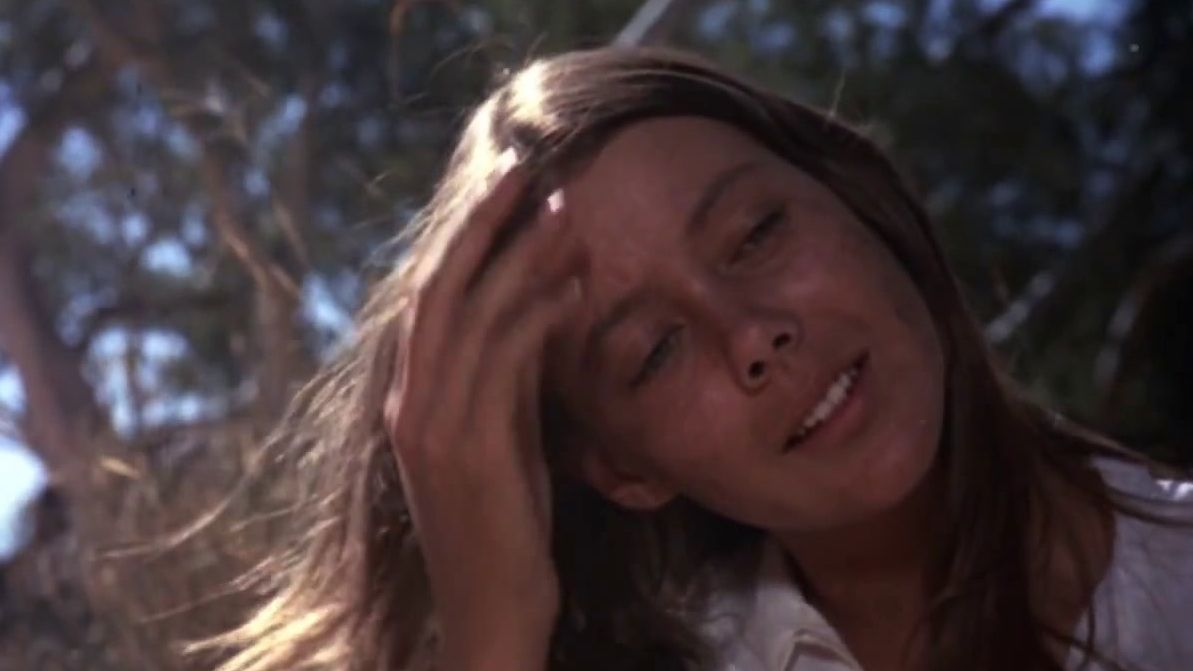
Under the pretense of having a picnic, a geologist takes his teenage daughter and 6-year-old son into the Australian outback and attempts to shoot them. When he fails, he turns the gun on himself, and the two city-bred children must contend with harsh wilderness alone. They are saved by a chance encounter with an Aboriginal boy who shows them how to survive, and in the process underscores the disharmony between nature and modern life.
Hovedpersonene i Walkabout er Girl (Jenny Agutter), White Boy (Luc Roeg), Black Boy (David Gulpilil).
Walkabout har aldersgrensen PG.
Walkabout er en Adventure, Drama-film.
Walkabout har en publikumsvurdering på 8.6 av 10.
Walkabout hadde et budsjett på 1 mill. USD.