
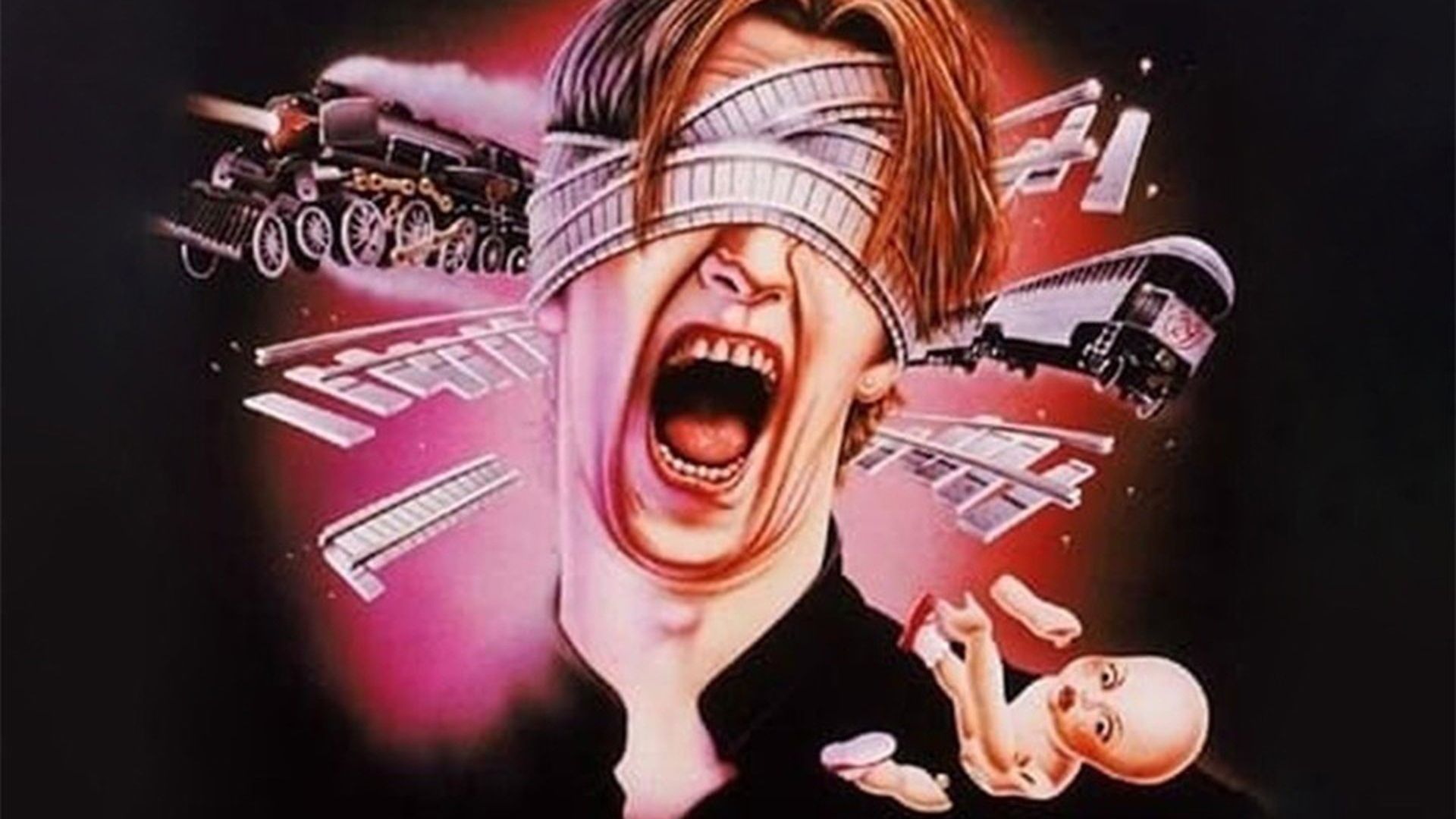






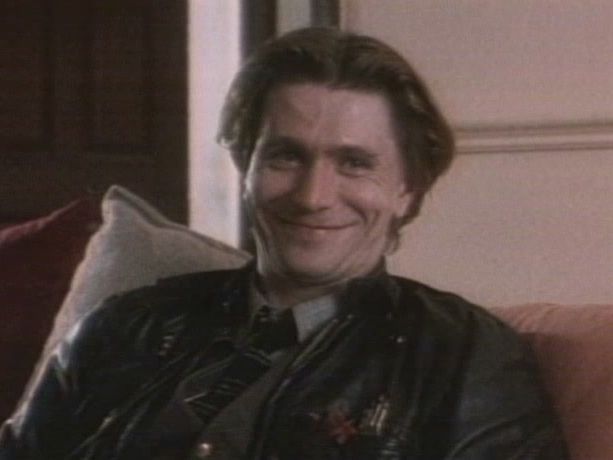
- Pyutaros14 februari 2026The tragedy of Track 29 is that even when the camera stays on Linda, it is never actually looking at her; it is a systemic failure of the Bechdel test that renders her a human vessel for the masculine architecture of her own life. She is trapped between Dr. Henry’s clinical, "Low-Temperature" control and the Stranger’s primal, "High-Temperature" aggression, existing only as a reactive input to their conflicting mandates. By manifesting the Stranger as a savior to her boredom, Linda isn't claiming agency but is instead hiring a mental mercenary—a move that proves she has been denied the internal tools to save herself. This is punctuated by the diner scene with Arlanda, where the social "logic-check" fails, confirming that Linda’s reality is a solo loop where even her rebellion is just another male projection. This structural erasure extends beyond the script and into the real-world critical reception of the film, which serves as a bitter mirror to the patriarchy on screen. Gary Oldman was universally lauded for his "brave" and "unhinged" performance, rewarded for the same high-temperature unpredictability that makes his character a predator, while Theresa Russell was dragged for her technical choices. The industry punished her for refusing to be the beautiful, compliant vessel the male gaze demands. She chose a jarring, infantile, and hyper-stylized performance by design to reflect a woman whose development was frozen at fifteen. If Russell had been less conventionally attractive, those same choices—the bows, the braces, the high-pitched fragility—would have been praised as "quirky" or "character-driven." Instead, because she didn't satisfy the aesthetic baseline expected of her, her work was dismissed, proving that the critics were just as blinded by the "Stepford" expectation as Henry himself. Henry represents the sterile "geometry" of the household, treating Linda like a behavioral error that needs to be sedated rather than a woman with a history. His manipulative nature, seen in his negotiated sexual payout in the car, stands as a cold contrast to the raw, un-negotiated intimacy of the piano scene. Yet, the film falls into the lazy Hollywood trap of pathologizing every expression of fringe desire, insisting that Linda’s psyche must be a "symptom" of her 15-year-old trauma. This robs her of any adult autonomy and forces her memories into a "Grindhouse" filter where she re-edits her own life using cinematic tropes like the Cape Fear bridge. In the end, she doesn't break the cycle; she just swaps a "Daddy" for a "Son," donning the Stepford mask to drive away from one male-dominated script into another, proving her perspective remains the background noise to a masculine crash.

Get Plex on Your Devices
Free on 20+ platforms. Pick yours.Track 29 Trivia
Track 29 was released on 12 juli 1988.
Track 29 was directed by Nicolas Roeg.
Track 29 has a runtime of 90 m.
Track 29 was produced by Rick McCallum.
Dokter Henry Henry is zo geobsedeerd door zijn modeltreinen, dat zijn vrouw Linda zich eenzaam voelt en ze begint zich af te vragen waar haar zoon, die ze lang geleden heeft laten adopteren, zou kunnen zijn. Op een dat ontmoet ze de Britse lifter Martin, die haar verloren zoon blijkt te zijn. De twee trekken vervolgens met elkaar op en beginnen een band te krijgen. Maar Martin mag zijn moeder's man absoluut niet. Linda begint te vrezen voor de veiligheid van haar man en diens treintjes.
The key characters in Track 29 are Linda Henry (Theresa Russell), Martin (Gary Oldman), Henry Henry (Christopher Lloyd).
Track 29 is rated 12.
Track 29 is a Drama, Mysterie film.
Track 29 has an audience rating of 4.2 out of 10.
Track 29 had a budget of US$ 5 mln..
Track 29 has made US$ 429K at the box office.