
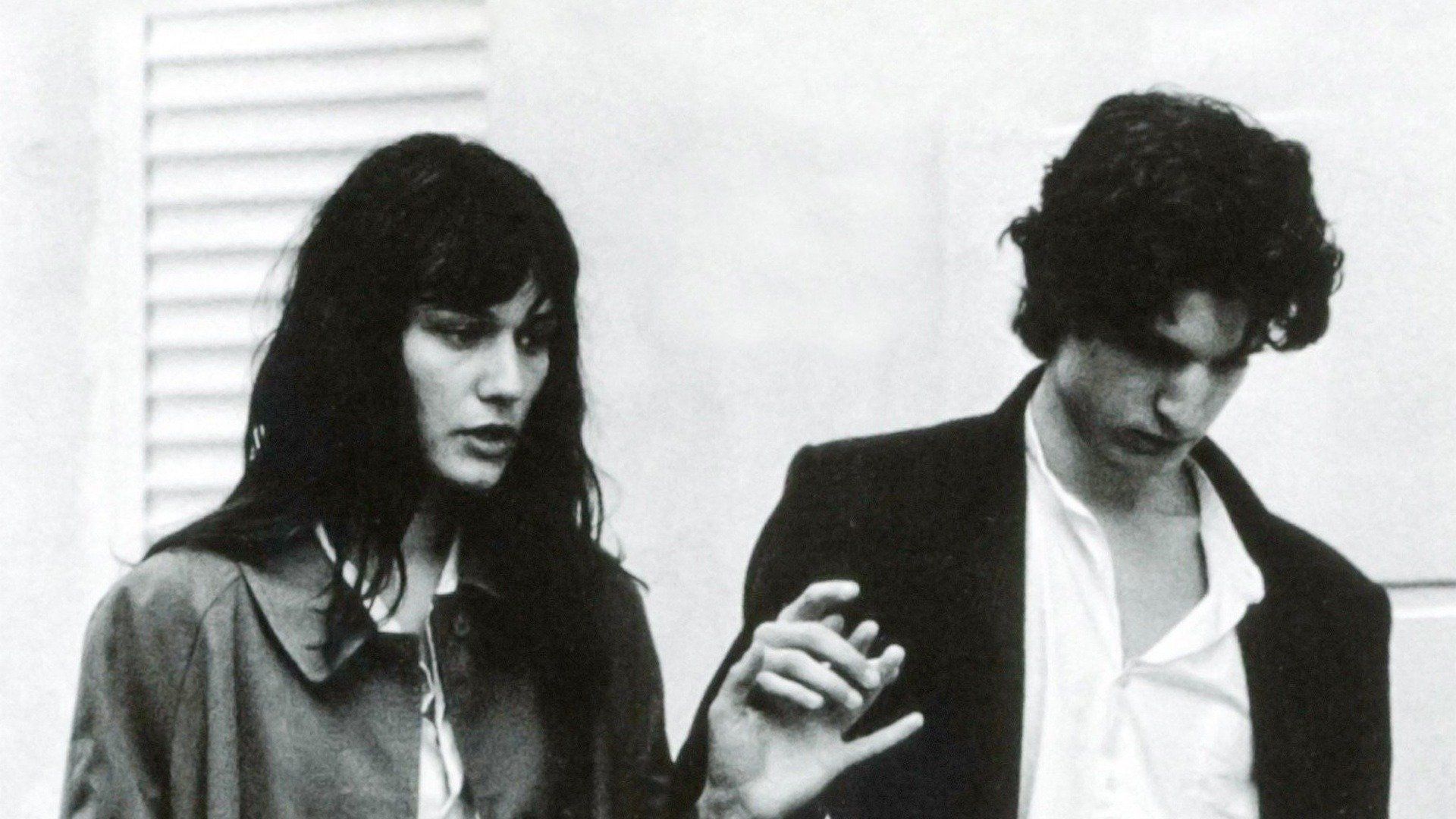
Les Amants Réguliers is een in contrastrijk zwart-wit getinte verbeelding van de studentenrevolutie van Parijs '68.
Where to Watch Regular Lovers


















- Deontay Wilder12 juni 2026Philippe Garrel’s Regular Lovers is a film about the aftermath of revolution, but even more profoundly, it is a film about the aftermath of youth. Shot in luminous black-and-white by William Lubtchansky, Garrel’s three-hour chronicle begins amid the barricades of May 1968 and slowly drifts away from history and into something more elusive: the melancholy realization that political awakening, artistic ambition, romantic ecstasy, and self-destruction often arrive in the same package. The opening hour depicts the Paris uprisings with a startling physical immediacy. Tear gas drifts through the frame, police charge through narrow streets, and young bodies scramble across rooftops. Yet Garrel has little interest in the conventional grammar of historical cinema. Unlike films that treat May ’68 as either triumph or failure, Regular Lovers regards it as a fleeting state of grace. Revolution appears less as a political event than as a momentary suspension of ordinary life, a brief period when anything seems possible. After the barricades fall, the film settles into the lives of François (Louis Garrel) and his circle of friends. They gather in vast apartments, smoke opium, debate art, make love, and drift through days without structure. Garrel observes these scenes with extraordinary patience. The film’s length is essential to its effect; time itself becomes the subject. Conversations trail off, parties dissolve into silence, and entire evenings seem to evaporate before our eyes. What emerges is not boredom but the texture of a generation confronting the void left behind when history moves on. Louis Garrel’s performance is one of the great achievements of contemporary French cinema. He embodies a particular kind of romantic exhaustion, simultaneously detached and deeply vulnerable. His François belongs to a lineage that stretches from Musset’s dreamers to the young men of Bresson and Eustache: figures who mistake sensitivity for purpose and discover too late that they are not the authors of their own lives. The love story between François and Lilie (Clotilde Hesme) forms the emotional center of the film. Garrel depicts their relationship with a tenderness that avoids sentimentality. Their romance feels inseparable from the historical moment that produced it. Like the revolution itself, it exists in a fragile present tense, sustained by the belief that the future can be postponed indefinitely. When reality finally intrudes, the heartbreak feels less like a dramatic rupture than an inevitable fading away. What distinguishes Regular Lovers from other films about disillusionment is Garrel’s refusal to judge his characters. The film neither condemns their decadence nor romanticizes it. Instead, it understands the peculiar sadness of being young enough to imagine total freedom and old enough to recognize its impossibility. The opium haze, the endless conversations, and the cultivated idleness are not presented as acts of rebellion but as symptoms of a generation searching for meaning after the collapse of collective purpose. Lubtchansky’s cinematography is among the most beautiful of the twenty-first century. Faces emerge from darkness with the sculptural clarity of silent cinema. Interiors seem suspended outside time. The black-and-white imagery transforms memory into a physical substance, giving the film the feeling of a recollection that is simultaneously vivid and already disappearing. Few films have captured the relationship between politics and personal life with such delicacy. Garrel understands that revolutions do not end when crowds disperse; they continue within the private disappointments, romances, and compromises that follow. Regular Lovers is therefore not simply a film about May 1968. It is a film about what remains after every moment of collective ecstasy has passed. By its final scenes, Regular Lovers has become something devastating: a work of mourning for a generation, a love story, and a meditation on the slow erosion of youthful certainty. It stands alongside Jean Eustache’s The Mother and the Whore and Bernardo Bertolucci’s Before the Revolution as one of cinema’s great portraits of post-revolutionary melancholy. Garrel’s masterpiece reminds us that history’s most lasting wounds are often the ones carried quietly within individual lives.

Get Plex on Your Devices
Free on 20+ platforms. Pick yours.Regular Lovers Trivia
Regular Lovers was released on 30 september 2005.
Regular Lovers was directed by Philippe Garrel.
Regular Lovers has a runtime of 3 u, 3 m.
Regular Lovers was produced by Gilles Sandoz.
Les Amants Réguliers is een in contrastrijk zwart-wit getinte verbeelding van de studentenrevolutie van Parijs '68.
The key characters in Regular Lovers are François Dervieux (Louis Garrel), Lilie (Clotilde Hesme), Gauthier (Nicolas Maury).
Regular Lovers is rated 12.
Regular Lovers is a Drama, Romantiek film.
Regular Lovers has an audience rating of 7 out of 10.
Regular Lovers has made US$ 125K at the box office.