
Nasumice
2018 82 mDrama
7.26.0
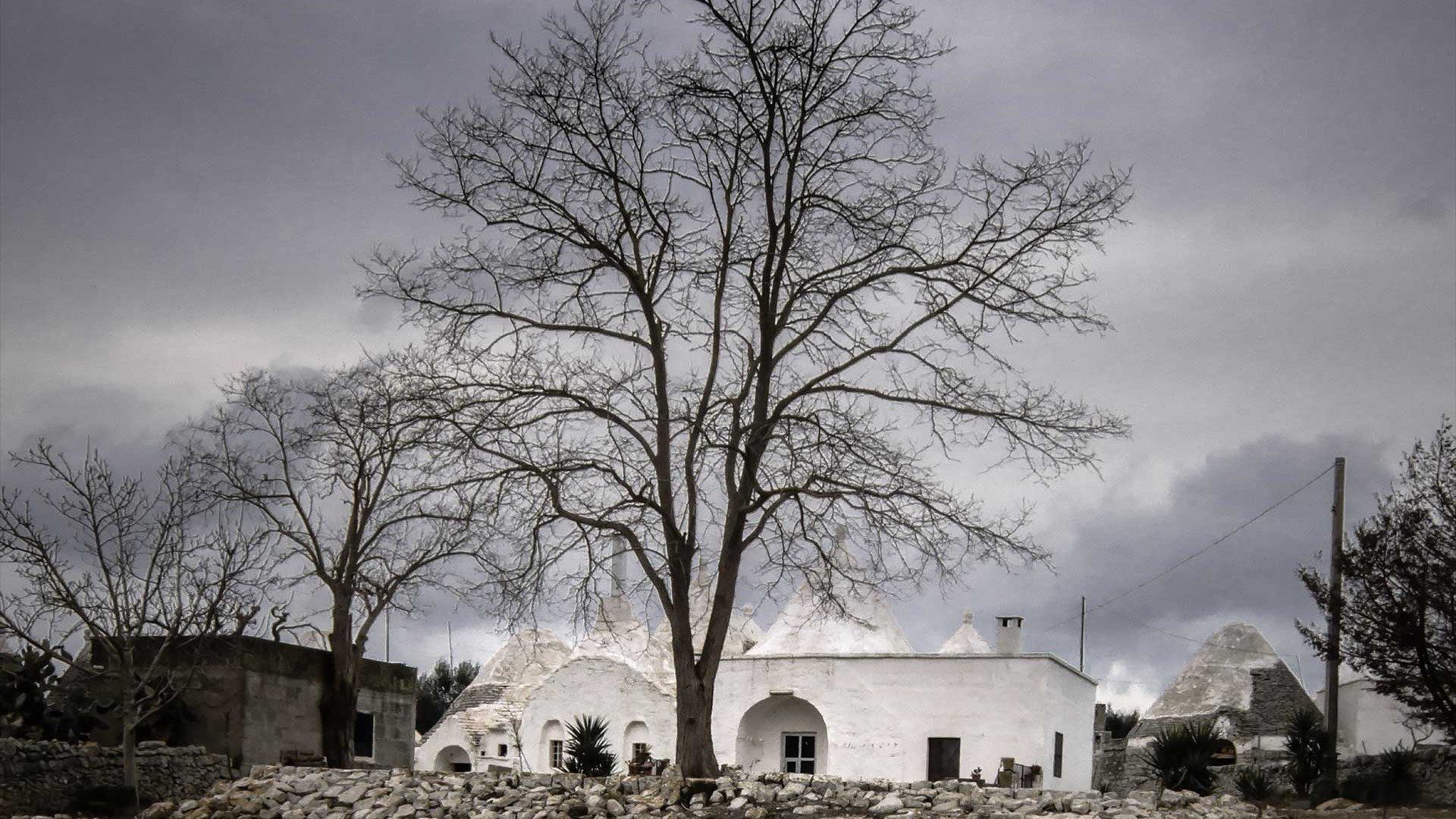
Italy, 1994. The war in the Balkans drags on with no end in sight. Elvis, a young man from Sarajevo, is taking pictures of tourists with his Polaroid camera to get by. After his camera is stolen, Elvis decides to visit Rodolfo, a stranger met by chance in Venice. Their brief and lonely encounter unfolds in the timeless landscape of whitewashed towns, green hills and olive trees of southern Italy.


- Dan Chapman8. ledna 2026Adrift, or Nasumice, is a sparse and meditative Bosnian film that drifts—appropriately—between borders, languages, and identities, reflecting the dislocation of its central character with a slow, sometimes hypnotic, but often frustrating quietude. Directed by Caleb Burdeau and set mostly in Italy, the film chronicles the life of Elvis, a Bosnian exile living on the margins in Venice in 1994, whose rootlessness mirrors the fragmentation of Yugoslavia itself. The title is apt—this is a film about people, lives, and conversations suspended in time and space, adrift in both physical and emotional senses. The film opens with a powerful poem by Bosnian writer Sasha Skenderija, a piece that arguably offers the most emotionally direct insight the film gives us into Elvis’s inner world. The rest of the narrative is content to leave much unsaid—often quite literally. Dialogue is sparse and naturalistic, and some exchanges aren’t subtitled, creating a barrier between the viewer and the text. While this could be a fault in a conventional narrative, here it serves as an artistic choice—immersing the viewer in the alienation and quiet confusion of a stateless migrant. We are made to feel as Elvis feels: unsure, watching, interpreting body language and tone more than speech. Elvis, played with convincing subtlety by Moamer Kasumovic, spends his time wandering, photographing street life, and avoiding permanence. When he connects with Rodolfo (Marcello Prayer), a local Italian who seems just as out of step with his own world, the film quietly unfolds as a document of their tentative friendship. Their relationship isn’t built on dramatic revelations or traditional plot beats, but shared space, drifting conversation, and mutual disaffection. In this way, the film takes on a kind of documentarian quality—observational, slow-moving, and very much unconcerned with holding the viewer's hand. Flashback sequences to Elvis’s time in Yugoslavia add further abstraction. These are never explicitly contextualised and can be difficult to parse, but they seem to reflect memories or emotional impressions rather than clear backstory. That choice contributes to the film’s dreamlike and deliberately opaque texture but also risks alienating the viewer, especially when paired with the glacial pacing. In the absence of plot, the film leans heavily on mood—and if that mood doesn’t land with you, it will feel like a long 80 minutes. Visually, however, the film has moments of real beauty. The streets of Venice are rendered not as romantic postcard scenery but as quiet, grey, occasionally claustrophobic spaces—places of dislocation rather than grandeur. The cinematography favours stillness and long takes, reinforcing the film’s meditative tone. The music, too, is an unexpected pleasure—delicate and melancholic, it complements the film’s sense of longing without ever overwhelming the imagery. One of the most quietly affecting elements of Adrift is its seemingly intentionally “unfinished” quality. The film offers no conventional resolution—no major turning point, no epiphany, no dramatic closure and this stylistic choice seems to raise a profound question about the nature of conflict and resolution, both personal and political. We're conditioned to see conflict as something that eventually concludes, as if struggle naturally gives way to catharsis or clarity. But Adrift challenges that traditional notion, used to justify war, and instead suggests conflict has the opposite effect. In the aftermath of war and trauma, resolution is not forthcoming; the war itself may end but the emotional cost remains long after—incalculable, slow-burning, and unresolved. As Rodolfo quietly reflects, “Sometimes we break when we are young, sometimes it takes longer, but in the end, we all break.” It's not a statement of defeat, but of shared human fragility, and it casts a shadow over Elvis’s final breakdown—a moment that feels less like a climax and more like an inevitable unravelling. The film’s ending suggests that healing is not always linear or visible, and that the internal damage wrought by conflict may take years—or a lifetime—to process. The film’s closing moments, where Elvis finally allows his emotions to surface, don’t suggest healing as much as they affirm the complexity of carrying pain for so long. In exiting the story at this moment of vulnerability rather than clarity, the film underlines its core idea: that grief and identity are not problems to be solved but states to be lived through. Its meditative tone, often frustrating in its stillness, is ultimately essential to this message—because for many, emotional truth does not arrive with narrative neatness, but in slow, quiet waves which take time to be drawn out. In the end, Adrift is a film that wears its arthouse intentions plainly. It’s deeply introspective, stubbornly slow, and defiantly uninterested in conventional payoffs but there is undoubtedly something here that is both haunting and beautiful. For viewers open to mood over momentum, and metaphor over meaning, there is something quietly and beautifully moving here—a sketch of displacement, male friendship, and the quiet persistence of memory.

Získat Plex na Vaše zařízení
Zdarma na 20+ platformách. Vyberte tu svou.Nasumice Trivia
Nasumice byl vydán 11. srpna 2018.
Nasumice byl režírován Caleb Burdeau.
Nasumice je dlouhý 82 m.
Nasumice byl produkován Cain Burdeau, Caleb Burdeau, Robert Carter, Amanda Roelle.
Italy, 1994. The war in the Balkans drags on with no end in sight. Elvis, a young man from Sarajevo, is taking pictures of tourists with his Polaroid camera to get by. After his camera is stolen, Elvis decides to visit Rodolfo, a stranger met by chance in Venice. Their brief and lonely encounter unfolds in the timeless landscape of whitewashed towns, green hills and olive trees of southern Italy.
Klíčové postavy v Nasumice jsou Elvis (Moamer Kasumović), Rodolfo (Marcello Prayer).
Nasumice je film s žánrem Drama.
Nasumice má hodnocení diváků 7.2 z 10.