
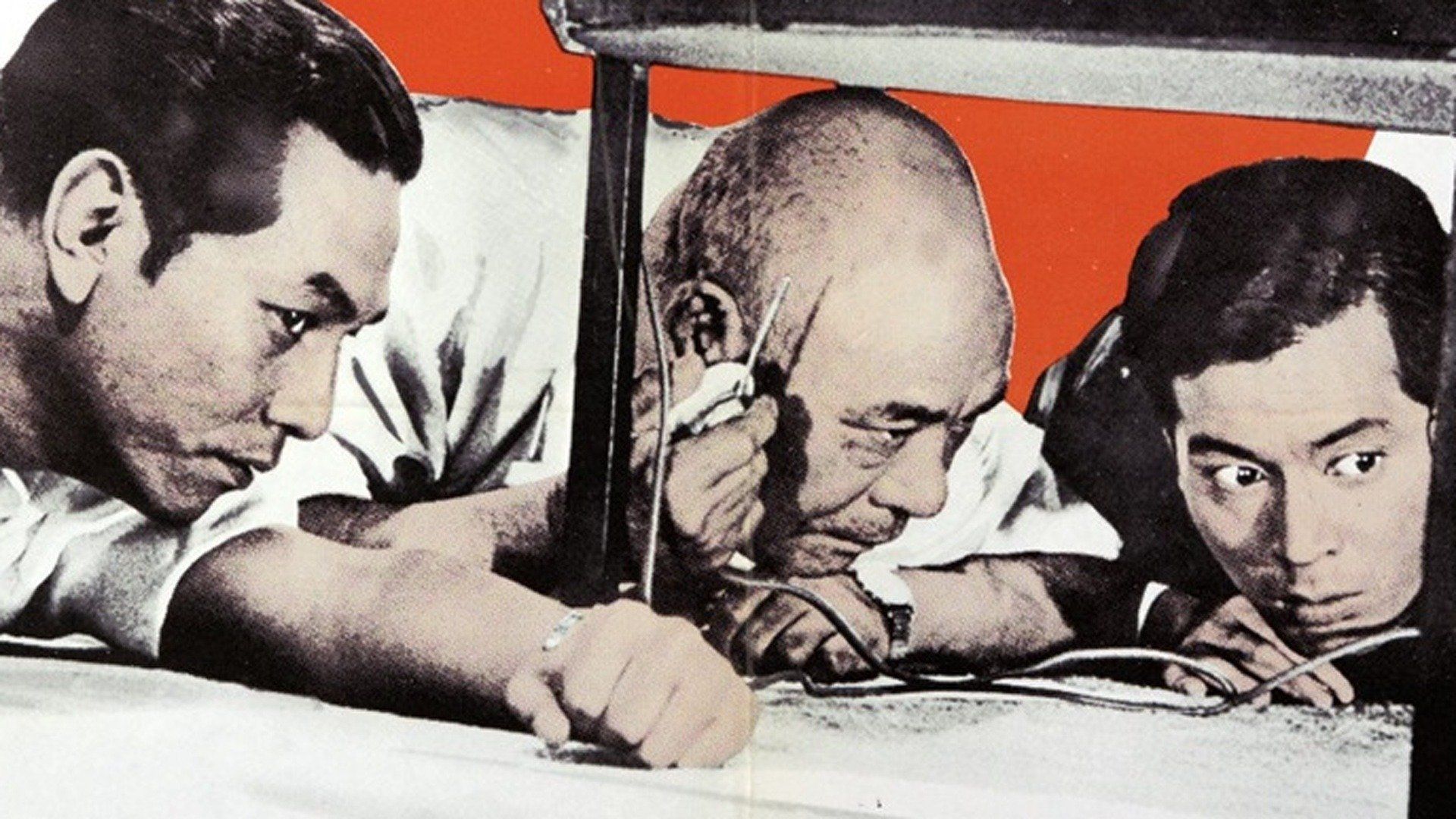










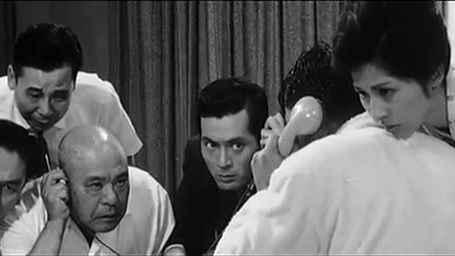
- LivewireAdmin14 settembre 2025Akira Kurosawa’s High and Low is a taut, two-movement thriller that first squeezes you with white-knuckle tension and then coolly unspools the mechanics of pursuit. It’s the rare film where the structure becomes part of the pleasure: Part One is a claustrophobic, ethically charged kidnapping standoff; Part Two is an exacting, boots-on-the-ground police procedural. Together they make a riveting study of class, conscience, and collective problem-solving. Part Two struggles with pace a bit and the absence of Toshirô Mifune removes a lot of the weight; that man controls your focus. What grabbed me most was the cinematography. Kurosawa’s widescreen compositions turn rooms into chessboards and people into deliberate pieces. The camera blocks and re-blocks characters across multiple planes—foreground debates, midground glances, background movements—so that tension is layered rather than simply cut together. Sharp contrasts carve the “high” from the “low”: the airy, elevated modernist home where the negotiations unfold versus the humid sprawl of the city below. Windows, bannisters, and door frames become visual bars, quietly imprisoning characters inside their own moral calculations. Even when the frame is crowded, the image is lucid; you always know where to look because the staging does the storytelling. It’s a masterclass in blocking, depth, and geometric precision that makes stand-still conversations feel kinetic. I have no idea how Kurosawa was able to keep multiple subjects in frame AND in focus without resorting to a split-diopter... Then comes the shift. Once the film pivots from private crisis to public investigation, the depiction of the police force is unusually absorbing. Kurosawa presents them as a true ensemble—no lone-wolf genius, just coordinated craft. Detectives map out timelines, test hypotheses, rehearse movements, and pool tiny fragments of data until patterns emerge. You feel the grind: stakeouts, false leads, incremental wins. The film respects procedure without glamorizing it; the cops are competent, collaborative, and human. That collective intelligence is exciting on its own terms, and it adds texture to the moral stakes established in the first half. The contrast between the single household in turmoil and the sprawling civic machine at work is the point—the investigation isn’t just plot propulsion, it’s a thematic counterweight. The part that stood out to me the most as being implausible was the press being so willing to work with investigators to catch the villain lol what a nice world that would be! The two-part design also amplifies the movie’s big ideas. The first half traps us in the high house, forcing us to sit with questions of responsibility, status, and sacrifice. The second half descends to the city’s margins, where consequences ripple outward and social strata collide. “High” and “low” aren’t just elevations; they’re vantage points—moral, economic, and literal—and the film keeps toggling between them until the title feels like an X-ray of the whole society. Performances are tightly controlled—emotion often lands in posture and silence rather than speeches—and the pacing, especially in the first half, is immaculate. As stated earlier, if anything holds it back from a perfect score for me, it’s a slight slackening late in the procedural stretch, where the method becomes a touch repetitious. But even there, the payoff sequences are staged with such crisp visual intelligence that the momentum returns right when it needs to. Bottom line: High and Low is a superbly crafted thriller that earns its reputation not just with suspense but with rigorous visual storytelling, an admirably grounded portrayal of police work, and a clean, two-act architecture that lets both the moral drama and the investigative engine sing. Letterboxd: FilmPhanPA
- Varun19 ottobre 2024A really engaging movie from start to end. Every scene, dialogue and decision is so meticulously crafted and the three acts were well structured. I’m a sucker for long scenes that take place in a single location so the first act was the most riveting. The procedural investigation in the second act was very interesting to follow. I thought the third act chase was a bit too long but it still felt intense and also contained some banger music. Overall this was a masterfully directed film and I’m so glad I finally started checking out the revered Kurosawa’s filmography a few months ago.


Ottenere Plex sui dispositivi
Gratuito su oltre 20 piattaforme. Scegliete la vostra.Anatomia di un rapimento Trivia
Anatomia di un rapimento è stato rilasciato il 1 marzo 1963.
Anatomia di un rapimento era diretto da Akira Kurosawa.
Anatomia di un rapimento ha una durata di 2h 23min.
Anatomia di un rapimento è stato prodotto da Tomoyuki Tanaka, Ryuzo Kikushima.
Il figlio di un autista viene rapito, ma è il frutto di un errore di persona. Il vero oggetto del desiderio per lo studente protagonista era il figlio di un industriale. Il commissario di polizia indaga in ricerca del rapitore e si addentrerà nei gironi di un inferno senza uscita.
I personaggi principali di Anatomia di un rapimento sono Kingo Gondo (Toshirō Mifune), Chief Detective Tokura (Tatsuya Nakadai), Reiko Gondo (Kyōko Kagawa).
Anatomia di un rapimento è votato T.
Anatomia di un rapimento è un film Dramma, Mistero, Crime.
Anatomia di un rapimento ha una valutazione di 9.5 su 10 dal pubblico.
Anatomia di un rapimento aveva un budget di 250K USD.
Anatomia di un rapimento ha guadagnato 562K USD al botteghino.