






- CrossCutCritic2025年5月5日The Man Who Remembered the Wrong Moment There is a pain deeper than death. It is the ache of remembering the wrong thing—the wrong person, the wrong time, the wrong love—and then realizing you can't change it. Not even with all the time in the world. Chris Marker’s La Jetée is twenty-eight minutes of still images and a single blink of motion. But within that silence lies a scream: the primal cry of the human soul trapped between memory and longing, destiny and despair. This is science fiction in form. But theology in soul. --- A man survives the apocalypse by being chosen. Not because he is heroic, but because he has a memory—a single image of a woman’s face, on a pier at an airport, before the world fell apart. That memory becomes his anchor. His key. His curse. Scientists use him to tunnel through time. They hope to exploit the past to save the present. But this isn’t really a film about time travel. It’s about time haunting us. Bending us. Refusing to be escaped. He meets the woman again. She becomes real, for a moment. And then the moment ends. --- There’s something cruciform about this story. The man is chosen. He is sent. He suffers. And he dies—not for glory, but for love. For the memory of love. For a memory that was never his to begin with. And the horror is this: He dies at the moment of greatest desire. He runs toward the memory he has clung to his whole life. Only to discover that the moment he remembers is the moment he is killed. What he thought was a symbol of safety was actually the scene of his own death. What he thought was home was a cross. --- La Jetée is not a parable. It is a liturgy of futility. And yet—a whisper remains: What if our ruin is not the end, but the beginning of grace? The man never escapes time. But maybe time never escaped him either. Maybe the past is not something to be used, but something to be mourned. And maybe the only way forward is to let the memory die—so that something more eternal can live. "You think your ruin disqualifies you. But I say—this is where I begin." La Jetée doesn’t offer resurrection. But it points toward it. *** Postscript: If This Moved You, You Might Also Appreciate... Winter Light – A pastor loses his faith and finds something darker. Or truer. Through a Glass Darkly – A daughter’s madness is the voice of God hidden in silence. Ordet – Faith dies, and rises again—but only through death. Mickey 17 – Sci-fi resurrection, and the ache of being replaceable. Kapo – A Jewish girl reclaims her name and faith in the ash of atrocity. These are not reviews. They are psalms, written with a lens. And you are welcome to read them as one of the faithful. Or as one still remembering the wrong moment.

お使いのデバイス向けのPlexを入手
20種類以上のプラットフォームで無料で使えます。お手持ちのデバイスをお選びください。ラ・ジュテに関するトリビア
ラ・ジュテは1962年2月16日に公開されました。
ラ・ジュテはChris Markerが監督を務めました。
ラ・ジュテの上映時間は29mです。
ラ・ジュテはAnatole Daumanがプロデューサーを務めました。
ある男が、世界大戦による黙示録的世界の問題の解決策を見出そうとする実験中に、自分の過去と向き合う。
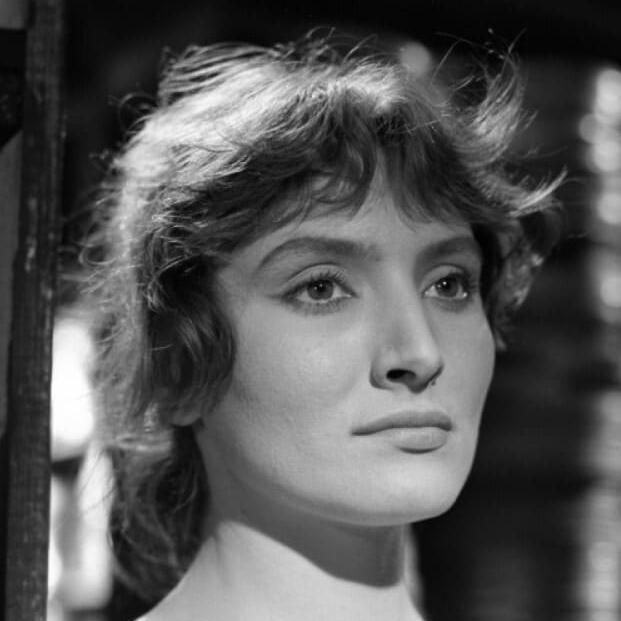
ラ・ジュテの主要人物はNarrator (voice) (Jean Négroni), Hélène Chatelain, Davos Hanichです。
ラ・ジュテはGと評価されています。
ラ・ジュテはロマンス, サイエンスフィクション, ドラマ映画です。
ラ・ジュテは、視聴者によって10点満点中9.3点をつけられています。