
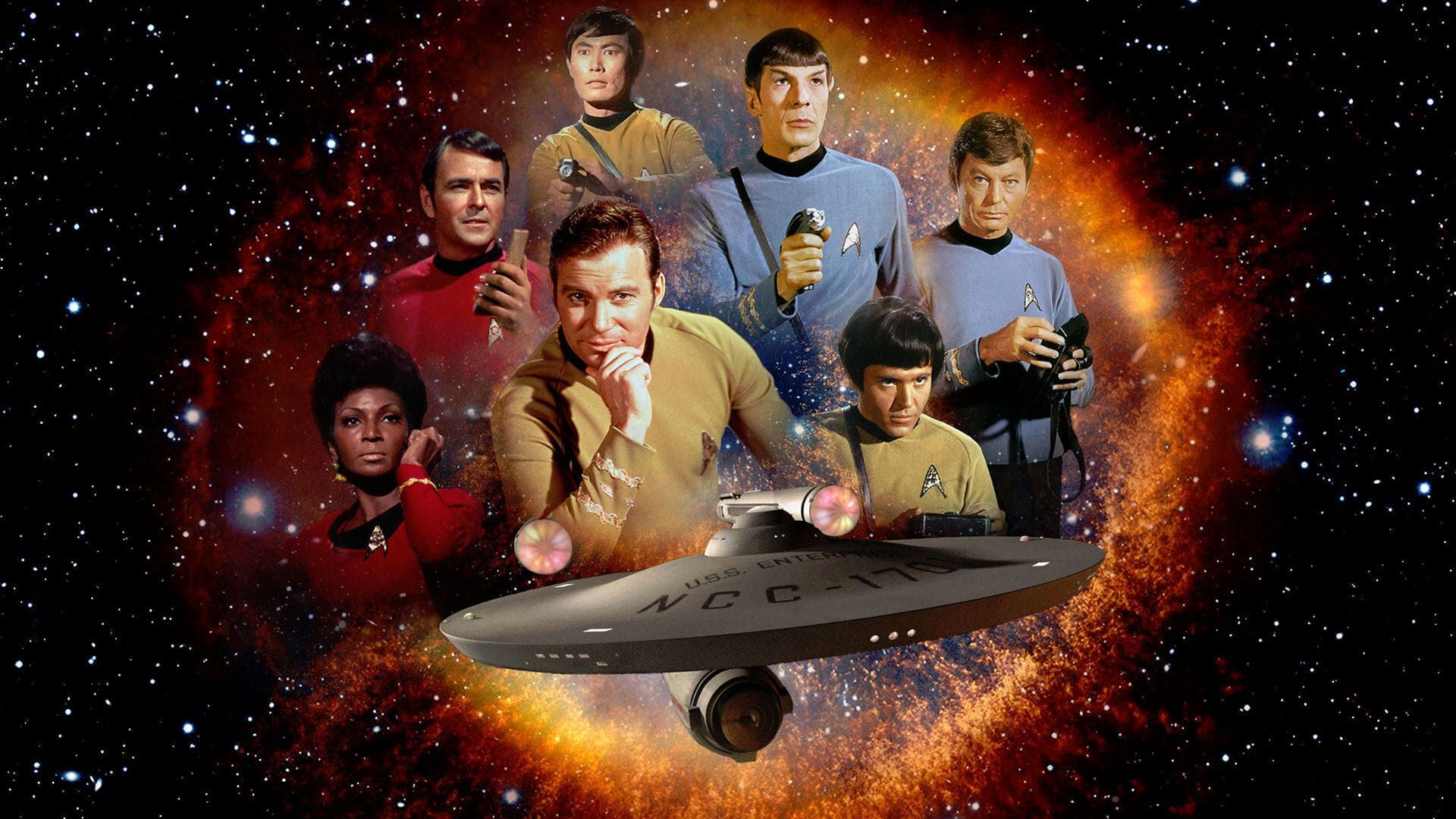









- Vincent Reggiannini22 de mayo de 2025What more can be said of this fantastic series that was so ahead of its time. Many of the stories are filtered through the eyes of the three main characters of the show, Kirk, Spock and McCoy - each representing the concepts of Logos (Spock), Pathos (McCoy) and Ethos (Kirk). The high concept shows may seem heavy handed today, but in the late 1960s these were never before seen on network television.
- Kylacham27 de julio de 2026What can you say about Star Trek that hasn't been already said? A show that arrived at a time when the only sci-fi consisted of Lost in Space, The Jetsons, The Twilight Zone, and The Outer Limits. Star Trek showed a hopeful, united future, beyond the age of greed. A future into which modern (for the time) philosophical and political issues were addressed. This was not a space age technology sideshow. If you're looking for pure sci-fi action, akin to the Kelvin Timeline Star Trek movies (which I enjoyed as movies, but they weren't Star Trek), then you may need to look elsewhere. It was very interesting to note that many of the issues of the day are still relevant now, 60 years later...
- ርልዪረ13 de febrero de 2026🖖🏽Star Trek the Original Series is the best television show ever. It beats its several later spinoffs and all but a very-very-very few network and cable tv shows to this very day. No matter what genre on any network, flashy, oversexed, overblown special effects, gun battles ridiculously never-ending spinoffs (like NCIS), uncreative fluff, or "you only watch it because everyone else watches it," kind of shows do not impress me. Star Trek has the one quality that the majority of shows lack and makes it shine above all: humanity. Gene Roddenberry created a diverse universe that advocated harmony between people of different races and cultures at a time of American and international turmoil. Violent disorder and social upheaval still spans across Earth. All Earthlings need to learn Star Trek's lesson about the reciprocal relationship between, humans, non-human animals, and the earth. Star Trek will remain a beacon of hope, peace, understanding, and acceptance forever.
- Dario13 de junio de 2026I first encountered Star Trek: The Original Series through 1980s reruns, where local television made no promises about order, continuity, or context. I just knew it was science fiction, and that was enough: ships, aliens, strange planets, colourful uniforms, and a starship that somehow looked both advanced and handmade. Rewatching it now on streaming gives the series a different weight. The old limitations are obvious — budget sets, uneven episodes, dated gender politics — but so is the ambition. This was a 1960s network show trying to imagine a future where humanity had not destroyed itself, where reason and compassion could sit on the same bridge, and where the unknown was something to approach rather than immediately fear. Kirk, Spock, and McCoy are still the engine: command, logic, and humanity in constant argument. Uhura, Sulu, Scotty, and Chekov remain iconic, even when underused. The best episodes — “Balance of Terror,” “The City on the Edge of Forever,” “The Devil in the Dark,” “Amok Time,” “Mirror, Mirror,” “Space Seed,” and “The Trouble with Tribbles” — still show why the series survived cancellation and became a cultural force. It is dated. It is uneven. It is also foundational, oddly moving, and still full of stubborn hope.
- galacticwaters29 de marzo de 2026the best to ever do it
- Richard3 de noviembre de 2025Saw it on TV and it felt like the future had polyester uniforms, cardboard corridors and more imagination than most shows today can muster. Captain Kirk, Mr. Spock, Dr. McCoy, the holy trinity of logic, emotion and swagger, boldly go where no one had gone before. The Enterprise wasn’t just a ship; it was a stage for morality plays, philosophical dilemmas and the occasional green skinned romance. The sets wobbled, the phasers sparked and the matte paintings hinted at entire civilizations. The tone? Visionary, theatrical and deeply human. It wasn’t about the effects, it was about ideas. And while the remastered versions with CGI planets and polished space battles try to modernize it, something gets lost. The charm of the original, the model work, the lighting, the handcrafted weirdness, was the future, as imagined in the ’60s. Replacing it with slick CGI feels like repainting a vintage comic book: cleaner, but not truer.


Consigue Plex en Tus Dispositivos
Gratis en más de 20 plataformas. Elige la tuya.Star Trek Trivia
Star Trek has 3 seasons.
Star Trek has 79 episodes.
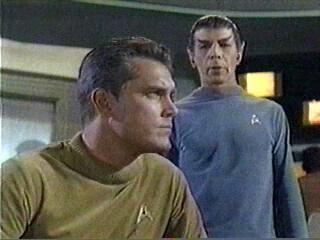
The key characters in Star Trek are James T. Kirk (William Shatner), Spock (Leonard Nimoy), Dr. McCoy (DeForest Kelley).
Star Trek was directed by Marc Daniels, Joseph Pevney, Ralph Senensky, Vincent McEveety, Herb Wallerstein, Jud Taylor, Marvin J. Chomsky, John Meredyth Lucas, James Goldstone, Gerd Oswald, Herschel Daugherty, David Alexander, Robert Butler, Michael O'Herlihy, Murray Golden, John Erman, Herbert Kenwith, James Komack, Joseph Sargent, Gene Nelson, Robert Sparr, Donnie McDougall, Lawrence Dobkin, Leo Penn, John Newland, Robert Gist, Harvey Hart, Anton Leader.
Star Trek was produced by Edward K. Milkis, John Meredyth Lucas, Robert H. Justman, John D. F. Black, Gene L. Coon, Byron Haskin, Fred Freiberger.
Serie que relata los viajes de la astronave USS Enterprise. Su Misión de Cinco Años consiste en explorar nuevos mundos y buscar nuevas civilizaciones. Es el año 2264, dos siglos después de que el hombre superara en sus viajes la velocidad de la luz y se realizara el primer viaje de la Enterprise NX-01. Durante los tres primeros años, el capitán James T. Kirk y su tripulación encuentran criaturas que se metamorfosean, asesinos, locos, seres tan poderosos que pueden controlar la mente de sociedades enteras, pero también seres muy débiles e incapaces de controlar su propia mente. Los expedicionarios vivirán peligrosas aventuras que los obligarán a luchar por su vida y la de sus amigos. Todas esas pruebas contribuirán a forjar un vínculo de amistad entre tres insólitos personajes: el valiente y carismático capitán, el irascible doctor y el Vulcaniano sin emociones.
Star Trek is rated TP.
Star Trek is a Drama, Action, Adventure show.
Star Trek has an audience rating of 8.8 out of 10.
Star Trek episodes are 50min long.
No, this show was canceled after 3 seasons.