Centurion is a good period film. Neil Marshall builds a genuinely convincing atmosphere for the era, and the historical slips that do creep in are unlikely to trouble anyone but the most dedicated pedant. Roman cavalry using stirrups, an army marching without scouts or any real effort to secure high ground, ornate bracers straight out of a 1950s gladiator picture: these are the sorts of details that only reveal themselves under close scrutiny, and I doubt most viewers will clock any of them.
Michael Fassbender does quite a good job in the lead. The film arrived at an interesting juncture in his career, right as Hollywood was still working out where to place him. His performance as Bobby Sands in Hunger had put him on the map, which in turn opened the door to Inglourious Basterds in 2009, a role that, thanks to a famously memorable "faux pas" scene, pushed him firmly into the front rank of actors to watch. Centurion arrived in 2010, effectively a test of whether audiences would accept him carrying an ensemble piece, a year before X-Men: First Class handed him a much larger ensemble within an established franchise and confirmed his path to stardom. Here, even though the film is very much an ensemble effort, Fassbender gets to lead and shine as a charming, decent protagonist. He doesn't steal the show outright, but he demonstrates real physicality, evident commitment to the role, and a knack for calm, commanding screen presence. The rest of the cast does a wonderful job of keeping the story moving along with him.
Where the film stumbles is in its battlefield gore. A great deal of it plainly relies on CGI, with blood spurting and showering in a manner that draws attention to itself as a visual effect rather than disappearing into the action. It comes across as gratuitous and, worse, noticeable, which makes it harder to suspend disbelief and stay immersed. This is a little surprising given that Marshall has said around ninety per cent of the film's wound and gore effects were achieved practically on set, using upwards of two hundred litres of fake blood. Whatever the ratio behind the scenes, the CGI sprays that do appear are the ones that stick out, and they undercut a lot of otherwise strong practical work.
The plot is solid, though its basic shape has echoes of Deliverance or O Brother, Where Art Thou?: a group of men who have done something find themselves hunted, and the bulk of the film becomes a matter of watching them hide, flee, and occasionally fight back. It's not a bad structure, but the Romans do seem oddly lacking in tactical sense as they're run down time after time by a pursuing force of perhaps half a dozen Picts.
Imogen Poots is lovely here, stunning and entirely natural in her role, which makes it something of a shame that such an unfortunate name belongs to such a gorgeous and talented young woman. She put me in mind, for whatever reason, of Beatie Edney playing Heather MacLeod in Highlander.
All told, Centurion is a good watch for anyone partial to sword-and-sandal films. It plays as an updated peplum picture, carried by a rising star, backed by solid production values, and offering its own answer to the old question of what became of the Ninth Legion.
Centurion
Toy Story 5
Toy Story 5
The Last House
The Last House is a film I neither loved nor loathed. It progresses reasonably well as a piece of storytelling, but it never quite becomes a satisfying experience, largely because it can't be bothered to work out the mechanics of its own premise.
The central problem is one of logistics. The film feels sanitized, scrubbed clean of the grim, unglamorous detail that a family sealed inside a single house for for a long period of time would actually have to contend with. I kept snagging on questions the script never bothers to raise, let alone answer. What did this family do with their waste and their packaging? Where did they obtain feminine hygiene products? How did they avoid illness from their food (a question that will make more sense to anyone who has actually seen the film)? None of these are pedantic nitpicks, they're the basic, unglamorous realities of prolonged survival, and a film that wants to be taken as science fiction, rather than fable, has an obligation to at least attempt to be coherent. In many ways, the movie veers into the procedural genre, but not sufficiently to respond to the dozens of nagging questions you're left with when you watch it.
That failure points to a larger issue, one I have encountered in other films that fancy themselves to be sci-fi: the moment a story can't define the rules of its own reality clearly enough to hold together, it quietly slides from science fiction into fantasy, whether or not the filmmakers intend that shift. I've never been able to fully embrace Old, Snowpiercer, or Us for precisely this reason. All three are competent films on their own terms, but each sets up a scenario dressed in the trappings of realism, then simply glosses over how that scenario could plausibly function, leaving the viewer to accept it only as metaphor rather than as a world with internal logic. Contrast this lack of rigour with a film like Beau Is Afraid, where reality is warped from the outset and never pretends otherwise, not even tacitly: because the film never claims coherence, its lack of it isn't a flaw. The Last House wants to have it both ways: grounded and plausible on the surface, yet riddled with holes the moment you think about it for more than a few seconds.
On the other hand the film has real strengths. The various actors who play the family all turn in excellent performances, and the production values are strong throughout.
I found two elements to be unnecessary, though. The voiceover is just intrusive. It adds very little and tries to explains too much. And the ending is far too pat, tipping over into the hackneyed and the schmaltzy just when the film ought to have gone for something harder-won.
Ultimately, the film's erratic subplots, weak dialogue, and ridiculous, disconnected climax leave the overwhelming impression of an unpolished, nonsensical trial run for an AI-generated script. Even so, taken as a whole, The Last House is an OK way to pass a Saturday afternoon. It's nothing to write home about, and it won't change your life, but it never becomes actively unpleasant to sit through either.
Mutiny is a decent little action picture, competently made and worth an evening's attention, though it stumbles before it even gets going by failing to understand the meaning of its own title. A mutiny occurs when soldiers or sailors refuse to obey orders and attempt to wrest control from leaders. Statham's character, on the other hand, infiltrates a cargo ship to uncover who's behind an assassination. He's not a crewman, so he can therefore neither incite nor be party to a mutiny. The female lead, Angie (Annabelle Wallis), is the one character actually positioned within the ship's chain of command who could plausibly lead one, but that's not what happens here either. The film starts, in effect, a point down before the opening credits finish, simply for not understanding the word on its own poster.
Statham, once again, plays a version of the character he has played in just about every film he does outside of the Ritchie-verse. Credit where it's due, though: this time he's an active working professional, a bodyguard doing his job, rather than a retired cop or spy dragged back into violence against his will. That's a genuine, if modest, departure from his last few formulaic films, and I'm inclined to cut him some slack for it. Also, I recently came across an interview in which he described his own career with a candour worth quoting:
"I'm not an actor, really. I used to work with jewellery and pinch jewellery on the streets. I was a sportsman for years. I am not really some thespian who can adapt and chameleon himself into different roles. I just got into this by being at the right place at the right time. I got plucked from obscurity into the movie industry. It's not like I spent years honing how to do different accents or working on my craft. I accept what I'm good at and just try to go with the flow in that direction."
I find that admission remarkably humble, realistic, and self-aware. Good for Mr. Statham! There's something to respect in a man who works within his limits rather than straining against them. It was, by his own account, sheer luck that a casting agent was taken with him and his market-stall street patter and offered him an audition for Lock, Stock and Two Smoking Barrels. Statham seems to know precisely how fortunate that break was, and he's had the good sense not to jinx it by reaching for roles he was never suited to.
The film itself offers a basic, thoroughly predictable plot, built on themes as simple and universal as they come: greed is corrosive, family is worth protecting, and decent men don't act like schmucks. The acting is fine across the board, and the ship itself is a nice touch, its cramped corridors and gangways giving the action a claustrophobic quality that a soundstage could never quite replicate.
None of it amounts to anything more than what it sets out to be, and that's absolutely fine. Mutiny requires zero thought, it's easy to watch, and it offer a great opportunity to root for a good guy. It's sheer brain-dead entertainment, but delivered wholly without pretence.
Mutiny
Thieves Highway
Thieves Highway is a film I wanted to like, and in some ways I did, but ultimately its hampered by its adherence to a hackneyed formula. The setting is genuinely gripping. I'm nowhere close to being a rancher and don't understand that world in the slightest, so it was fascinating to learn even a little about it. It blew my mind, in fact, that livestock police working for the Agriculture Department are a real thing in America. Aaron Eckhart plays Frank Bennett, a "cow cop" whose primary job is to investigate and shut down rustlers, still a real problem in a country as expansive as the USA. I knew nothing about any of this beforehand, and even if it served only as the backdrop for a work of fiction, it still engagingly showed what daily life was like elsewhere.
Beyond that setting, though, the film is so formulaic that I found it almost impossible to sit through without laughing at points where laughter clearly wasn't intended. The structure announces itself early: Frank pays a visit to his mentor for a heart-to-heart about professional responsibility and conscience, the sort of scene meant to set the moral tone for everything that follows. Shortly afterwards, in a diner, Frank's partner mentions that he has one day left before he moves to a desk job, on account of a fourth child on the way. I nearly fell off my chair laughing, and I mean that literally, not figuratively, because the scene plays out almost exactly like the old Simpsons parody of McBain
In that episode, they flash to a McBain scene where his partner Scoey talks about retiring in two days, how his daughter is graduating soon, and how he and his wife intend to sail around on their boat, the "Live-4-Ever". Moments later, he's shot to pieces by henchmen sent by the villain, Mendoza. That gag exists to mock films like Lethal Weapon and the glut of 1980s buddy-cop pictures where similar plot devices were used. Thieves Highway actually makes a dead serious attempt at recycling that hackneyed trope, a plot device so worn out that the only place you can find it used with any degree of success is in parody. "MENDOZAAAAAAAAAAA!!!" LOL
Amid all this, Frank also decides to woo an old crush who has conveniently returned to town just as the film's plot kicks into gear. I don't understand why the filmmakers felt a romantic subplot was necessary here, it added nothing and the story would have lost little without it.
From there, the film unfolds exactly as you would expect. There isn't a single surprise or a fresh idea anywhere in it, only Eckhart straining for intensity and earnestness that never quite arrives. He comes across rather like a second-year acting student, working hard to inject gravitas through aspirated line readings and meaningful pauses that don't land the way he intends.
The acting, then, is mediocre, the camera work and direction are fine but staid, and the setting is genuinely wonderful. None of it comes together, though. The film aims for intense, gripping storytelling and never once reaches that goal.
Thieves Highway
No Reservations
No Reservations is a cute romcom, with a hint of darkness and a splash of tragedy running beneath its otherwise light surface. The setup carries real emotional weight. Kate (Catherine Zeta-Jones), a talented but exacting New York chef, is left to raise her niece Zoe (Abigail Breslin) after Zoe's mother, Kate's sister, dies in a car accident. The arrangement is difficult from the start. Kate has no idea how to care for a child, and Zoe is struggling to adjust to a life she never asked for. Kate's chaotic hours at the restaurant only compound the strain, and things unravel to the point where Paula (Patricia Clarkson) brings in another chef, Nick (Aaron Eckhart), to help pick up the slack.
Unfortunately, what follows is remarkably derivative and predictable. Kate and Nick hate each other initially, then fall for each other, in a manner so telegraphed that one can predict nearly every scene days before it arrives. It's about the most tired script I've seen in a long while, and the film never once deviates from it: no surprises, no curveballs, nothing left to chance. The writing is so schmaltzy, so saccharine, so sappy, that one has to wonder why the filmmakers bothered reaching for the emotional material they had (a dead parent, a grieving child) only to bury it under a romantic formula this well-worn. Given the strength of that setup, the script feels like a genuine missed opportunity, one step up from a Hallmark movie and not much more.
The cast does a great job with what they're given. Zeta-Jones and Eckhart have decent chemistry, and Breslin holds her own, but no amount of skilled performance can inject surprise into a story that refuses to offer any. The direction is fine and the acting is fine; the story itself is merely adequate and the characters are so stereotypical they make you want to laugh.
All in all, No Reservations is watchable but forgettable, more a romcom template than a fresh film. Stick with the original German version Mostly Martha, it's just a better film.
No Reservations
Killer Elite
Killer Elite is a great ensemble effort. The dynamic between Jason Statham and Clive Owen, however, is the genuine high point of the film. Owen, in particular, elevates the film, and the tension between the two men gives the picture its spine. Robert De Niro turns in strong work here, no small feat considering I'm not usually a fan of his. It is also nice seeing Dominic Purcell get some screen time, he's an actor I've always liked.
One has to wonder whether Statham is capable of playing a character who doesn't retire from a life of violence only to be dragged back into it within the first ten minutes. It's the plot of roughly 93% cent of his filmography. This time, however, it works, and I attribute that success to excellent writing and to Owen's presence, since he's the better actor of the two by a WIDE margin.
The action sequences are well executed and restrained rather than offering Michael Bay style excess. Everything feels more contained and, as a result, slightly more realistic. The film offers some pretty wicked commentary on British intrusiveness and warmongering. It really goes out of its way to tell a fantastic story, one inspired by actual events.
The costuming is good and captures the era convincingly, with one exception: the suits, for whatever reason, never quite land the transition from the seventies into the eighties. The scenery and use of sets and locations are fantastic. The filmmakers clearly went out of their way to try to make the viewer feel absorbed in the setting.
The romantic subplot, on the other hand, seems entirely unnecessary and obtrusive. Part of the problem is that Statham simply can't do romance, he's too wooden, too boring, to pull it off. Yvonne Strahovski does what she can with him, but she's bogged down by Statham's utter lack of emotional range.
All in all, Killer Elite is a decent political action thriller.
Killer Elite
Bad Boys
This is Michael Bay's first big action movie, and it clearly establishes what the rest of his career is going to be about: "splosions", and lots of them. The plot is thin: drugs get stolen, and the two leads have to get them back. Along the way, Martin Lawrence's character has to impersonate Will Smith's in order to convince a remarkably attractive but kind of whiny Téa Leoni that she can trust the police, and for some reason they keep up the charade far longer than makes sense rather than simply sitting her down for a powwow and fessing up.
Smith is a cocky rich kid who spends more time looking cool than solving the case, while Lawrence spends most of the film shouting because he seems to do that best. They work well as partners, but the dynamic between them is just a bit odd.
The direction is pure Bay: constant camera spins, explosions, car flips and slow-motion shots designed to make the heroes look as virile as possible. There's very little logic to be found, whether in terms of physics or of how society actually functions, and there are no real consequences for anything, even with the typical angry captain breathing down their necks the entire time. Since this was Bay's first big movie, he seems to have borrowed tropes from the police action films of the 80s and 90s, the Lethal Weapon pictures chief among them, and dialed everything up to 11. In that sense, the film marks a clear passing of the torch, carried by Jerry Bruckheimer, from the low- to medium-budget cop films that came before (Lethal Weapon, Die Hard, Beverly Hills Cop, Red Heat) to the bigger-budget Bay and Bay-adjacent action extravaganzas of the 90s and 2000s (Bad Boys, The Rock, Face/Off, Rush Hour).
The villain was pretty meh. I liked Tchéky Karyo well enough in La Femme Nikita, but Hollywood never seemed to know what to do with him (Goldeneye, Kiss of the Dragon), and here he's once again reduced to a generic 90s psycho from Europe, complete with irritating facial expressions and grimaces.
In the end, the film boils down to two black men loudly arguing with each other while the city explodes around them and the police department is left with no budget to speak of. Lots of fun to watch, though, if you turn your brain off and munch on some Cheetos.
Bad Boys
Leatherheads
Leatherheads plays as an homage to bygone screwball comedy romances, the sort of thing Capra or Hawks might have directed. At least that was the attempt, and I genuinely appreciate the effort, but it doesn't quite get there. Out of the films Clooney has directed himself in, this one seems to me the most self-indulgent. He seems to like himself a lot, here.
Maybe I didn't think much of it because it dragged on a little. Maybe there was too much modern innuendo in it. Maybe the speech was a touch too modern, or maybe it's simply that the film had no real purpose. Things just happened. Even the Marx Brothers' football picture Horse Feathers had a point: win the big game, save Huxley College. Leatherheads, by contrast, involves too many disjointed storylines without much grand purpose behind them.
Without spoilers, I hated what Zellweger's character does in the film, so much so that afterwards I couldn't care less about her, nor about her romance with Clooney. They both come across as selfish assholes for the final third of the picture.
On the other hand, the film has great settings, fantastic costuming, and music that's spot on. The direction is good, too, with Clooney sticking to his signature style: nothing too wild with the camera, the story told from a mid distance throughout.
The cast does a good job, with particularly notable work from Krasinski, but competence alone isn't enough to make the film truly stellar. It needed either a great deal more humour to be genuinely fun or a great deal less to work as a "historical" picture, but it lands squarely in the middle with an unassuming plop.
Leatherheads
Overlord
I enjoyed the film but found it a bit predictable and just plain gross at times. Now I admit, I absolutely love the film's title screen. It looks exactly as though it stepped out of 1950, making a film about 1943. After that, we get the typical buddy squad war flick for a while and then we get zombies introduced into the mix.
It's not a bad medley, but it felt like I'd been there before, probably when I played Call of Duty: World at War back in 2008 and unlocked Nazi Zombies mode.
It was good as a war film, but when it flips into the zombie storyline, it just sort of smoulders out for me. Still, the film worked well enough.
Jovan Adepo does a wonderful job as Boyce, and his character is fantastically written and developed throughout the film. He's flanked by a solid supporting cast: Wyatt Russell as the war-weary Corporal Ford, Mathilde Ollivier as the local Frenchwoman caught up in the mess, John Magaro, Iain De Caestecker, Jacob Anderson and Bokeem Woodbine rounding out the squad, with Pilou Asbaek doing reliably slimy work as the requisite sadistic SS officer. Nobody in the cast is a household name, but that lack of star power actually suits the film. These feel like soldiers rather than movie stars playing dress-up.
The opening paratrooper sequence is quite intense, the practical make-up effects are well done, and there's a bold willingness to play the war material straight before the horror kicks in. On the other hand, some of the characters are pretty thinly sketched and even though the performances are competent they're not truly memorable (except for Adepo).
I'd like to get picky and flag the historical liberties, like casting black actors as members of the U.S. Army's 101st Airborne when that division wasn't actually desegregated until after the war. But you know what? A movie already committed to Nazi super-soldier zombies seems like it probably isn't going for strict historical accuracy anyway.
There's nothing I can point to that is terrible in the film, but nothing really grabbed my attention either. It's a competent little time waster.
Overlord
Mute
Apart from Blade Runner, this is the most cyberpunk film I've seen. The setting is exactly right for what a near-futuristic city might look like, in this case Berlin. The movie does a great job of lingering on the city's seedy underside: prostitutes, gigolos, club owners, goons, back-alley doctors, and porno producers all populate its dark corners. It felt, at times, like watching an alternate storyline for Cyberpunk 2077. The atmosphere is the film's greatest strength, and I loved it throughout.
The story itself is fair, though I would have liked more backstory on the main character, Leo. Without it, he's difficult to connect with. Everyone in the cast turns in excellent work, but even competent performances aren't enough to rescue the film from an incredibly slow rhythm that seemed, at times, boring to watch. Calling it "even-paced" would be generous. It drags a bit and a number of scenes run on far longer than they need to. The film could easily have lost fifteen to twenty minutes, in my view.
It was a nice touch to add Sam Bell (Sam Rockwell's character from "Moon") to this film. It was a nifty little Easter egg every time you saw his court case on screens. I admit, I geeked out a little. I also loved the subtle reference to the Syndicate, from the old Bullfrog game of the same name, see if you can spot it.
I understand that Leo belongs to a religious community, so heavy-duty action wouldn't have suited his character, but the film was crying out for some all the same. A couple of well-placed action sequences might have saved it for me.
Don't misread that as a lack of enjoyment. I did enjoy it. The relationships between several of the characters are handled well, and the small supporting roles add up to a genuinely magnificent neo-noir atmosphere.
Still, the film is lacking in sparkling dialogue (I mean the exchanges between the other characters, not Leo's) and could have used a more involved pace overall.
Mute
Synchronic
Synchronic tells a simple story, and it's all the better for it. This is low-key science fiction set in the present, not a space opera or some far-future extravaganza. The concept is interesting without straining credulity, which is a difficult balance for the genre to strike.
The character development is very clear. Two simultaneous storylines progress naturally, converge, and finally culminate in the climax and conclusion of the film. There's very little denouement, but just enough to draw the whole picture together.
It's interesting to see a quiet film built around two men from very different corners of the filmmaking universe. Anthony Mackie is better known for his Falcon and Captain America roles, while Jamie Dornan starred in "50 Shades of Grey". It was a pleasure to see two talented actors working in such a relatively low-budget, calm little film. The story turned out better than I would have expected.
I didn't care for the background music, that slow synth glitch drone which was popular in the 1990s for experimental work. Think of Aphex Twin's "Selected Ambient Works Volume 2" (which I love, it's one of my favourite albums, but not as background noise), or what Daft Punk and Nine Inch Nails did for the most recent Tron films, which worked because there was pacing variation, particularly for the action sequences. The score didn't always have to sit at a drone. Here, several scenes would have benefitted from different music, or none at all.
I liked that the film didn't feel obliged to go epic on us. We didn't need a Buzz Lightyear time-travel story. (Oh wait, we got that anyway, and it was depressing and terrible.) Still, a touch more liveliness in Synchronic would not have been amiss.
Synchronic
Silent Night
Silent Night is very much an experiment. Nobody in the film really speaks, and while I understand what Woo was trying to accomplish, it doesn't work for me. I found the device distracting. The main character being unable to speak makes sense within the story, but having everyone else follow suit feels forced. To communicate information that might otherwise be unclear, Woo resorts to tricks such as showing phone messages or letters on screen, which comes across as even more forced than the silence itself. A little dialogue here and there would have made the conceit far less noticeable.
The action, at least, is generally strong. There are plenty of recognizable Woo camera angles and framed moments throughout, echoing films like The Killer or Hard Boiled. Several of these sequences are genuinely well done.
The gun violence is gloriously excessive, but that's part of the fun. It's a touch unrealistic, with waves of bad guys lining up to be knocked down like bowling pins, one by one, but it is what it is. You don't watch a Woo film for restraint.
Joel Kinnaman does a good job, and I have to admit he's a considerably better actor than I gave him credit for. He manages to convey pain, rage, remorse, and murderous intent quite convincingly without saying a word, and not everyone can pull that off using nothing but sightlines and facial expressions. Fortunately, Catalina Sandino Moreno accomplishes much the same feat, managing to provide an excellent counterpart.
The one character I don't get is Kid Cudi's. I don't think that's down to any failing on his part, the role itself just feels like it was an afterthought. The film would have benefited from developing his relationship with Kinnaman's character from the outset, so that the two men had some rapport to draw upon. As it stands, they have none, and their interactions come off as hollow and unnecessary.
The sets are good, and there's a nice training sequence, though "montage" isn't quite the right word for it. It's more of a before-and-after with progressing calendar pages in between the two states. Still, it's a nifty touch.
All in all, this is a decent action film, but its unnecessary experimentation makes it more distracting than it needed to be. It would have worked far better as a straightforward, full-blooded shoot-'em-up.
Silent Night
Sisu
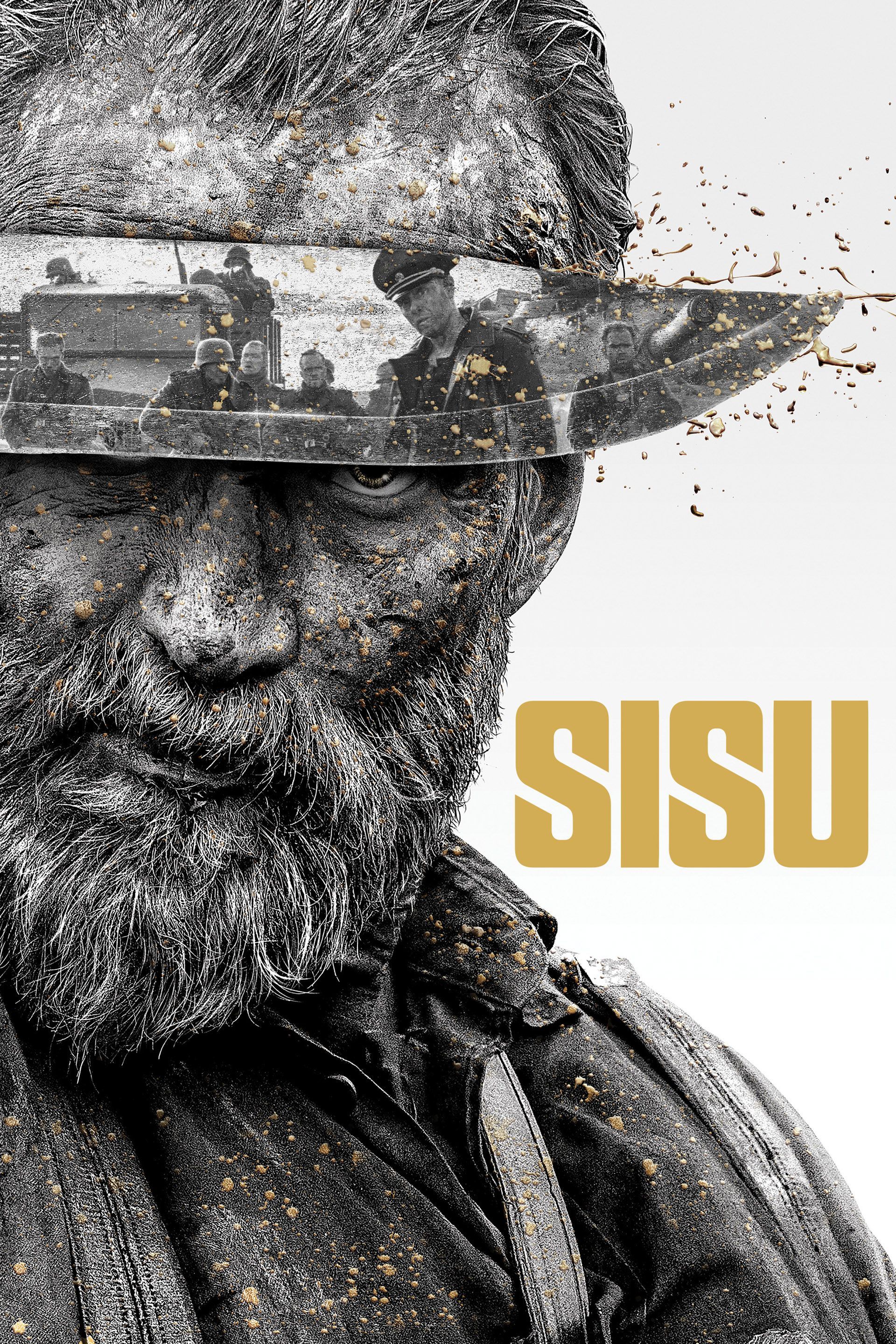
Sisu is a good survival action film, though set against a far more extreme backdrop than the genre usually allows itself. It's genuinely refreshing to see an older, hardened man carrying the lead role rather than the usual young, unblemished action hero. The film plays something like The Revenant mixed with Rambo, or perhaps an open-world take on Die Hard, transplanted onto the barren wartime tundra of northern Finland.
That landscape is one of the film's real achievements. The scenery is beautiful and shot with real care, and the stark, barren terrain works as an effective metaphor for the interactions between the characters themselves: hard, unyielding, and stripped of anything superfluous.
Jorma Tommila does a solid job in the lead, though the role doesn't ask a great deal of him as an actor. Mostly, he needs to look tough, grunt, yell in pain, and radiate menace. That said, the physical demands of the part are considerable, and it's genuinely impressive to watch a man of his age handle them with such conviction. Yes, I know stunt doubles exist, but still.
Where the film falls down is in its depiction of the Nazis, who come across as slovenly and to modern in thought and speech for the period and the setting. I couldn't abide the vulgarity used in the film. I have no objection to swearing in film when it's sensible and grounded in the reality of the world it depicts. Heavy profanity works in something like Pulp Fiction, The Wolf of Wall Street, or Casino, because it belongs to the characters and the era. Here, the dialogue leans on modern idioms that feel transplanted wholesale from the present day. Referring to women as "bitches", a usage popularized by hip-hop culture decades later, simply wasn't how anyone spoke in the late 1940s, and it yanks the viewer straight out of the period the film has otherwise worked hard to establish.
The film is also, frankly, gross. It's one bloody, grinding scene after another, most of it there to demonstrate just how much punishment the protagonist can absorb and how he earned his fearsome reputation. I don't need that level of gore every quarter of an hour to accept a character as tough. We all want our heroes larger than life, capable of shrugging off what would flatten an ordinary man, but there's a point past which the sheer volume of injury thrown at the hero stretches credulity past breaking. A real human, however hardened, would pass out or die from shock alone under that kind of punishment. In film, ghowever, characters seem to be able to absorb wounds that would leave most people crippled for life, then simply walk it off and return to killing villains as though nothing had happened.
Without spoiling matters, I will say this much: there comes a point where the villains have the hero entirely at their mercy. They could kill him outright, decapitate him, finish the matter in any number of ways. Instead, they choose the hackneyed "leave him for dead" option, a trope we've all seen used a hundred times before simply to keep the plot moving. I genuinely don't understand why directors keep reaching for it. It's lazy, unrealistic storytelling, and every time I see it deployed, it irritates me and lowers my opinion of the film using it.
Regardless of its many shortcomings, the film is actually a good little action flick and a decent ride, but just a little too unrealistic and repulsive for my tastes.
Sisu
Hardcore Henry
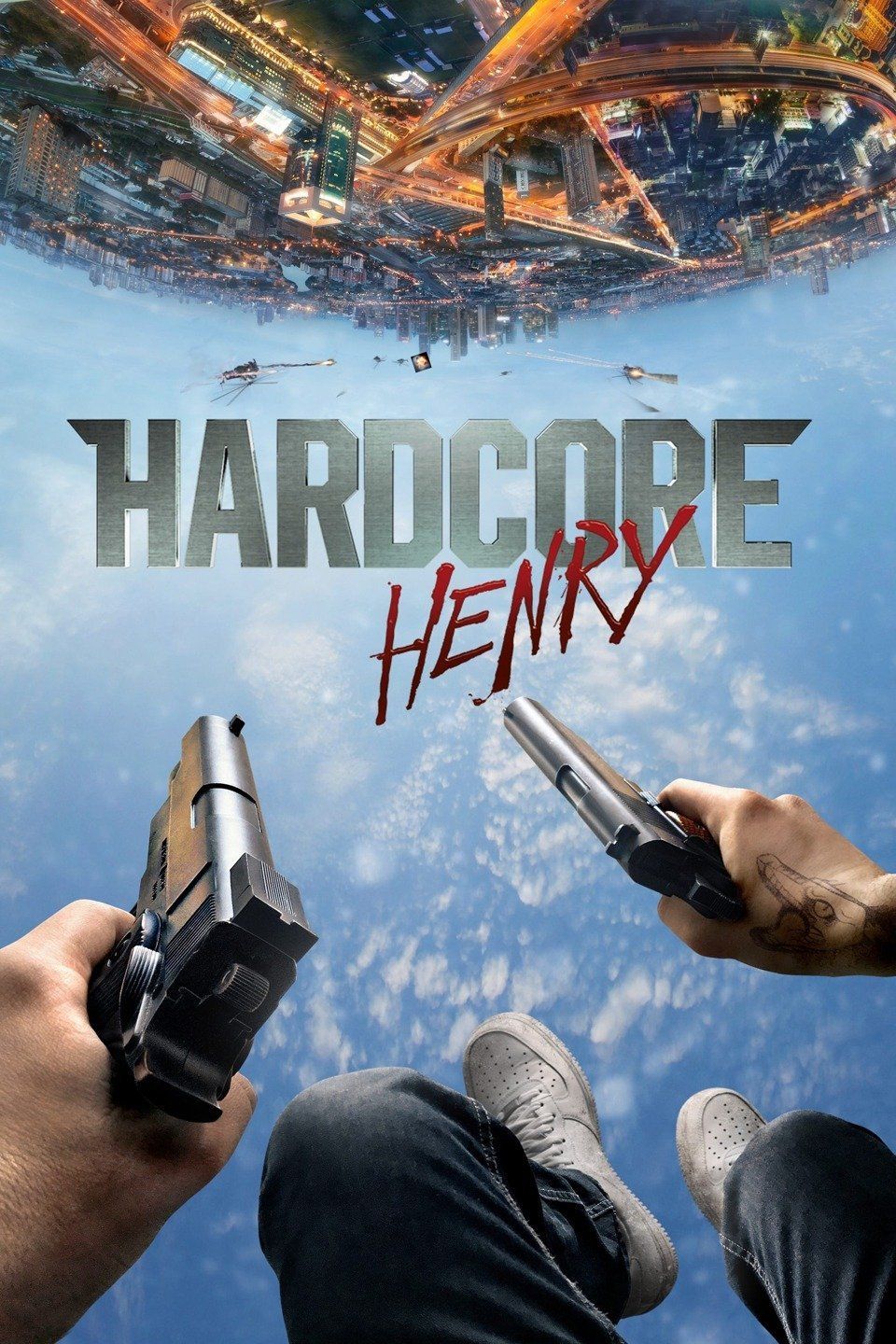
Watching Hardcore Henry is rather like watching someone else play through a first-person shooter, which is very much the point. There isn't a great deal of plot depth or thematic focus on offer, here. The real star of the show is the perspective itself, the experiment of shooting an entire feature film from the first-person point of view.
I liked it rather more than I expected to, though I don't think I'd ever want to sit through another film built the same way. It's too disorienting for regular consumption. That said, this is a far more mass-market effort than most experimental cinema, and I'd argue the film draws directly on work done by earlier experimental filmmakers while doing something most audiences have never encountered before. Lady in the Lake, from 1947, was shot entirely in the first-person perspective, as was the more recent Maniac, from 2012. Hardcore Henry, however, fuses that camera style with explosive, sustained action in a genuinely new way.
Many of the scenes were disorienting and difficult to watch, and I noticed my brain doing something rather interesting in response: I began instinctively imagining how each scene would look pulled back to a mid-distance, third-person view. It felt like a natural reaction to the almost claustrophobic sensation of experiencing everything strictly through the character's eyes, with no wider frame to orient oneself.
There were also a handful of gross moments that struck me as unnecessary, though I understand why they were included. They lent the film a queasy, visceral sense of a body under siege, as though the camera itself were flinching, which suits a story about a man stitched back together and immediately sent out to be broken again.
Some of the action takes were absolutely fantastic, particularly a chase sequence involving motorcycles. The film's one-take conceit really earned its keep there, and the spectacle was thoroughly engrossing.
Sharlto Copley does an outstanding job, especially considering he plays multiple roles throughout. Without spoiling anything, there are scenes in which he shifts from character to character and the transitions are handled superbly. This isn't the old split-screen trick, with the same actor standing on two sides of a set. It's genuinely accomplished technical camera work, and his performance stays credible and grounded throughout, no matter how often the film asks him to change identity beneath it.
Danila Kozlovsky also deserves credit for his work as the villain. He comes across as superbly unlikeable, and by the film's end, I was strongly desirous of his demise, which I have no doubt is exactly the reaction the director was after.
All in all, a good film, and one I'm glad to have experienced, but it isn't something I feel any need to see more of.